
Before Memmo my notes were scattered across PDFs. Now a workspace pulls everything into one place — I see exactly what's still left to study.
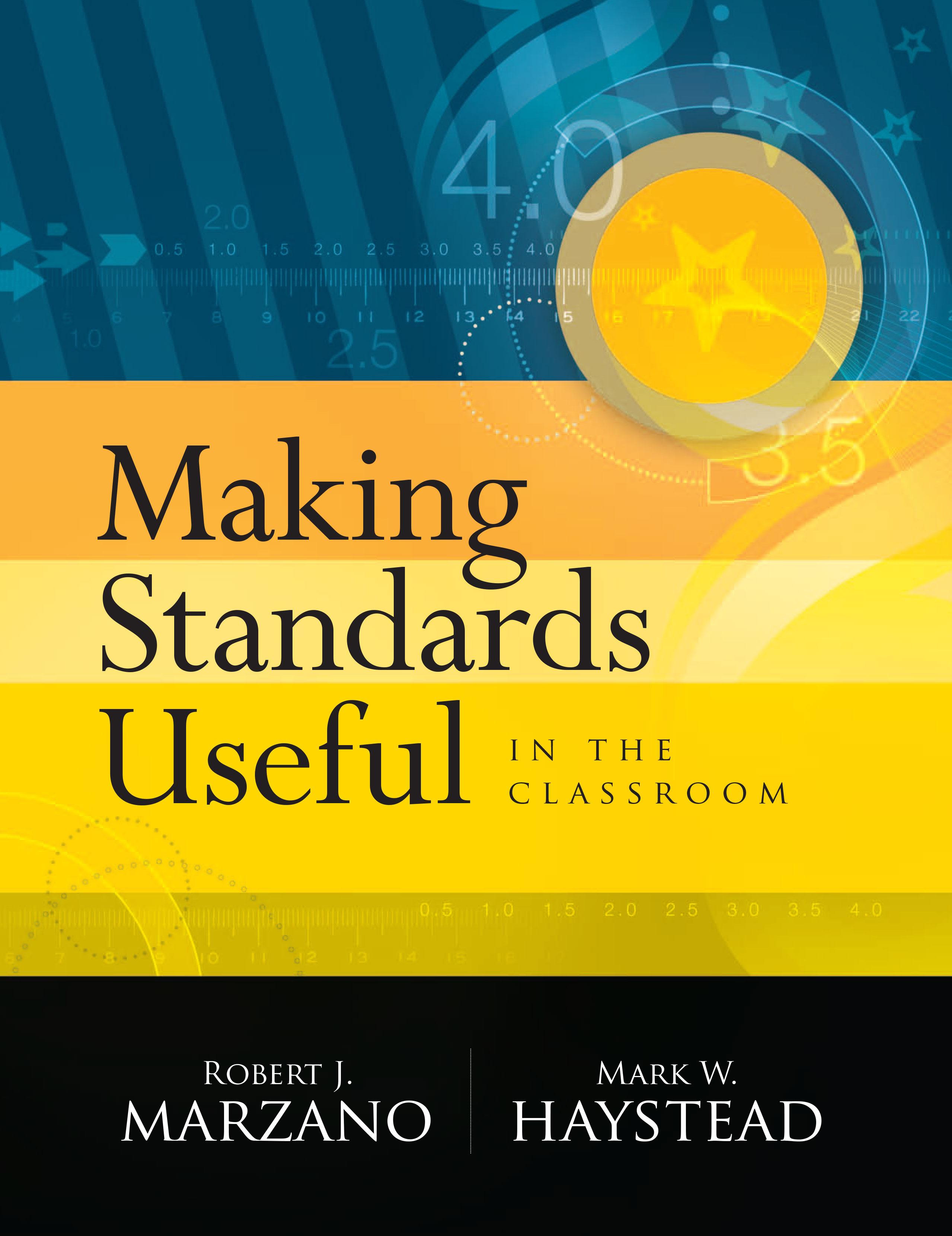
Has the standards movement in the United States led to improved classroom instruction and effective assessment? In too many cases, the answer is no. As authors Robert J. Marzano and Mark W. Haystead explain, two major reasons account for this situation: state and national standards documents typically identify far more content than teachers can actually teach during a school year, and the standards are not written in a manner that supports effective instruction and assessment.
In Making Standards Useful in the Classroom, Marzano and Haystead present a way to convert standards documents into a format that teachers can actually use to guide instruction and to create meaningful formative assessments. In Part I of this practical guide, teachers, administrators, and curriculum specialists will find answers to questions such as these:
* What are the steps to follow in unpacking and rewriting standards so they are useful for classroom teachers?
* What is a measurement topic and what kind of content should it include?
* How can measurement topics be organized into a coherent system for learning and assessment?
* Why is averaging a flawed method for calculating grades?
* What is the best way to assess learning and determine a grade that accurately represents students' growth in knowledge and skill?
Part II of the book consists of scoring scales with sample measurement topics for language arts, math, science, and social studies for kindergarten through 8th grade, and sample measurement topics for life skills for kindergarten through 12th grade. Using the samples as a guide, districts and schools can create their own systems for translating standards into useful components of effective instruction and formative assessment that truly drive student learning.
Note: This product listing is for the Adobe Acrobat (PDF) version of the book.
Before Memmo my notes were scattered across PDFs. Now a workspace pulls everything into one place — I see exactly what's still left to study.
Memmo's summaries are gold before exams. I don't have to re-read 800 pages two weeks before — just the important parts.
The AI chat has saved me the night before an exam more than once. I just keep asking until I get it — no waiting on a study group to reply.
The quizzes hit exactly what I need to know. Memmo tracks what I get stuck on — so I only practice what's worth it.
Flashcards with spaced repetition are magic. Memmo knows when I'm about to forget something and brings it back.
The AI podcasts are my favorite. I listen on my way to school and get a recap without sitting at a computer.

Handbok i kvalitativa metoder
281 kr

Hållbar utveckling: en introduktion för ingenjörer och andra problemlösare
334 kr

Brymans Samhällsvetenskapliga metoder
390 kr

Projektledning
491 kr

Den orättvisa hälsan: om socioekonomiska skillnader i hälsa och livslängd
326 kr

Organizational Leadership
429 kr

Vetenskapsteori för nybörjare
196 kr

På väg mot läraryrket
172 kr

Det sociala livet i skolan: Socialpsykologiska perspektiv
253 kr

Betygsättningens didaktik
151 kr

Personality
402 kr

Studying Leadership
404 kr

Managing Innovation
477 kr

Introduktion till samhällsvetenskaplig metod
347 kr

The Psychology of Sex and Gender
698 kr

Evidens och kunskap för socialt arbete
207 kr

Introduction to Leadership
605 kr