
Before Memmo my notes were scattered across PDFs. Now a workspace pulls everything into one place — I see exactly what's still left to study.
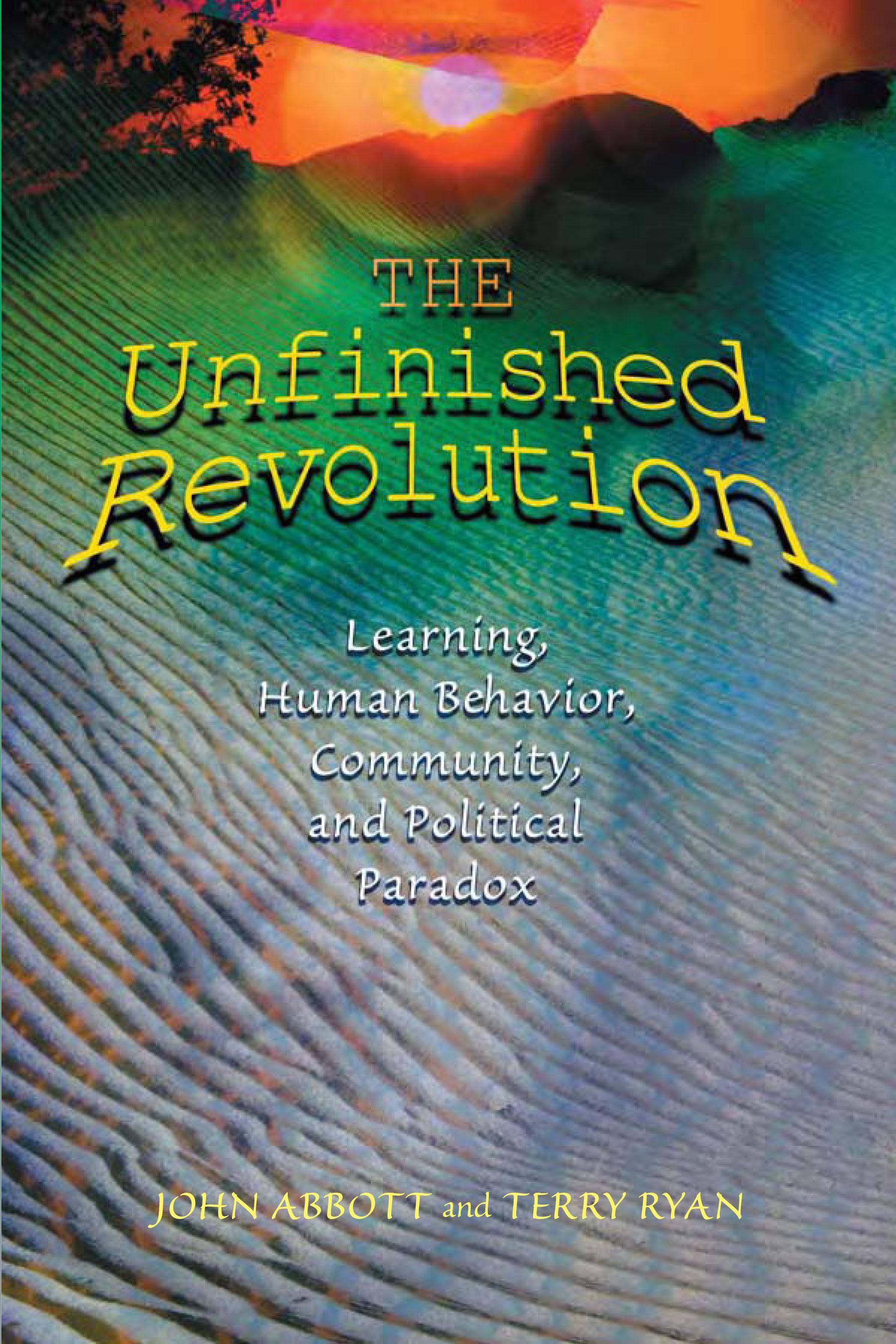
If you believe it is possible for communities, schools, parents, and businesses to come together around helping all children become lifelong learners, then read this book. In The Unfinished Revolution, authors John Abbott and Terry Ryan argue that the so-called crisis in education is really a crisis in childhood and that the unit of change is not the school but rather the larger community. Drawing on their experiences of working with schools, community leaders, researchers, parents, and business leaders in the United States, the United Kingdom, and Canada, the authors show how current models of education--based on ideas about learning from the industrial age--cannot by themselves bring out the full potential of all children. They maintain that the schools we have inherited from the industrial age are structured to develop a mass of students who, at best, are equipped with basic skills and the ability to follow orders--but only a small cadre of creative, lifelong learners.
To create learning environments that help all children take control of their own learning, the authors propose a constructivist and apprentice-based approach that takes full account of our current understanding about how humans actually learn. They urge "going with the grain of the brain" as a way of breaking down today's highly partitioned system of education. Abbott and Ryan make the case that communities have the power to help education blend into a seamless web, in which learning opportunities permeate the entire culture. This form of dynamic learning will not be seen as a system, but rather as a way of life. Learning will be something that we all recognize, encourage, and actively support through formal education, community participation, and the power of the connected world of information communication and technology.
A utopian vision? No. The authors describe societies undergoing a revolution in thinking and working that, despite disruptions, offers ways to cope with ongoing social, political, and economic changes. This revolution is unfinished as long as education systems lag behind these larger transformations. In this book, the authors address that lag by charting a course across disciplines to connect learning to what happens outside the classroom, ultimately producing lifelong learners who can take full advantage of today's increasingly open and dynamic societies.
Note: This product listing is for the Adobe Acrobat (PDF) version of the book.
Before Memmo my notes were scattered across PDFs. Now a workspace pulls everything into one place — I see exactly what's still left to study.
Memmo's summaries are gold before exams. I don't have to re-read 800 pages two weeks before — just the important parts.
The AI chat has saved me the night before an exam more than once. I just keep asking until I get it — no waiting on a study group to reply.
The quizzes hit exactly what I need to know. Memmo tracks what I get stuck on — so I only practice what's worth it.
Flashcards with spaced repetition are magic. Memmo knows when I'm about to forget something and brings it back.
The AI podcasts are my favorite. I listen on my way to school and get a recap without sitting at a computer.

Handbok i kvalitativa metoder
281 kr

Hållbar utveckling: en introduktion för ingenjörer och andra problemlösare
334 kr

Brymans Samhällsvetenskapliga metoder
390 kr

Projektledning
491 kr

Den orättvisa hälsan: om socioekonomiska skillnader i hälsa och livslängd
326 kr

Vetenskapsteori för nybörjare
196 kr

Organizational Leadership
429 kr

På väg mot läraryrket
172 kr

Det sociala livet i skolan: Socialpsykologiska perspektiv
253 kr

Betygsättningens didaktik
151 kr

Personality
402 kr

Studying Leadership
404 kr

Managing Innovation
477 kr

Introduktion till samhällsvetenskaplig metod
347 kr

The Psychology of Sex and Gender
698 kr

Evidens och kunskap för socialt arbete
207 kr

Introduction to Leadership
605 kr