
Before Memmo my notes were scattered across PDFs. Now a workspace pulls everything into one place — I see exactly what's still left to study.
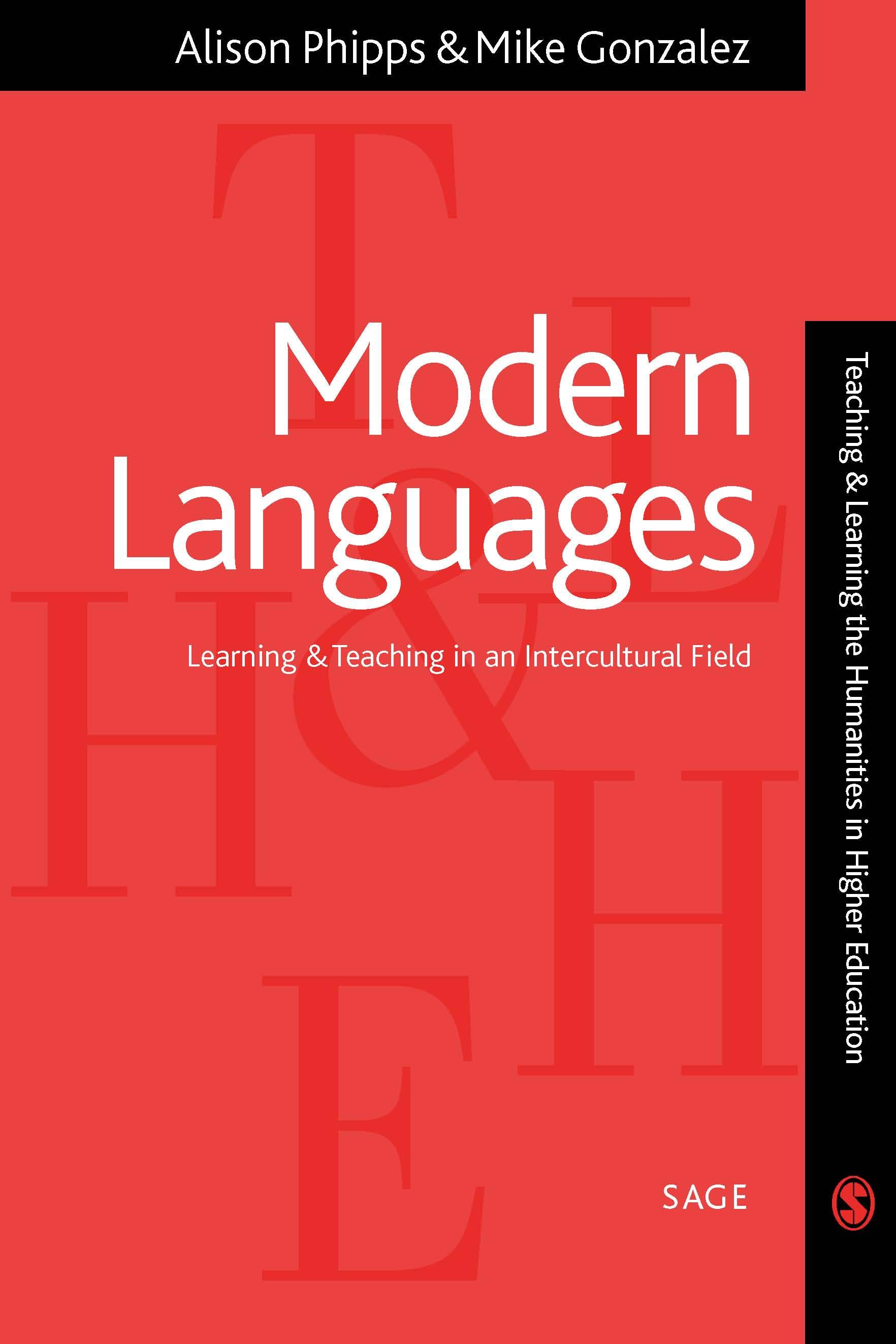
′Every so often a book comes along filled with so much wisdom, critical insight, and sheer humanity that it takes one′s breath away. Modern Languages is such a book. Reclaiming language as both a site of struggle and a crucial sphere of politics, Alison Phipps and Mike Gonzalez make it clear that matters of language lie at the heart of any viable pedagogy in which democracy matters. But not a language(s) drained of critical possibilities, passion, power, or imagination, but language as the context and medium in which meaning is produced, affective investments made, and experiences are given legitimacy. Any educator, parent, student, or citizen of the world who cares about democracy, pedagogy, and the crucial role of modern languages creating the conditions for agency, politics, and, yes, hope should read this book′ - Professor Henry Giroux, Waterbury Chair, Penn State University, USA
′I expect it will become a much-thumbed handbook for teachers in search of inspiration, and I am sure it will be a catalyst to further debate and exploration. But I suspect it may also become a turning point for thinking about modern languages. This book exudes life and hope. It shows a future where languages can thrive because they are an integral and indispensable part of what it means to be human. It is an exhilarating prospect to help to bring that future closer′ - Professor Michael Kelly, Director, Subject Centre for Languages, Linguistics and Area Studies, University of Southampton
′Modern Languages is argumentative in the best sense: it is intellectually ambitious and is making a bold and brave argument of its own. The story is exciting, and offers a radical way of reconceiving teaching and learning in languages. It is written with evident passion and conviction and it seeks to reach out to an audience. The authors come across as committed and even as brilliant teachers. This is a book for its age but yet may have a long shelf-life. It has made me think about modern languages and language teaching and learning in quite new ways′ - Professor Ronald Barnett, Institute of Education, University of London
′This book pushes the traditional field of Modern Languages into new challenges and it crosses intradisciplinary borders between different languages and cultures. It is intrinsically about languaging and about being intercultural. The authors argue that languages are "a social justice issue", give voice to language users in general and to language students in particular and engage into powerful, erudite, reflexive and critical insights. This book portrays language and culture education as a passionate, intelligent and committed undertaking. In sum, it is essential and stimulating reading for those Language and Culture educators, teaching in Modern Language Departments from universities all over the world, who dare′ - Dr Manuela Guilherme, Researcher, Center for Social Studies, Universidade de Coimbra
This accessible book aims to challenge and stimulate all those engaged with teaching modern languages in higher education. It is not a `how to′ book; rather it engages with the complex, often paradoxical position of modern languages today, and offers arguments for, and illustrations of the ways in which teachers of modern languages can position themselves critically in that rapidly changing context. It works with the concepts of languaging and being intercultural, which arise from a rigorous examination of research findings, a challenging critique of current models of work within the discipline and a reflection on existing teaching practices.
Beginning with an examination of the ′crisis′ in modern languages in the U.K. and North America, the authors draw on data and descriptions of learning experiences in the field and position themselves critically within the debates. Key problems for teachers and learners are identified and elaborated through examples of critical incidents which point to generic as well as specific issues and solutions in teaching languages in higher education.
The Teaching & Learning in the Humanities series, edited by Ellie Chambers and Jan Parker, is for beginning and experienced lecturers. It deals with all aspects of teaching individual arts and humanities subjects in higher education. Experienced teachers offer authoritative suggestions on how to become critically reflective about discipline-specific practices.
Before Memmo my notes were scattered across PDFs. Now a workspace pulls everything into one place — I see exactly what's still left to study.
Memmo's summaries are gold before exams. I don't have to re-read 800 pages two weeks before — just the important parts.
The AI chat has saved me the night before an exam more than once. I just keep asking until I get it — no waiting on a study group to reply.
The quizzes hit exactly what I need to know. Memmo tracks what I get stuck on — so I only practice what's worth it.
Flashcards with spaced repetition are magic. Memmo knows when I'm about to forget something and brings it back.
The AI podcasts are my favorite. I listen on my way to school and get a recap without sitting at a computer.

Handbok i kvalitativa metoder
281 kr

Hållbar utveckling: en introduktion för ingenjörer och andra problemlösare
334 kr

Brymans Samhällsvetenskapliga metoder
390 kr

Projektledning
491 kr

Den orättvisa hälsan: om socioekonomiska skillnader i hälsa och livslängd
326 kr

Vetenskapsteori för nybörjare
196 kr

Organizational Leadership
429 kr

På väg mot läraryrket
172 kr

Det sociala livet i skolan: Socialpsykologiska perspektiv
253 kr

Betygsättningens didaktik
151 kr

Personality
402 kr

Studying Leadership
404 kr

Managing Innovation
477 kr

Introduktion till samhällsvetenskaplig metod
347 kr

The Psychology of Sex and Gender
698 kr

Evidens och kunskap för socialt arbete
207 kr

Introduction to Leadership
605 kr