
Before Memmo my notes were scattered across PDFs. Now a workspace pulls everything into one place — I see exactly what's still left to study.
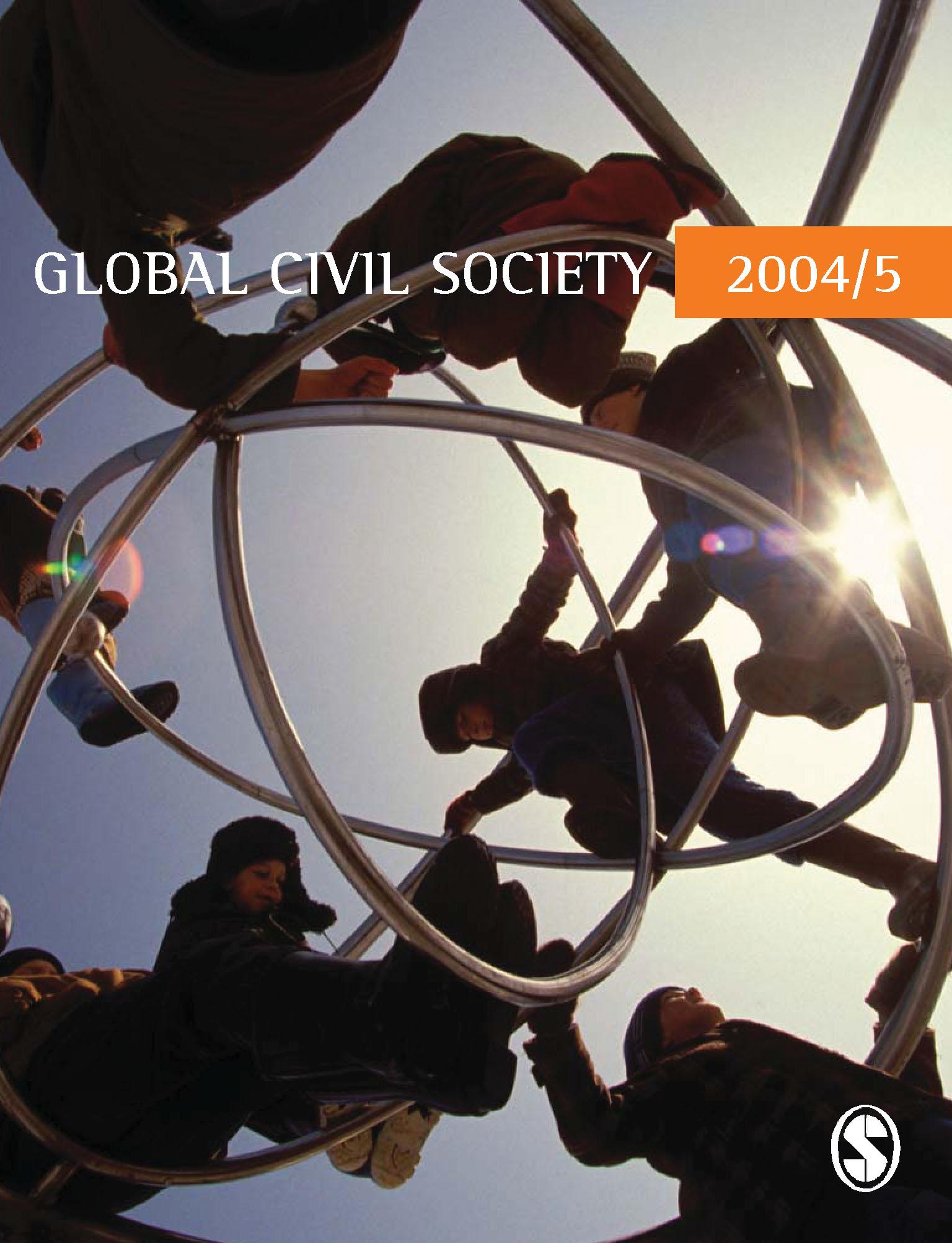
The Global Civil Society Yearbook shows how those perceptions can be shaped by the huge diversity of individuals, movements, NGOs, networks - and the ideas and values they represent - acting across borders and beyond national politics.
Now in its fourth year of publication, the Global Civil Society Yearbook is the standard work on the topic, essential reading for social and political scientists, activists, students, journalists and policy makers.
Global Civil Society 2004/5 adopts an unorthodox approach to major geo-political issues including oil, the Middle East and democracy. Yahia Said examines oil and activism, Mohamed el Said-Sayed explores Middle Eastern perspectives, and Heba Raouf Ezzat outlines a new multicultural approach to global civil society.
The emergence of what Mary Kaldor calls ′a new kind of global politics′ has implications for sovereignty and democracy, which Global Civil Society 2004/5 tackles head-on. Hilary Wainwright identifies the conditions in which global civil society can strengthen and reinvigorate local democracy. In contrast, Kenneth Anderson and David Rieff question global civil society′s claim to represent world opinion, arguing that the hotchpotch of environmental groups, feminist networks and human rights activists are merely undemocratic and unaccountable ′social movement missionaries.′
Global Civil Society 2004-5 includes a wealth of data on globalisation, the rule of law, NGO growth, values and attitudes, governance, civil liberties and a chronology of the myriad protests, conferences and campaigns that are the sinews of global civil society.
"Global Civil Society 2002 was a gripping read. Global Civil Society 2003 was stimulating, informative and authoritative. I am delighted to recommend this series, which fills an important gap in research on globalisation."
Anthony Giddens
"One of the great unreported events of the last decade has been the total explosion of nongovernment organisations in developing countries of the world. While I was shaving the other day, I looked in the mirror and thought, "Wow, I am an NGO!" I have always been interested in this, but I am more interested since I discovered I was one. And that′s why I′d recommend this Yearbook."
Bill Clinton
Before Memmo my notes were scattered across PDFs. Now a workspace pulls everything into one place — I see exactly what's still left to study.
Memmo's summaries are gold before exams. I don't have to re-read 800 pages two weeks before — just the important parts.
The AI chat has saved me the night before an exam more than once. I just keep asking until I get it — no waiting on a study group to reply.
The quizzes hit exactly what I need to know. Memmo tracks what I get stuck on — so I only practice what's worth it.
Flashcards with spaced repetition are magic. Memmo knows when I'm about to forget something and brings it back.
The AI podcasts are my favorite. I listen on my way to school and get a recap without sitting at a computer.

Handbok i kvalitativa metoder
281 kr

Hållbar utveckling: en introduktion för ingenjörer och andra problemlösare
334 kr

Brymans Samhällsvetenskapliga metoder
390 kr

Projektledning
491 kr

Den orättvisa hälsan: om socioekonomiska skillnader i hälsa och livslängd
326 kr

Vetenskapsteori för nybörjare
196 kr

Organizational Leadership
429 kr

På väg mot läraryrket
172 kr

Det sociala livet i skolan: Socialpsykologiska perspektiv
253 kr

Betygsättningens didaktik
151 kr

Personality
402 kr

Studying Leadership
404 kr

Managing Innovation
477 kr

Introduktion till samhällsvetenskaplig metod
347 kr

The Psychology of Sex and Gender
698 kr

Evidens och kunskap för socialt arbete
207 kr

Introduction to Leadership
605 kr