
Before Memmo my notes were scattered across PDFs. Now a workspace pulls everything into one place — I see exactly what's still left to study.
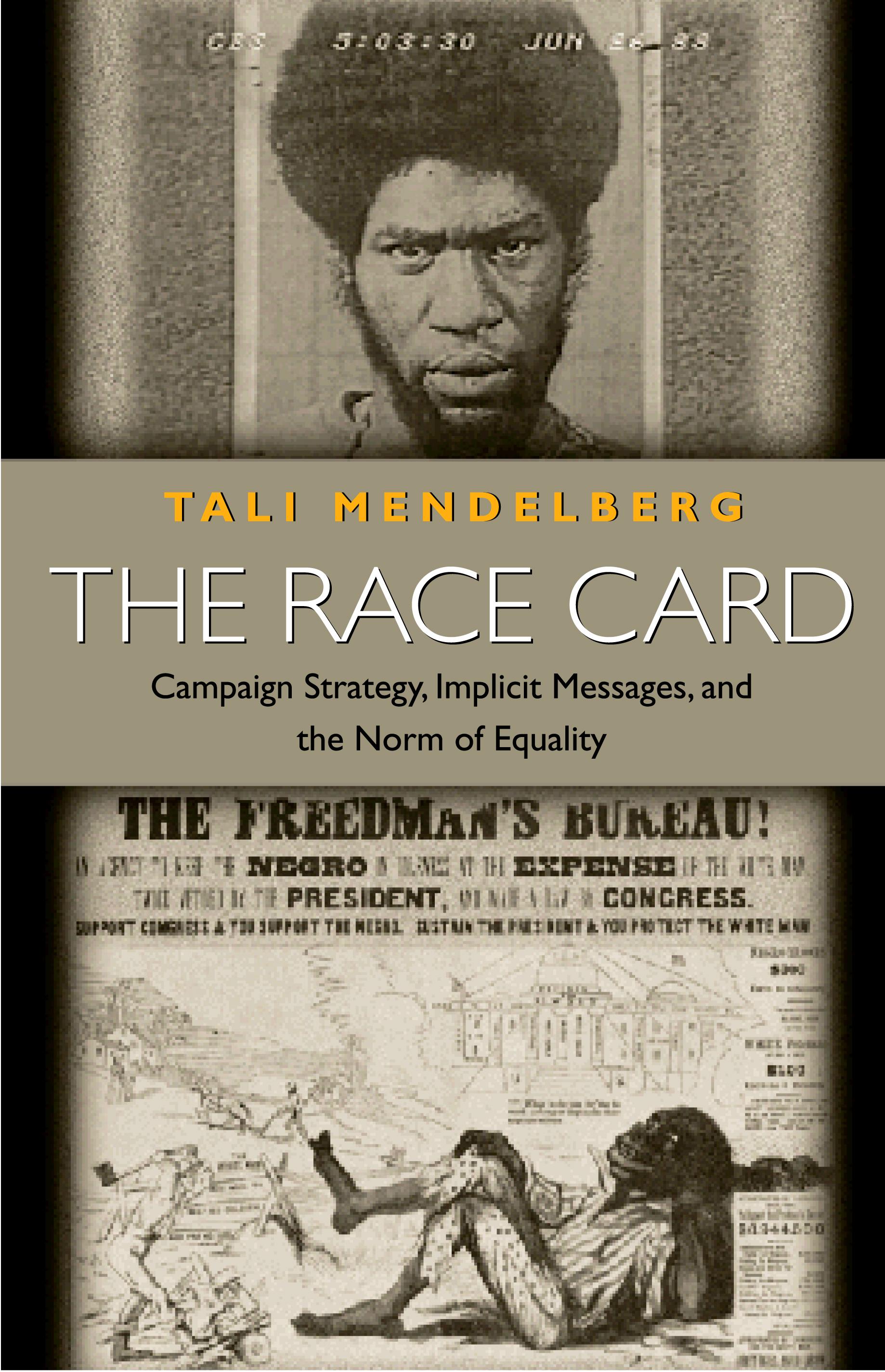
Did George Bush's use of the Willie Horton story during the1988 presidential campaign communicate most effectively when no one noticed its racial meaning? Do politicians routinely evoke racial stereotypes, fears, and resentments without voters' awareness? This controversial, rigorously researched book argues that they do. Tali Mendelberg examines how and when politicians play the race card and then manage to plausibly deny doing so.
In the age of equality, politicians cannot prime race with impunity due to a norm of racial equality that prohibits racist speech. Yet incentives to appeal to white voters remain strong. As a result, politicians often resort to more subtle uses of race to win elections. Mendelberg documents the development of this implicit communication across time and measures its impact on society. Drawing on a wide variety of research--including simulated television news experiments, national surveys, a comprehensive content analysis of campaign coverage, and historical inquiry--she analyzes the causes, dynamics, and consequences of racially loaded political communication. She also identifies similarities and differences among communication about race, gender, and sexual orientation in the United States and between communication about race in the United States and ethnicity in Europe, thereby contributing to a more general theory of politics.
Mendelberg's conclusion is that politicians--including many current state governors--continue to play the race card, using terms like "welfare" and "crime" to manipulate white voters' sentiments without overtly violating egalitarian norms. But she offers some good news: implicitly racial messages lose their appeal, even among their target audience, when their content is exposed.
Before Memmo my notes were scattered across PDFs. Now a workspace pulls everything into one place — I see exactly what's still left to study.
Memmo's summaries are gold before exams. I don't have to re-read 800 pages two weeks before — just the important parts.
The AI chat has saved me the night before an exam more than once. I just keep asking until I get it — no waiting on a study group to reply.
The quizzes hit exactly what I need to know. Memmo tracks what I get stuck on — so I only practice what's worth it.
Flashcards with spaced repetition are magic. Memmo knows when I'm about to forget something and brings it back.
The AI podcasts are my favorite. I listen on my way to school and get a recap without sitting at a computer.

Handbok i kvalitativa metoder
281 kr

Hållbar utveckling: en introduktion för ingenjörer och andra problemlösare
334 kr

Brymans Samhällsvetenskapliga metoder
390 kr

Projektledning
491 kr

Den orättvisa hälsan: om socioekonomiska skillnader i hälsa och livslängd
326 kr

Vetenskapsteori för nybörjare
196 kr

Organizational Leadership
429 kr

På väg mot läraryrket
172 kr

Det sociala livet i skolan: Socialpsykologiska perspektiv
253 kr

Betygsättningens didaktik
151 kr

Personality
402 kr

Studying Leadership
404 kr

Managing Innovation
477 kr

Introduktion till samhällsvetenskaplig metod
347 kr

The Psychology of Sex and Gender
698 kr

Evidens och kunskap för socialt arbete
207 kr

Introduction to Leadership
605 kr