
Before Memmo my notes were scattered across PDFs. Now a workspace pulls everything into one place — I see exactly what's still left to study.
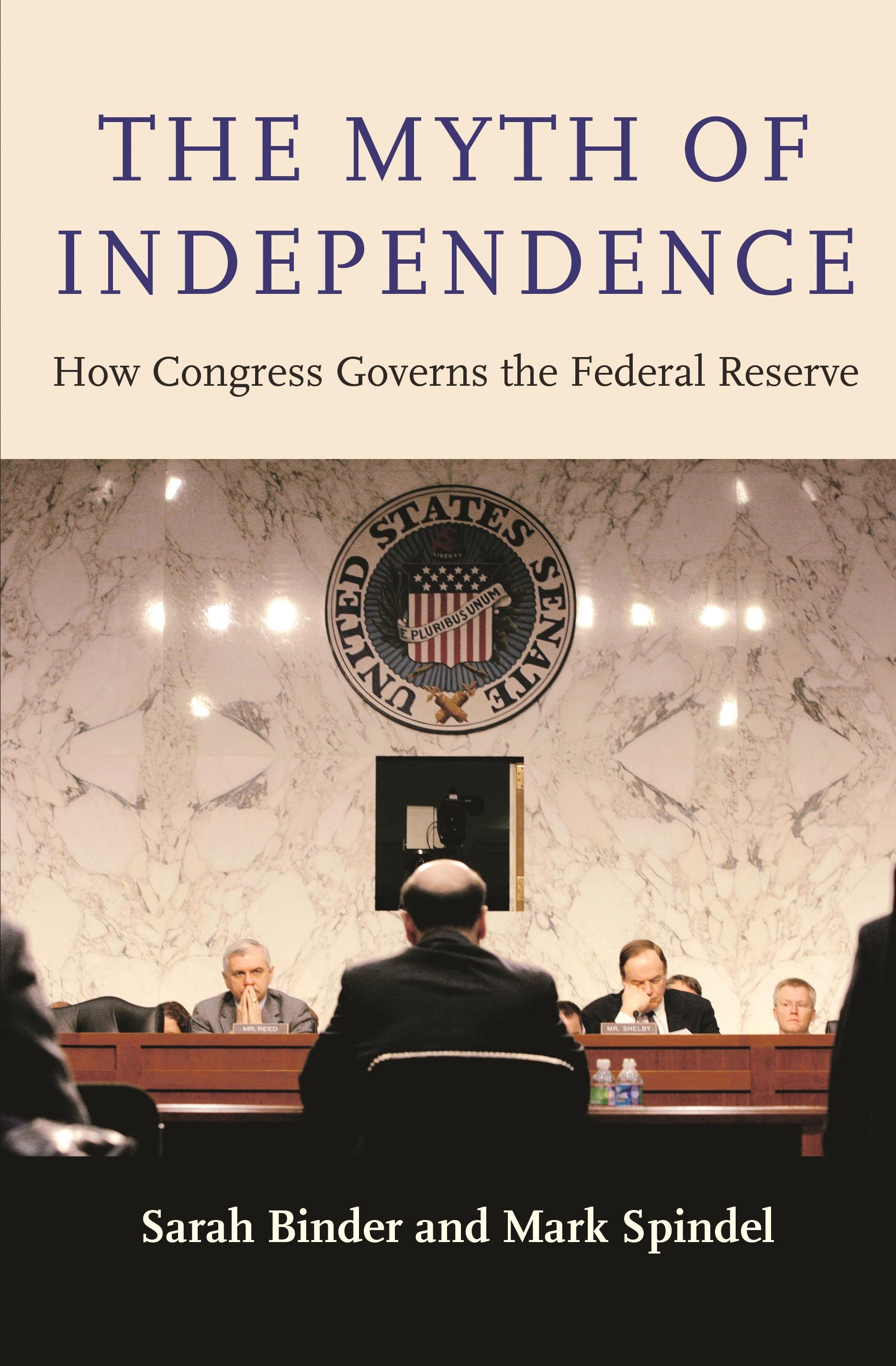
Born out of crisis a century ago, the Federal Reserve has become the most powerful macroeconomic policymaker and financial regulator in the world. The Myth of Independence traces the Fed’s transformation from a weak, secretive, and decentralized institution in 1913 to a remarkably transparent central bank a century later. Offering a unique account of Congress’s role in steering this evolution, Sarah Binder and Mark Spindel explore the Fed’s past, present, and future and challenge the myth of its independence.
Binder and Spindel argue that recurring cycles of crisis, blame, and reform propelled lawmakers to create and revamp the powers and governance of the Fed at critical junctures, including the Panic of 1907, the Great Depression, the postwar Treasury-Fed Accord, the inflationary episode of the 1970s, and the recent financial crisis. Marshaling archival sources, interviews, and statistical analyses, the authors pinpoint political and economic dynamics that shaped interactions between the legislature and the Fed, and that have generated a far stronger central bank than anticipated at its founding. The Fed today retains its unique federal style, diluting the ability of lawmakers and the president to completely centralize control of monetary policy.
In the long wake of the financial crisis, with economic prospects decidedly subpar, partisan rivals in Congress seem poised to continue battling over the Fed’s statutory mandates and the powers given to achieve them. Examining the interdependent relationship between America’s Congress and its central bank, The Myth of Independence presents critical insights about the future of monetary and fiscal policies that drive the nation’s economy.
Before Memmo my notes were scattered across PDFs. Now a workspace pulls everything into one place — I see exactly what's still left to study.
Memmo's summaries are gold before exams. I don't have to re-read 800 pages two weeks before — just the important parts.
The AI chat has saved me the night before an exam more than once. I just keep asking until I get it — no waiting on a study group to reply.
The quizzes hit exactly what I need to know. Memmo tracks what I get stuck on — so I only practice what's worth it.
Flashcards with spaced repetition are magic. Memmo knows when I'm about to forget something and brings it back.
The AI podcasts are my favorite. I listen on my way to school and get a recap without sitting at a computer.

Handbok i kvalitativa metoder
281 kr

Hållbar utveckling: en introduktion för ingenjörer och andra problemlösare
334 kr

Brymans Samhällsvetenskapliga metoder
390 kr

Projektledning
491 kr

Den orättvisa hälsan: om socioekonomiska skillnader i hälsa och livslängd
326 kr

Vetenskapsteori för nybörjare
196 kr

Organizational Leadership
429 kr

På väg mot läraryrket
172 kr

Det sociala livet i skolan: Socialpsykologiska perspektiv
253 kr

Betygsättningens didaktik
151 kr

Personality
402 kr

Studying Leadership
404 kr

Managing Innovation
477 kr

Introduktion till samhällsvetenskaplig metod
347 kr

The Psychology of Sex and Gender
698 kr

Evidens och kunskap för socialt arbete
207 kr

Introduction to Leadership
605 kr