
Before Memmo my notes were scattered across PDFs. Now a workspace pulls everything into one place — I see exactly what's still left to study.
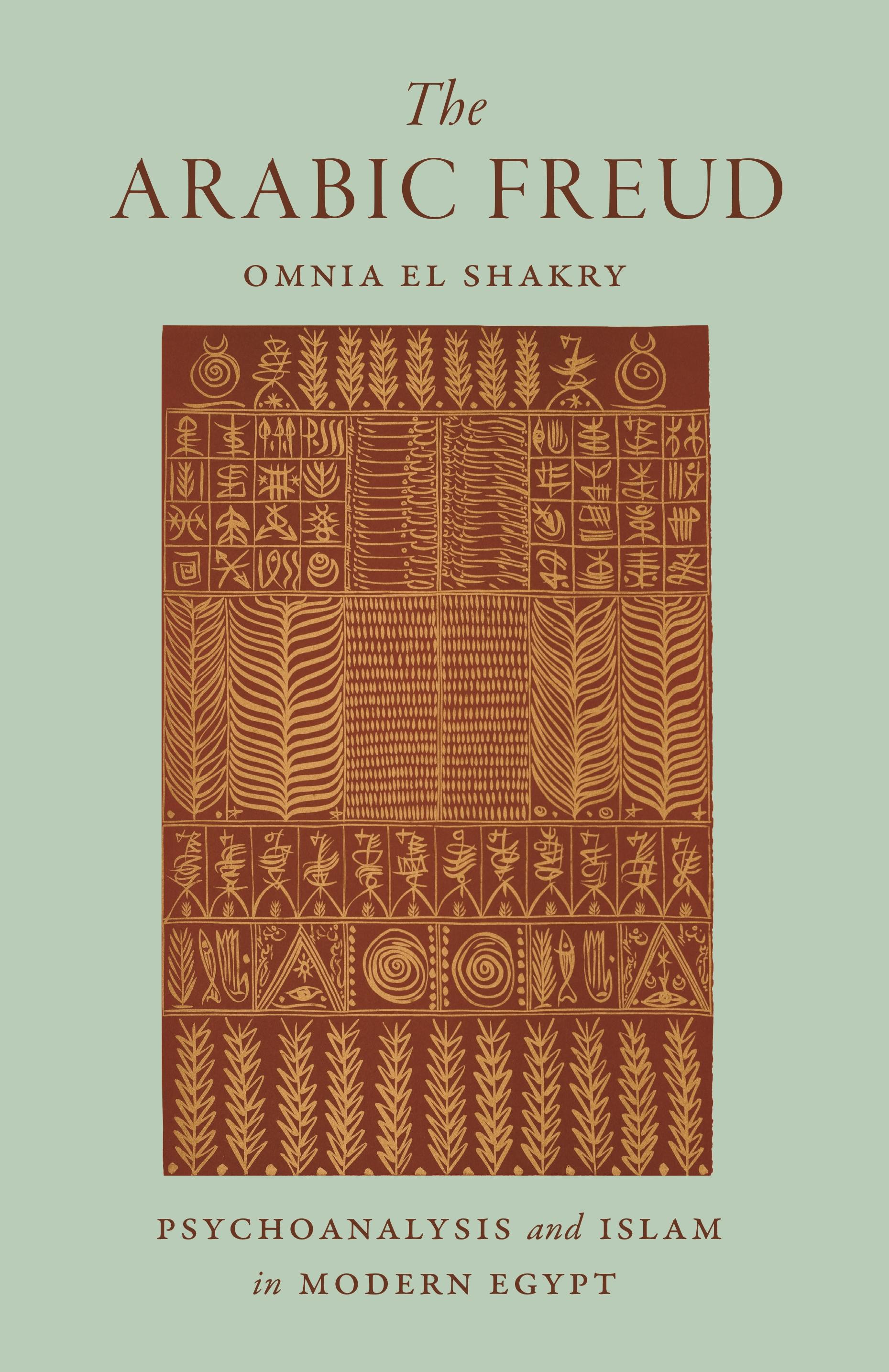
The first in-depth look at how postwar thinkers in Egypt mapped the intersections between Islamic discourses and psychoanalytic thought
In 1945, psychologist Yusuf Murad introduced an Arabic term borrowed from the medieval Sufi philosopher and mystic Ibn ‘Arabi—al-la-shu‘ur—as a translation for Sigmund Freud’s concept of the unconscious. By the late 1950s, Freud’s Interpretation of Dreams had been translated into Arabic for an eager Egyptian public. In The Arabic Freud, Omnia El Shakry challenges the notion of a strict divide between psychoanalysis and Islam by tracing how postwar thinkers in Egypt blended psychoanalytic theories with concepts from classical Islamic thought in a creative encounter of ethical engagement.
Drawing on scholarly writings as well as popular literature on self-healing, El Shakry provides the first in-depth examination of psychoanalysis in Egypt and reveals how a new science of psychology—or “science of the soul,” as it came to be called—was inextricably linked to Islam and mysticism. She explores how Freudian ideas of the unconscious were crucial to the formation of modern discourses of subjectivity in areas as diverse as psychology, Islamic philosophy, and the law. Founding figures of Egyptian psychoanalysis, she shows, debated the temporality of the psyche, mystical states, the sexual drive, and the Oedipus complex, while offering startling insights into the nature of psychic life, ethics, and eros.
This provocative and insightful book invites us to rethink the relationship between psychoanalysis and religion in the modern era. Mapping the points of intersection between Islamic discourses and psychoanalytic thought, it illustrates how the Arabic Freud, like psychoanalysis itself, was elaborated across the space of human difference.
Before Memmo my notes were scattered across PDFs. Now a workspace pulls everything into one place — I see exactly what's still left to study.
Memmo's summaries are gold before exams. I don't have to re-read 800 pages two weeks before — just the important parts.
The AI chat has saved me the night before an exam more than once. I just keep asking until I get it — no waiting on a study group to reply.
The quizzes hit exactly what I need to know. Memmo tracks what I get stuck on — so I only practice what's worth it.
Flashcards with spaced repetition are magic. Memmo knows when I'm about to forget something and brings it back.
The AI podcasts are my favorite. I listen on my way to school and get a recap without sitting at a computer.

Handbok i kvalitativa metoder
281 kr

Hållbar utveckling: en introduktion för ingenjörer och andra problemlösare
334 kr

Brymans Samhällsvetenskapliga metoder
390 kr

Projektledning
491 kr

Den orättvisa hälsan: om socioekonomiska skillnader i hälsa och livslängd
326 kr

Organizational Leadership
429 kr

Vetenskapsteori för nybörjare
196 kr

På väg mot läraryrket
172 kr

Det sociala livet i skolan: Socialpsykologiska perspektiv
253 kr

Betygsättningens didaktik
151 kr

Personality
402 kr

Studying Leadership
404 kr

Managing Innovation
477 kr

Introduktion till samhällsvetenskaplig metod
347 kr

The Psychology of Sex and Gender
698 kr

Evidens och kunskap för socialt arbete
207 kr

Introduction to Leadership
605 kr