
Before Memmo my notes were scattered across PDFs. Now a workspace pulls everything into one place — I see exactly what's still left to study.
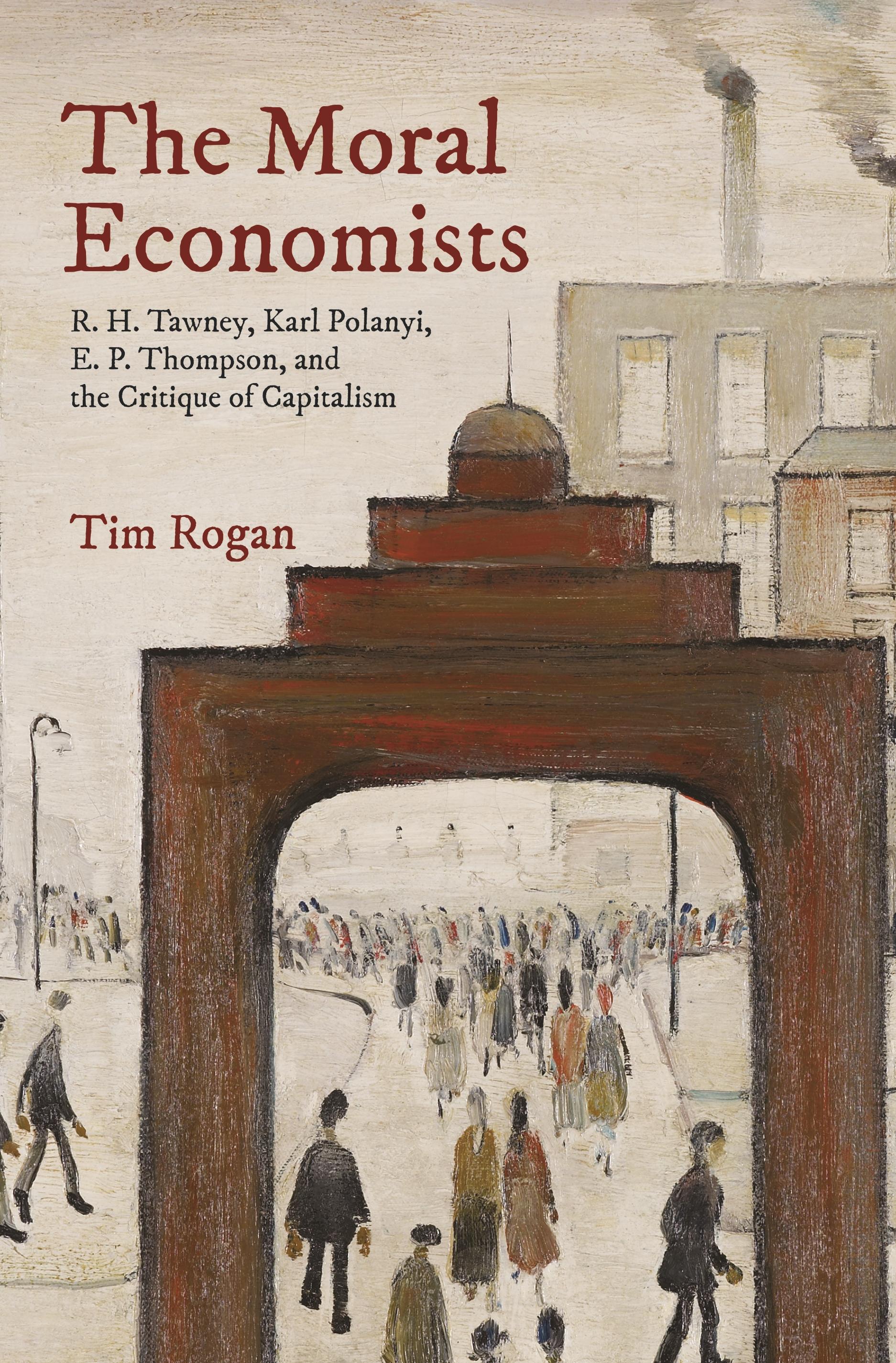
A fresh look at how three important twentieth-century British thinkers viewed capitalism through a moral rather than material lens
What’s wrong with capitalism? Answers to that question today focus on material inequality. Led by economists and conducted in utilitarian terms, the critique of capitalism in the twenty-first century is primarily concerned with disparities in income and wealth. It was not always so. The Moral Economists reconstructs another critical tradition, developed across the twentieth century in Britain, in which material deprivation was less important than moral or spiritual desolation.
Tim Rogan focuses on three of the twentieth century’s most influential critics of capitalism—R. H. Tawney, Karl Polanyi, and E. P. Thompson. Making arguments about the relationships between economics and ethics in modernity, their works commanded wide readerships, shaped research agendas, and influenced public opinion. Rejecting the social philosophy of laissez-faire but fearing authoritarianism, these writers sought out forms of social solidarity closer than individualism admitted but freer than collectivism allowed. They discovered such solidarities while teaching economics, history, and literature to workers in the north of England and elsewhere. They wrote histories of capitalism to make these solidarities articulate. They used makeshift languages of “tradition” and “custom” to describe them until Thompson patented the idea of the “moral economy.” Their program began as a way of theorizing everything economics left out, but in challenging utilitarian orthodoxy in economics from the outside, they anticipated the work of later innovators inside economics.
Examining the moral cornerstones of a twentieth-century critique of capitalism, The Moral Economists explains why this critique fell into disuse, and how it might be reformulated for the twenty-first century.
Before Memmo my notes were scattered across PDFs. Now a workspace pulls everything into one place — I see exactly what's still left to study.
Memmo's summaries are gold before exams. I don't have to re-read 800 pages two weeks before — just the important parts.
The AI chat has saved me the night before an exam more than once. I just keep asking until I get it — no waiting on a study group to reply.
The quizzes hit exactly what I need to know. Memmo tracks what I get stuck on — so I only practice what's worth it.
Flashcards with spaced repetition are magic. Memmo knows when I'm about to forget something and brings it back.
The AI podcasts are my favorite. I listen on my way to school and get a recap without sitting at a computer.

Handbok i kvalitativa metoder
281 kr

Hållbar utveckling: en introduktion för ingenjörer och andra problemlösare
334 kr

Brymans Samhällsvetenskapliga metoder
390 kr

Projektledning
491 kr

Den orättvisa hälsan: om socioekonomiska skillnader i hälsa och livslängd
326 kr

Vetenskapsteori för nybörjare
196 kr

Organizational Leadership
429 kr

På väg mot läraryrket
172 kr

Det sociala livet i skolan: Socialpsykologiska perspektiv
253 kr

Betygsättningens didaktik
151 kr

Personality
402 kr

Studying Leadership
404 kr

Managing Innovation
477 kr

Introduktion till samhällsvetenskaplig metod
347 kr

The Psychology of Sex and Gender
698 kr

Evidens och kunskap för socialt arbete
207 kr

Introduction to Leadership
605 kr