
Before Memmo my notes were scattered across PDFs. Now a workspace pulls everything into one place — I see exactly what's still left to study.
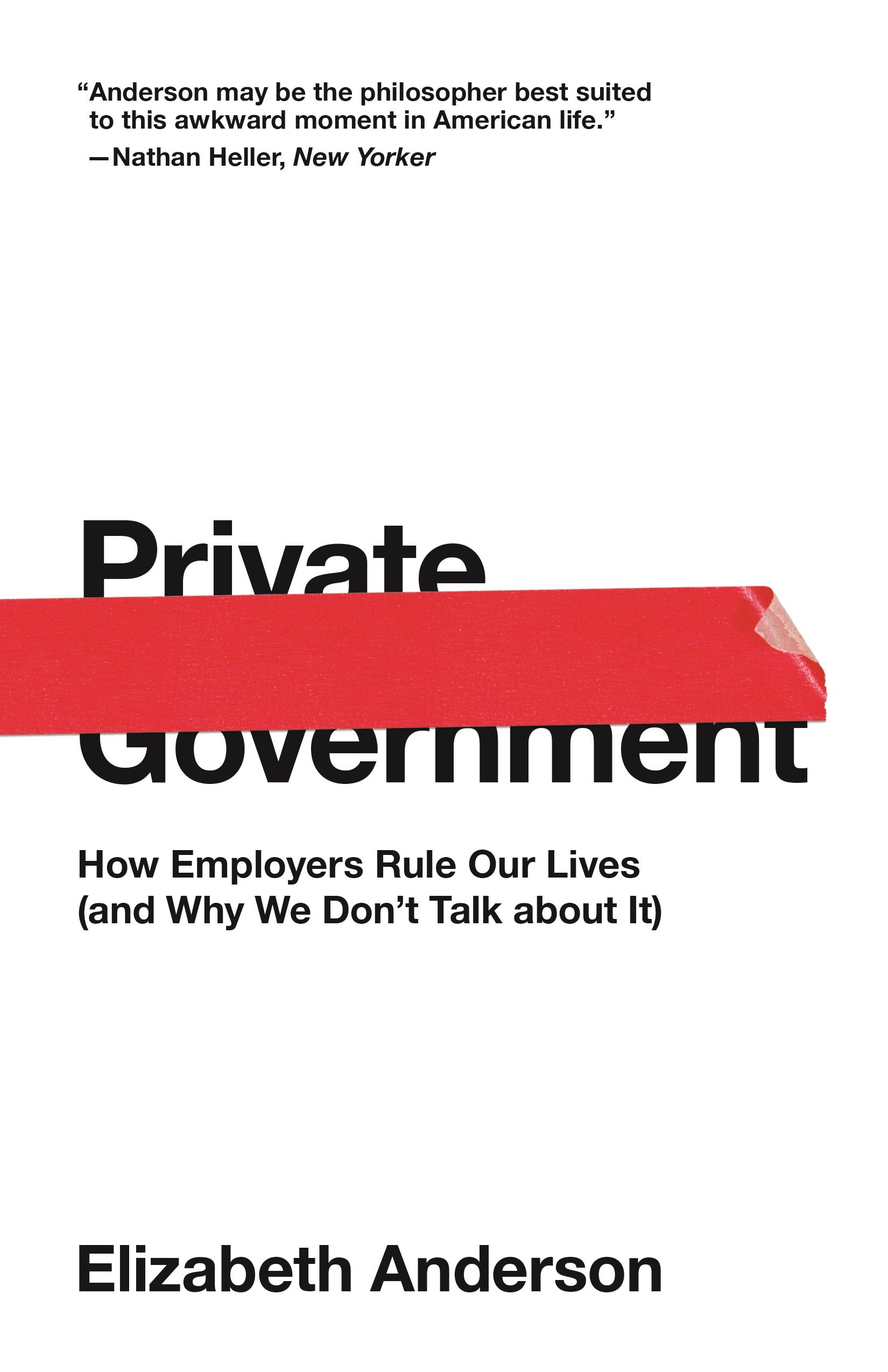
Why our workplaces are authoritarian private governments—and why we can't see it
One in four American workers says their workplace is a "dictatorship." Yet that number probably would be even higher if we recognized most employers for what they are—private governments with sweeping authoritarian power over our lives, on duty and off. We normally think of government as something only the state does, yet many of us are governed far more—and far more obtrusively—by the private government of the workplace. In this provocative and compelling book, Elizabeth Anderson argues that the failure to see this stems from long-standing confusions. These confusions explain why, despite all evidence to the contrary, we still talk as if free markets make workers free—and why so many employers advocate less government even while they act as dictators in their businesses.
In many workplaces, employers minutely regulate workers' speech, clothing, and manners, leaving them with little privacy and few other rights. And employers often extend their authority to workers' off-duty lives. Workers can be fired for their political speech, recreational activities, diet, and almost anything else employers care to govern. Yet we continue to talk as if early advocates of market society—from John Locke and Adam Smith to Thomas Paine and Abraham Lincoln—were right when they argued that it would free workers from oppressive authorities. That dream was shattered by the Industrial Revolution, but the myth endures.
Private Government offers a better way to talk about the workplace, opening up space for discovering how workers can enjoy real freedom.
Based on the prestigious Tanner Lectures delivered at Princeton University's Center for Human Values, Private Government is edited and introduced by Stephen Macedo and includes commentary by cultural critic David Bromwich, economist Tyler Cowen, historian Ann Hughes, and philosopher Niko Kolodny.
Before Memmo my notes were scattered across PDFs. Now a workspace pulls everything into one place — I see exactly what's still left to study.
Memmo's summaries are gold before exams. I don't have to re-read 800 pages two weeks before — just the important parts.
The AI chat has saved me the night before an exam more than once. I just keep asking until I get it — no waiting on a study group to reply.
The quizzes hit exactly what I need to know. Memmo tracks what I get stuck on — so I only practice what's worth it.
Flashcards with spaced repetition are magic. Memmo knows when I'm about to forget something and brings it back.
The AI podcasts are my favorite. I listen on my way to school and get a recap without sitting at a computer.

Handbok i kvalitativa metoder
281 kr

Hållbar utveckling: en introduktion för ingenjörer och andra problemlösare
334 kr

Brymans Samhällsvetenskapliga metoder
390 kr

Projektledning
491 kr

Den orättvisa hälsan: om socioekonomiska skillnader i hälsa och livslängd
326 kr

Vetenskapsteori för nybörjare
196 kr

Organizational Leadership
429 kr

På väg mot läraryrket
172 kr

Det sociala livet i skolan: Socialpsykologiska perspektiv
253 kr

Betygsättningens didaktik
151 kr

Personality
402 kr

Studying Leadership
404 kr

Managing Innovation
477 kr

Introduktion till samhällsvetenskaplig metod
347 kr

The Psychology of Sex and Gender
698 kr

Evidens och kunskap för socialt arbete
207 kr

Introduction to Leadership
605 kr