
Before Memmo my notes were scattered across PDFs. Now a workspace pulls everything into one place — I see exactly what's still left to study.
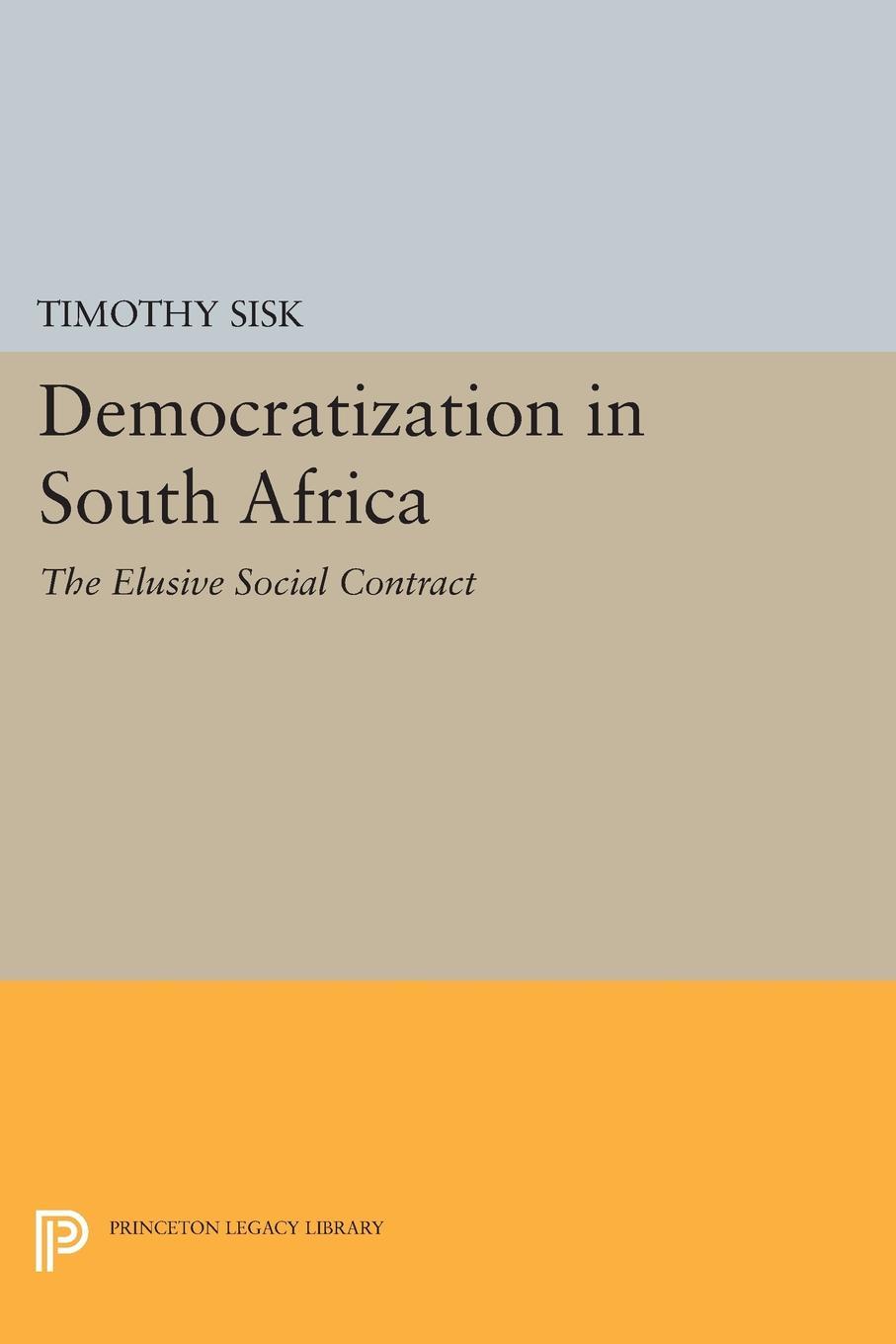
Timothy Sisk presents a new way of conceiving the transition to democracy in South Africa. Unlike authors such as Horowitz and Lijphart, who have sought to prescribe an ideal set of post-apartheid political institutions, Sisk asks what kinds of institutions show signs of actually emerging, given recent history and present realities. He treats the problem of constructing a democratic post-apartheid society in South Africa as part of a larger condition common to societies deeply divided by ethnic, religious, racial, or national discord. Though its profound cleavages of race and class make it a "least likely" candidate for conflict resolution through democratization, Sisk argues that the centripetal pull on moderate politicians of all parties was greater than the seemingly natural polarizing trend in a divided society. This centripetal pull led to the adoption of an interim constitution in 1993 after protracted negotiations. An American Fulbright scholar sent to South Africa after the end of the 21-year rupture of official scholarly exchanges between the two countries, Sisk analyzes the changes in the strategic calculations of the white minority government, the black liberation movement, and other parties over the course of negotiations since 1990. He concludes that intermittent upsurges of violence often reinforced, rather than reduced, the incentives of leaders on both sides to negotiate a settlement that would avoid mutually damaging outcomes. Drawing on extensive interviews with political figures, as well as other primary and secondary sources, Sisk finds reason for hope that a democratic social contract can evolve, balancing majority rule with minority representation and guaranteeing equal economic opportunity and social justice.
Originally published in 1994.
The Princeton Legacy Library uses the latest print-on-demand technology to again make available previously out-of-print books from the distinguished backlist of Princeton University Press. These editions preserve the original texts of these important books while presenting them in durable paperback and hardcover editions. The goal of the Princeton Legacy Library is to vastly increase access to the rich scholarly heritage found in the thousands of books published by Princeton University Press since its founding in 1905.
Before Memmo my notes were scattered across PDFs. Now a workspace pulls everything into one place — I see exactly what's still left to study.
Memmo's summaries are gold before exams. I don't have to re-read 800 pages two weeks before — just the important parts.
The AI chat has saved me the night before an exam more than once. I just keep asking until I get it — no waiting on a study group to reply.
The quizzes hit exactly what I need to know. Memmo tracks what I get stuck on — so I only practice what's worth it.
Flashcards with spaced repetition are magic. Memmo knows when I'm about to forget something and brings it back.
The AI podcasts are my favorite. I listen on my way to school and get a recap without sitting at a computer.

Handbok i kvalitativa metoder
281 kr

Hållbar utveckling: en introduktion för ingenjörer och andra problemlösare
334 kr

Brymans Samhällsvetenskapliga metoder
390 kr

Projektledning
491 kr

Den orättvisa hälsan: om socioekonomiska skillnader i hälsa och livslängd
326 kr

Vetenskapsteori för nybörjare
196 kr

Organizational Leadership
429 kr

På väg mot läraryrket
172 kr

Det sociala livet i skolan: Socialpsykologiska perspektiv
253 kr

Betygsättningens didaktik
151 kr

Personality
402 kr

Studying Leadership
404 kr

Managing Innovation
477 kr

Introduktion till samhällsvetenskaplig metod
347 kr

The Psychology of Sex and Gender
698 kr

Evidens och kunskap för socialt arbete
207 kr

Introduction to Leadership
605 kr