
Before Memmo my notes were scattered across PDFs. Now a workspace pulls everything into one place — I see exactly what's still left to study.
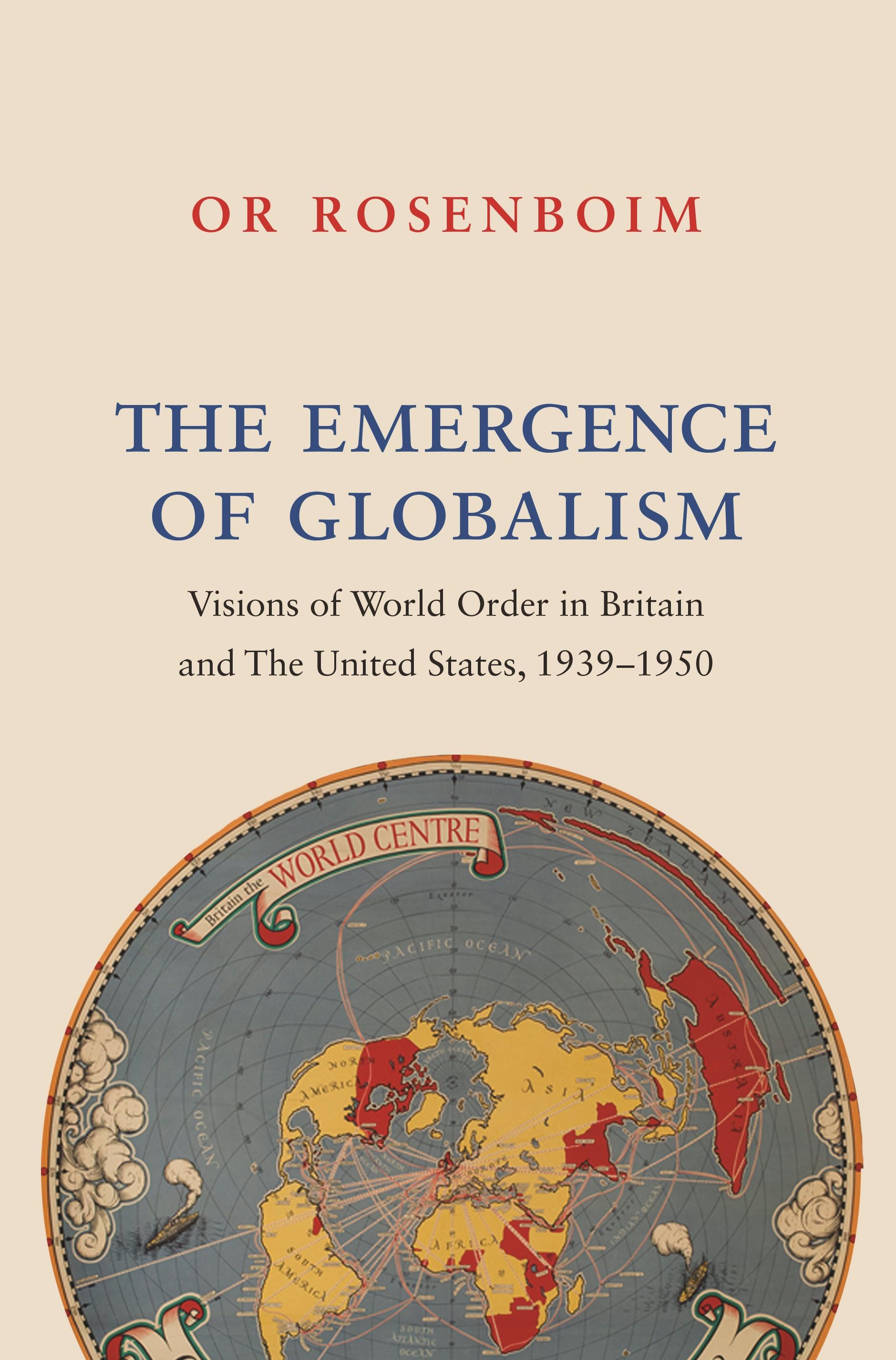
How competing visions of world order in the 1940s gave rise to the modern concept of globalism
During and after the Second World War, public intellectuals in Britain and the United States grappled with concerns about the future of democracy, the prospects of liberty, and the decline of the imperial system. Without using the term "globalization," they identified a shift toward technological, economic, cultural, and political interconnectedness and developed a "globalist" ideology to reflect this new postwar reality. The Emergence of Globalism examines the competing visions of world order that shaped these debates and led to the development of globalism as a modern political concept.
Shedding critical light on this neglected chapter in the history of political thought, Or Rosenboim describes how a transnational network of globalist thinkers emerged from the traumas of war and expatriation in the 1940s and how their ideas drew widely from political philosophy, geopolitics, economics, imperial thought, constitutional law, theology, and philosophy of science. She presents compelling portraits of Raymond Aron, Owen Lattimore, Lionel Robbins, Barbara Wootton, Friedrich Hayek, Lionel Curtis, Richard McKeon, Michael Polanyi, Lewis Mumford, Jacques Maritain, Reinhold Niebuhr, H. G. Wells, and others. Rosenboim shows how the globalist debate they embarked on sought to balance the tensions between a growing recognition of pluralism on the one hand and an appreciation of the unity of humankind on the other.
An engaging look at the ideas that have shaped today's world, The Emergence of Globalism is a major work of intellectual history that is certain to fundamentally transform our understanding of the globalist ideal and its origins.
Before Memmo my notes were scattered across PDFs. Now a workspace pulls everything into one place — I see exactly what's still left to study.
Memmo's summaries are gold before exams. I don't have to re-read 800 pages two weeks before — just the important parts.
The AI chat has saved me the night before an exam more than once. I just keep asking until I get it — no waiting on a study group to reply.
The quizzes hit exactly what I need to know. Memmo tracks what I get stuck on — so I only practice what's worth it.
Flashcards with spaced repetition are magic. Memmo knows when I'm about to forget something and brings it back.
The AI podcasts are my favorite. I listen on my way to school and get a recap without sitting at a computer.

Handbok i kvalitativa metoder
281 kr

Hållbar utveckling: en introduktion för ingenjörer och andra problemlösare
334 kr

Brymans Samhällsvetenskapliga metoder
390 kr

Projektledning
491 kr

Den orättvisa hälsan: om socioekonomiska skillnader i hälsa och livslängd
326 kr

Vetenskapsteori för nybörjare
196 kr

Organizational Leadership
429 kr

På väg mot läraryrket
172 kr

Det sociala livet i skolan: Socialpsykologiska perspektiv
253 kr

Betygsättningens didaktik
151 kr

Personality
402 kr

Studying Leadership
404 kr

Managing Innovation
477 kr

Introduktion till samhällsvetenskaplig metod
347 kr

The Psychology of Sex and Gender
698 kr

Evidens och kunskap för socialt arbete
207 kr

Introduction to Leadership
605 kr