
Before Memmo my notes were scattered across PDFs. Now a workspace pulls everything into one place — I see exactly what's still left to study.
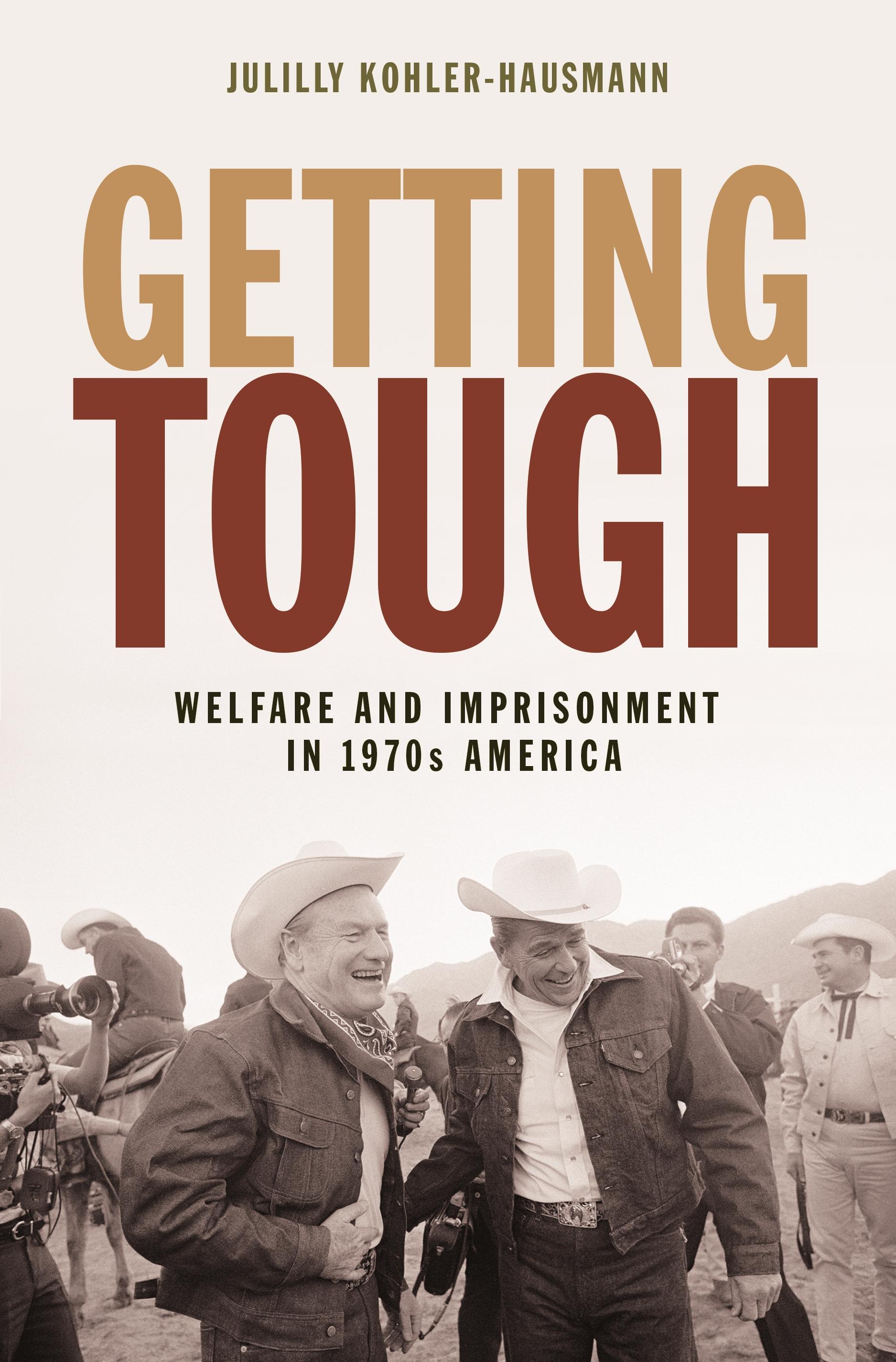
The politics and policies that led to America's expansion of the penal system and reduction of welfare programs
In 1970s America, politicians began "getting tough" on drugs, crime, and welfare. These campaigns helped expand the nation's penal system, discredit welfare programs, and cast blame for the era's social upheaval on racialized deviants that the state was not accountable to serve or represent. Getting Tough sheds light on how this unprecedented growth of the penal system and the evisceration of the nation's welfare programs developed hand in hand. Julilly Kohler-Hausmann shows that these historical events were animated by struggles over how to interpret and respond to the inequality and disorder that crested during this period.
When social movements and the slowing economy destabilized the U.S. welfare state, politicians reacted by repudiating the commitment to individual rehabilitation that had governed penal and social programs for decades. In its place, they championed strategies of punishment, surveillance, and containment. The architects of these tough strategies insisted they were necessary, given the failure of liberal social programs and the supposed pathological culture within poor African American and Latino communities. Kohler-Hausmann rejects this explanation and describes how the spectacle of enacting punitive policies convinced many Americans that social investment was counterproductive and the "underclass" could be managed only through coercion and force.
Getting Tough illuminates this narrative through three legislative cases: New York's adoption of the 1973 Rockefeller drug laws, Illinois's and California's attempts to reform welfare through criminalization and work mandates, and California's passing of a 1976 sentencing law that abandoned rehabilitation as an aim of incarceration. Spanning diverse institutions and weaving together the perspectives of opponents, supporters, and targets of punitive policies, Getting Tough offers new interpretations of dramatic transformations in the modern American state.
Before Memmo my notes were scattered across PDFs. Now a workspace pulls everything into one place — I see exactly what's still left to study.
Memmo's summaries are gold before exams. I don't have to re-read 800 pages two weeks before — just the important parts.
The AI chat has saved me the night before an exam more than once. I just keep asking until I get it — no waiting on a study group to reply.
The quizzes hit exactly what I need to know. Memmo tracks what I get stuck on — so I only practice what's worth it.
Flashcards with spaced repetition are magic. Memmo knows when I'm about to forget something and brings it back.
The AI podcasts are my favorite. I listen on my way to school and get a recap without sitting at a computer.

Handbok i kvalitativa metoder
281 kr

Hållbar utveckling: en introduktion för ingenjörer och andra problemlösare
334 kr

Brymans Samhällsvetenskapliga metoder
390 kr

Projektledning
491 kr

Den orättvisa hälsan: om socioekonomiska skillnader i hälsa och livslängd
326 kr

Organizational Leadership
429 kr

Vetenskapsteori för nybörjare
196 kr

På väg mot läraryrket
172 kr

Det sociala livet i skolan: Socialpsykologiska perspektiv
253 kr

Betygsättningens didaktik
151 kr

Personality
402 kr

Studying Leadership
404 kr

Managing Innovation
477 kr

Introduktion till samhällsvetenskaplig metod
347 kr

The Psychology of Sex and Gender
698 kr

Evidens och kunskap för socialt arbete
207 kr

Introduction to Leadership
605 kr