
Before Memmo my notes were scattered across PDFs. Now a workspace pulls everything into one place — I see exactly what's still left to study.
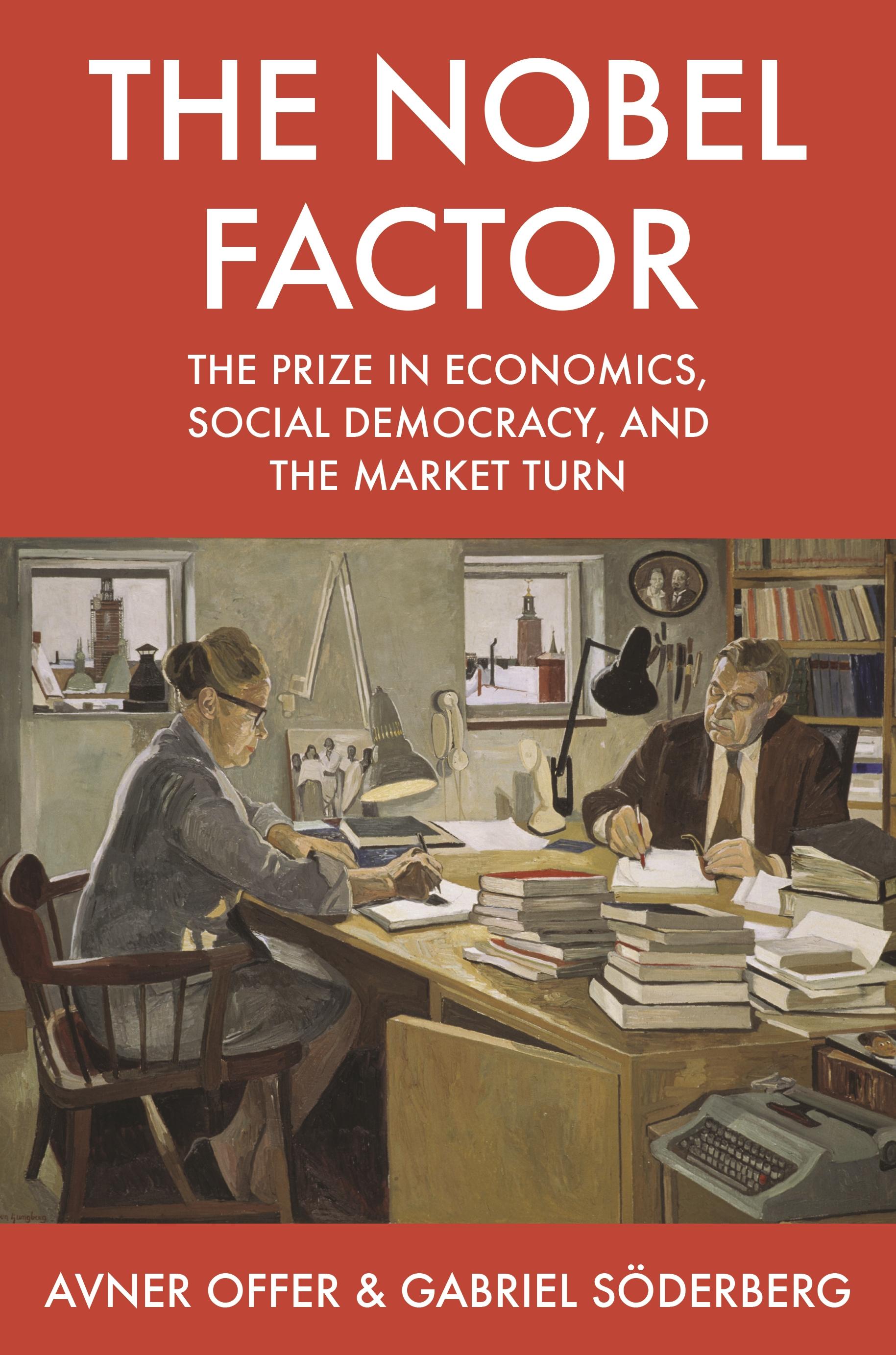
How the creation of the Nobel Prize in Economics changed the economics profession, Sweden, and the world
Economic theory may be speculative, but its impact is powerful and real. Since the 1970s, it has been closely associated with a sweeping change around the world—the "market turn." This is what Avner Offer and Gabriel Söderberg call the rise of market liberalism, a movement that, seeking to replace social democracy, holds up buying and selling as the norm for human relations and society. Our confidence in markets comes from economics, and our confidence in economics is underpinned by the Nobel Prize in Economics, which was first awarded in 1969. Was it a coincidence that the market turn and the prize began at the same time? The Nobel Factor, the first book to describe the origins and power of the most important prize in economics, explores this and related questions by examining the history of the prize, the history of economics since the prize began, and the simultaneous struggle between market liberals and social democrats in Sweden, Europe, and the United States.
The Nobel Factor tells how the prize, created by the Swedish central bank, emerged from a conflict between central bank orthodoxy and social democracy. The aim was to use the halo of the Nobel brand to enhance central bank authority and the prestige of market-friendly economics, in order to influence the future of Sweden and the rest of the developed world. And this strategy has worked, with sometimes disastrous results for societies striving to cope with the requirements of economic theory and deregulated markets.
Drawing on previously untapped Swedish national bank archives and providing a unique analysis of the sway of prizewinners, The Nobel Factor offers an unprecedented account of the real-world consequences of economics—and its greatest prize.
Before Memmo my notes were scattered across PDFs. Now a workspace pulls everything into one place — I see exactly what's still left to study.
Memmo's summaries are gold before exams. I don't have to re-read 800 pages two weeks before — just the important parts.
The AI chat has saved me the night before an exam more than once. I just keep asking until I get it — no waiting on a study group to reply.
The quizzes hit exactly what I need to know. Memmo tracks what I get stuck on — so I only practice what's worth it.
Flashcards with spaced repetition are magic. Memmo knows when I'm about to forget something and brings it back.
The AI podcasts are my favorite. I listen on my way to school and get a recap without sitting at a computer.

Handbok i kvalitativa metoder
281 kr

Hållbar utveckling: en introduktion för ingenjörer och andra problemlösare
334 kr

Brymans Samhällsvetenskapliga metoder
390 kr

Projektledning
491 kr

Den orättvisa hälsan: om socioekonomiska skillnader i hälsa och livslängd
326 kr

Organizational Leadership
429 kr

Vetenskapsteori för nybörjare
196 kr

På väg mot läraryrket
172 kr

Det sociala livet i skolan: Socialpsykologiska perspektiv
253 kr

Betygsättningens didaktik
151 kr

Personality
402 kr

Studying Leadership
404 kr

Managing Innovation
477 kr

Introduktion till samhällsvetenskaplig metod
347 kr

The Psychology of Sex and Gender
698 kr

Evidens och kunskap för socialt arbete
207 kr

Introduction to Leadership
605 kr