
Before Memmo my notes were scattered across PDFs. Now a workspace pulls everything into one place — I see exactly what's still left to study.
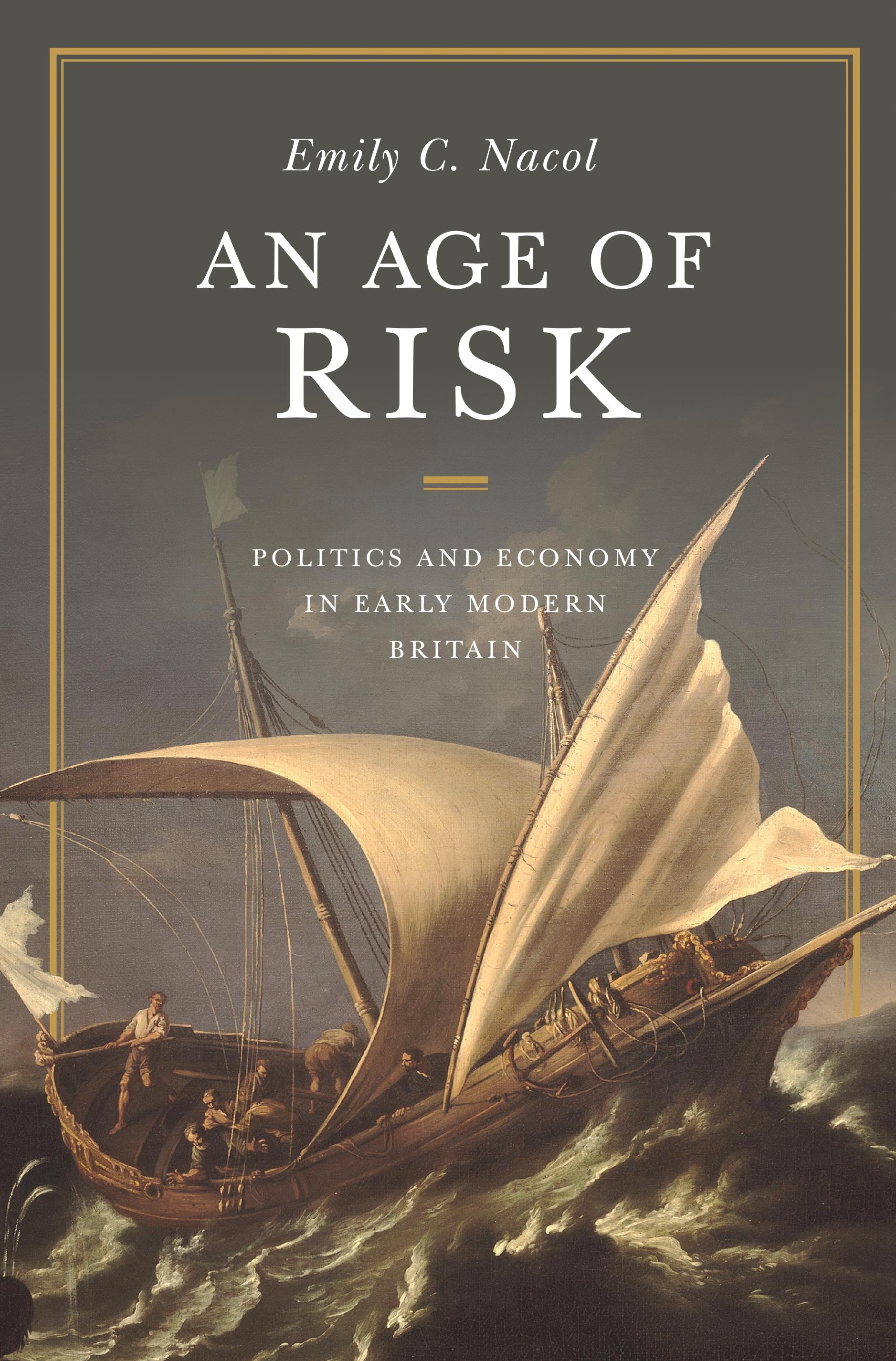
In An Age of Risk, Emily Nacol shows that risk, now treated as a permanent feature of our lives, did not always govern understandings of the future. Focusing on the epistemological, political, and economic writings of Thomas Hobbes, John Locke, David Hume, and Adam Smith, Nacol explains that in seventeenth- and eighteenth-century Britain, political and economic thinkers reimagined the future as a terrain of risk, characterized by probabilistic calculation, prediction, and control.
In these early modern sources, Nacol contends, we see three crucial developments in thought on risk and politics. While early modern thinkers differentiated uncertainty about the future from probabilistic calculations of risk, they remained attentive to the ways uncertainty and risk remained in a conceptual tangle, a problem that constrained good decision making. They developed sophisticated theories of trust and credit as crucial background conditions for prudent risk-taking, and offered complex depictions of the relationships and behaviors that would make risk-taking more palatable. They also developed two narratives that persist in subsequent accounts of risk—risk as a threat to security, and risk as an opportunity for profit. Looking at how these narratives are entwined in early modern thought, Nacol locates the origins of our own ambivalence about risk-taking. By the end of the eighteenth century, she argues, a new type of political actor would emerge from this ambivalence, one who approached risk with fear rather than hope.
By placing a fresh lens on early modern writing, An Age of Risk demonstrates how new and evolving orientations toward risk influenced approaches to politics and commerce that continue to this day.
Before Memmo my notes were scattered across PDFs. Now a workspace pulls everything into one place — I see exactly what's still left to study.
Memmo's summaries are gold before exams. I don't have to re-read 800 pages two weeks before — just the important parts.
The AI chat has saved me the night before an exam more than once. I just keep asking until I get it — no waiting on a study group to reply.
The quizzes hit exactly what I need to know. Memmo tracks what I get stuck on — so I only practice what's worth it.
Flashcards with spaced repetition are magic. Memmo knows when I'm about to forget something and brings it back.
The AI podcasts are my favorite. I listen on my way to school and get a recap without sitting at a computer.

Handbok i kvalitativa metoder
281 kr

Hållbar utveckling: en introduktion för ingenjörer och andra problemlösare
334 kr

Brymans Samhällsvetenskapliga metoder
390 kr

Projektledning
491 kr

Den orättvisa hälsan: om socioekonomiska skillnader i hälsa och livslängd
326 kr

Vetenskapsteori för nybörjare
196 kr

Organizational Leadership
429 kr

På väg mot läraryrket
172 kr

Det sociala livet i skolan: Socialpsykologiska perspektiv
253 kr

Betygsättningens didaktik
151 kr

Personality
402 kr

Studying Leadership
404 kr

Managing Innovation
477 kr

Introduktion till samhällsvetenskaplig metod
347 kr

The Psychology of Sex and Gender
698 kr

Evidens och kunskap för socialt arbete
207 kr

Introduction to Leadership
605 kr