
Before Memmo my notes were scattered across PDFs. Now a workspace pulls everything into one place — I see exactly what's still left to study.
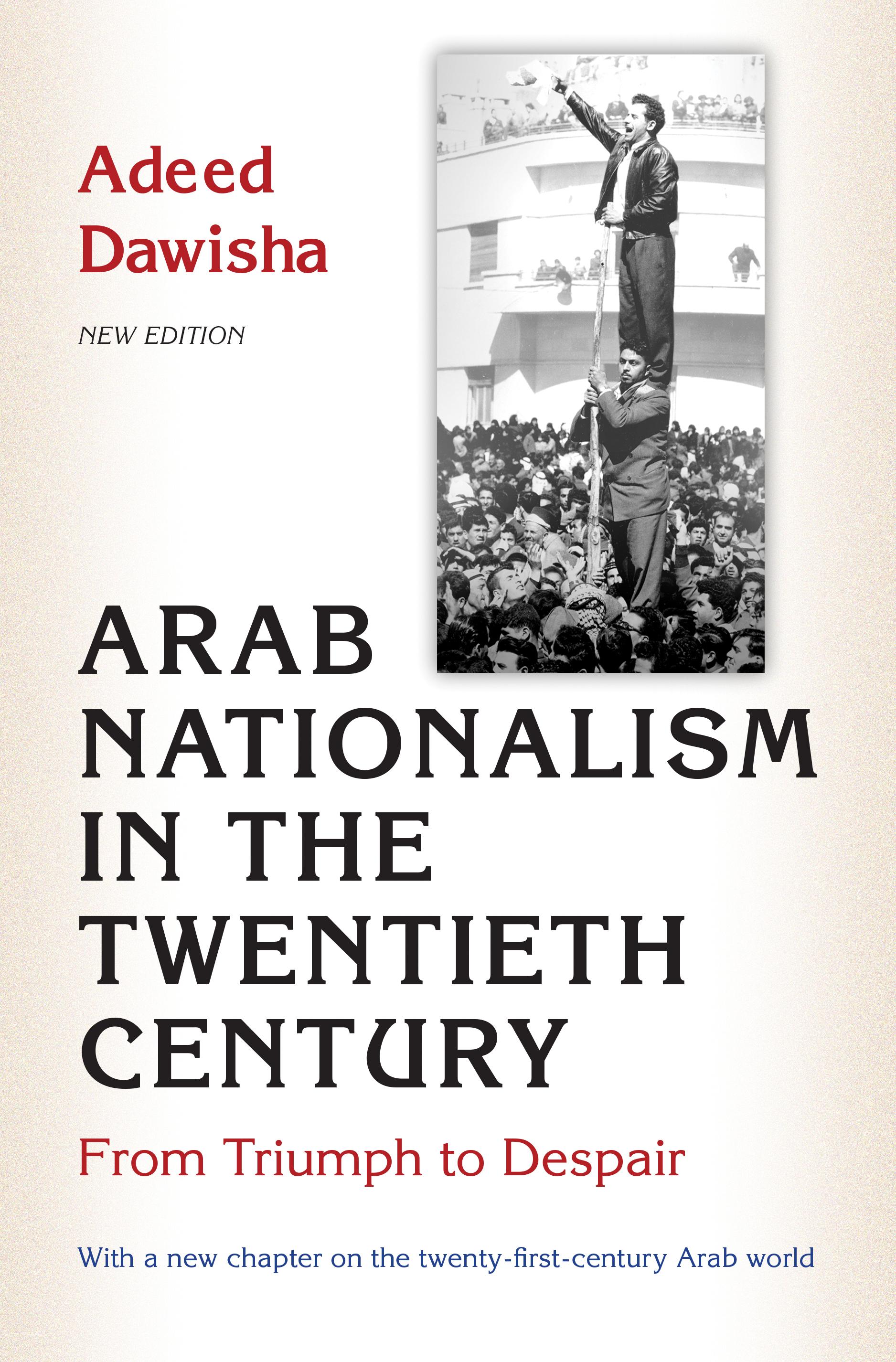
Like a great dynasty that falls to ruin and is eventually remembered more for its faults than its feats, Arab nationalism is remembered mostly for its humiliating rout in the 1967 Six Day War, for inter-Arab divisions, and for words and actions distinguished by their meagerness. But people tend to forget the majesty that Arab nationalism once was. In this elegantly narrated and richly documented book, Adeed Dawisha brings this majesty to life through a sweeping historical account of its dramatic rise and fall.
Dawisha argues that Arab nationalism--which, he says, was inspired by nineteenth-century German Romantic nationalism--really took root after World War I and not in the nineteenth century, as many believe, and that it blossomed only in the 1950s and 1960s under the charismatic leadership of Egypt's Gamal 'Abd al-Nasir. He traces the ideology's passage from the collapse of the Ottoman Empire through its triumphant ascendancy in the late 1950s with the unity of Egypt and Syria and with the nationalist revolution of Iraq, to the mortal blow it received in the 1967 Arab defeat by Israel, and its eventual eclipse. Dawisha criticizes the common failure to distinguish between the broader, cultural phenomenon of "Arabism" and the political, secular desire for a united Arab state that defined Arab nationalism. In recent decades competitive ideologies--not least, Islamic militancy--have inexorably supplanted the latter, he contends.
Dawisha, who grew up in Iraq during the heyday of Arab nationalism, infuses his work with rare personal insight and extraordinary historical breadth. In addition to Western sources, he draws on an unprecedented wealth of Arab political memoirs and studies to tell the fascinating story of one of the most colorful and significant periods of the contemporary Arab world. In doing so, he also gives us the means to more fully understand trends in the region today.
Complete with a hard-hitting new and expanded section that surveys recent nationalism and events in the Middle East, Arab Nationalism in the Twentieth Century tells the fascinating story of one of the most colorful and significant periods in twentieth-century Middle Eastern history.
Before Memmo my notes were scattered across PDFs. Now a workspace pulls everything into one place — I see exactly what's still left to study.
Memmo's summaries are gold before exams. I don't have to re-read 800 pages two weeks before — just the important parts.
The AI chat has saved me the night before an exam more than once. I just keep asking until I get it — no waiting on a study group to reply.
The quizzes hit exactly what I need to know. Memmo tracks what I get stuck on — so I only practice what's worth it.
Flashcards with spaced repetition are magic. Memmo knows when I'm about to forget something and brings it back.
The AI podcasts are my favorite. I listen on my way to school and get a recap without sitting at a computer.

Handbok i kvalitativa metoder
281 kr

Hållbar utveckling: en introduktion för ingenjörer och andra problemlösare
334 kr

Brymans Samhällsvetenskapliga metoder
390 kr

Projektledning
491 kr

Den orättvisa hälsan: om socioekonomiska skillnader i hälsa och livslängd
326 kr

Vetenskapsteori för nybörjare
196 kr

Organizational Leadership
429 kr

På väg mot läraryrket
172 kr

Det sociala livet i skolan: Socialpsykologiska perspektiv
253 kr

Betygsättningens didaktik
151 kr

Personality
402 kr

Studying Leadership
404 kr

Managing Innovation
477 kr

Introduktion till samhällsvetenskaplig metod
347 kr

The Psychology of Sex and Gender
698 kr

Evidens och kunskap för socialt arbete
207 kr

Introduction to Leadership
605 kr