
Before Memmo my notes were scattered across PDFs. Now a workspace pulls everything into one place — I see exactly what's still left to study.
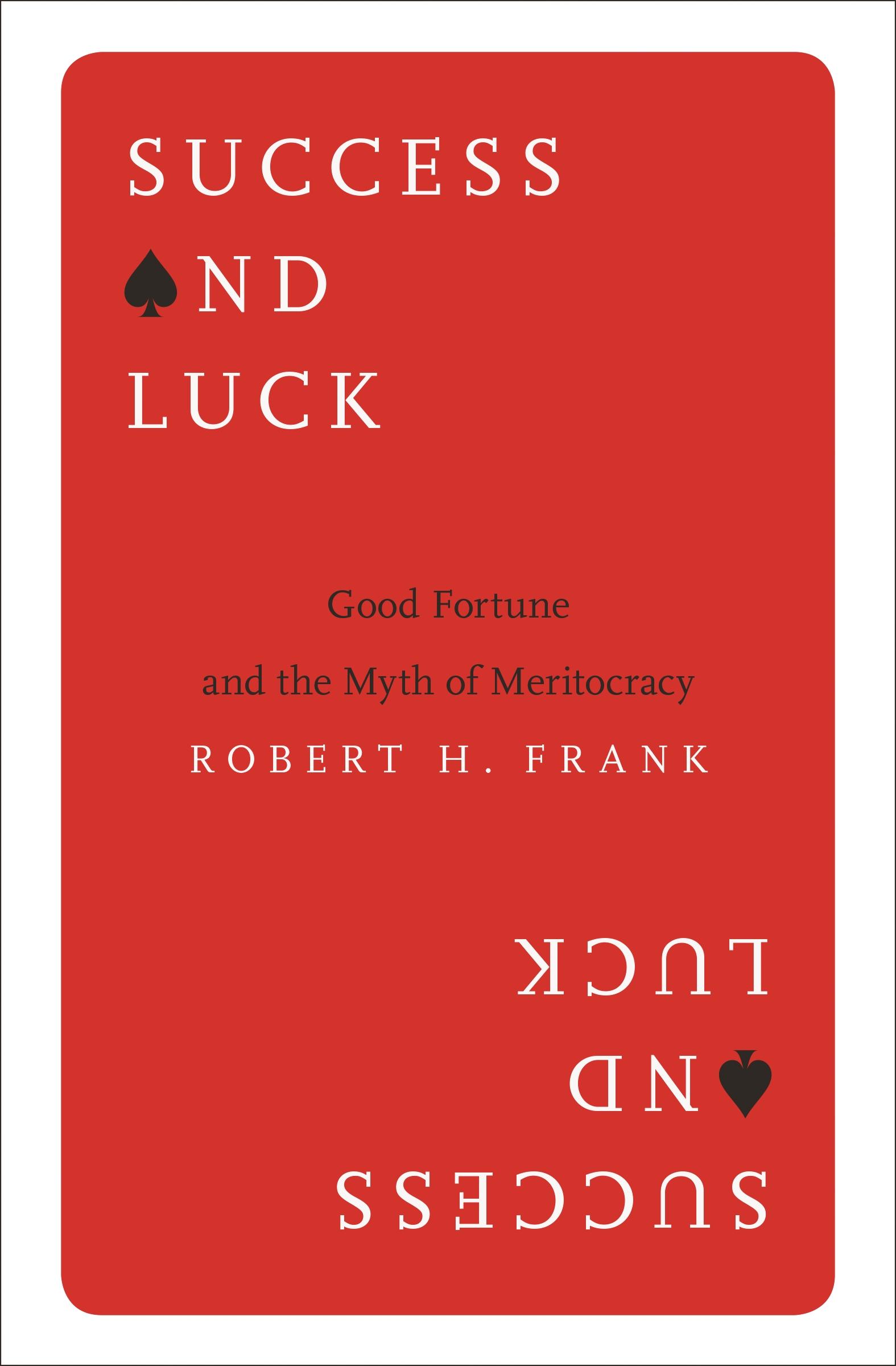
From New York Times bestselling author and economics columnist Robert Frank, a compelling book that explains why the rich underestimate the importance of luck in their success, why that hurts everyone, and what we can do about it
How important is luck in economic success? No question more reliably divides conservatives from liberals. As conservatives correctly observe, people who amass great fortunes are almost always talented and hardworking. But liberals are also correct to note that countless others have those same qualities yet never earn much. In recent years, social scientists have discovered that chance plays a much larger role in important life outcomes than most people imagine. In Success and Luck, bestselling author and New York Times economics columnist Robert Frank explores the surprising implications of those findings to show why the rich underestimate the importance of luck in success—and why that hurts everyone, even the wealthy.
Frank describes how, in a world increasingly dominated by winner-take-all markets, chance opportunities and trivial initial advantages often translate into much larger ones—and enormous income differences—over time; how false beliefs about luck persist, despite compelling evidence against them; and how myths about personal success and luck shape individual and political choices in harmful ways.
But, Frank argues, we could decrease the inequality driven by sheer luck by adopting simple, unintrusive policies that would free up trillions of dollars each year—more than enough to fix our crumbling infrastructure, expand healthcare coverage, fight global warming, and reduce poverty, all without requiring painful sacrifices from anyone. If this sounds implausible, you'll be surprised to discover that the solution requires only a few, noncontroversial steps.
Compellingly readable, Success and Luck shows how a more accurate understanding of the role of chance in life could lead to better, richer, and fairer economies and societies.
Before Memmo my notes were scattered across PDFs. Now a workspace pulls everything into one place — I see exactly what's still left to study.
Memmo's summaries are gold before exams. I don't have to re-read 800 pages two weeks before — just the important parts.
The AI chat has saved me the night before an exam more than once. I just keep asking until I get it — no waiting on a study group to reply.
The quizzes hit exactly what I need to know. Memmo tracks what I get stuck on — so I only practice what's worth it.
Flashcards with spaced repetition are magic. Memmo knows when I'm about to forget something and brings it back.
The AI podcasts are my favorite. I listen on my way to school and get a recap without sitting at a computer.

Handbok i kvalitativa metoder
281 kr

Hållbar utveckling: en introduktion för ingenjörer och andra problemlösare
334 kr

Brymans Samhällsvetenskapliga metoder
390 kr

Projektledning
491 kr

Den orättvisa hälsan: om socioekonomiska skillnader i hälsa och livslängd
326 kr

Vetenskapsteori för nybörjare
196 kr

Organizational Leadership
429 kr

På väg mot läraryrket
172 kr

Det sociala livet i skolan: Socialpsykologiska perspektiv
253 kr

Betygsättningens didaktik
151 kr

Personality
402 kr

Studying Leadership
404 kr

Managing Innovation
477 kr

Introduktion till samhällsvetenskaplig metod
347 kr

The Psychology of Sex and Gender
698 kr

Evidens och kunskap för socialt arbete
207 kr

Introduction to Leadership
605 kr