
Before Memmo my notes were scattered across PDFs. Now a workspace pulls everything into one place — I see exactly what's still left to study.
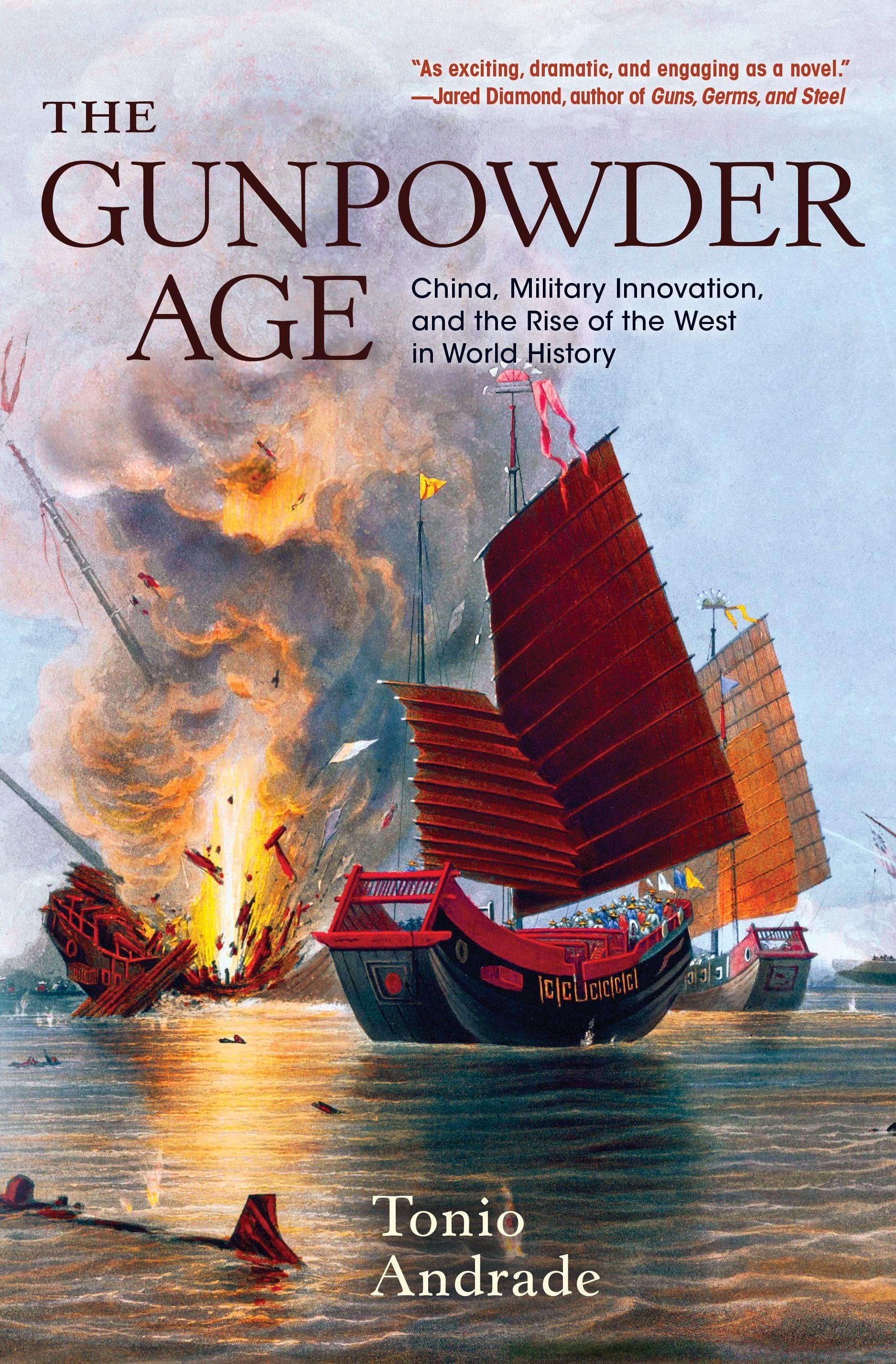
A first look at gunpowder's revolutionary impact on China's role in global history
The Chinese invented gunpowder and began exploring its military uses as early as the 900s, four centuries before the technology passed to the West. But by the early 1800s, China had fallen so far behind the West in gunpowder warfare that it was easily defeated by Britain in the Opium War of 1839–42. What happened? In The Gunpowder Age, Tonio Andrade offers a compelling new answer, opening a fresh perspective on a key question of world history: why did the countries of western Europe surge to global importance starting in the 1500s while China slipped behind?
Historians have long argued that gunpowder weapons helped Europeans establish global hegemony. Yet the inhabitants of what is today China not only invented guns and bombs but also, as Andrade shows, continued to innovate in gunpowder technology through the early 1700s—much longer than previously thought. Why, then, did China become so vulnerable? Andrade argues that one significant reason is that it was out of practice fighting wars, having enjoyed nearly a century of relative peace, since 1760. Indeed, he demonstrates that China—like Europe—was a powerful military innovator, particularly during times of great warfare, such as the violent century starting after the Opium War, when the Chinese once again quickly modernized their forces. Today, China is simply returning to its old position as one of the world's great military powers.
By showing that China’s military dynamism was deeper, longer lasting, and more quickly recovered than previously understood, The Gunpowder Age challenges long-standing explanations of the so-called Great Divergence between the West and Asia.
Before Memmo my notes were scattered across PDFs. Now a workspace pulls everything into one place — I see exactly what's still left to study.
Memmo's summaries are gold before exams. I don't have to re-read 800 pages two weeks before — just the important parts.
The AI chat has saved me the night before an exam more than once. I just keep asking until I get it — no waiting on a study group to reply.
The quizzes hit exactly what I need to know. Memmo tracks what I get stuck on — so I only practice what's worth it.
Flashcards with spaced repetition are magic. Memmo knows when I'm about to forget something and brings it back.
The AI podcasts are my favorite. I listen on my way to school and get a recap without sitting at a computer.

Handbok i kvalitativa metoder
281 kr

Hållbar utveckling: en introduktion för ingenjörer och andra problemlösare
334 kr

Brymans Samhällsvetenskapliga metoder
390 kr

Projektledning
491 kr

Den orättvisa hälsan: om socioekonomiska skillnader i hälsa och livslängd
326 kr

Vetenskapsteori för nybörjare
196 kr

Organizational Leadership
429 kr

På väg mot läraryrket
172 kr

Det sociala livet i skolan: Socialpsykologiska perspektiv
253 kr

Betygsättningens didaktik
151 kr

Personality
402 kr

Studying Leadership
404 kr

Managing Innovation
477 kr

Introduktion till samhällsvetenskaplig metod
347 kr

The Psychology of Sex and Gender
698 kr

Evidens och kunskap för socialt arbete
207 kr

Introduction to Leadership
605 kr