
Before Memmo my notes were scattered across PDFs. Now a workspace pulls everything into one place — I see exactly what's still left to study.
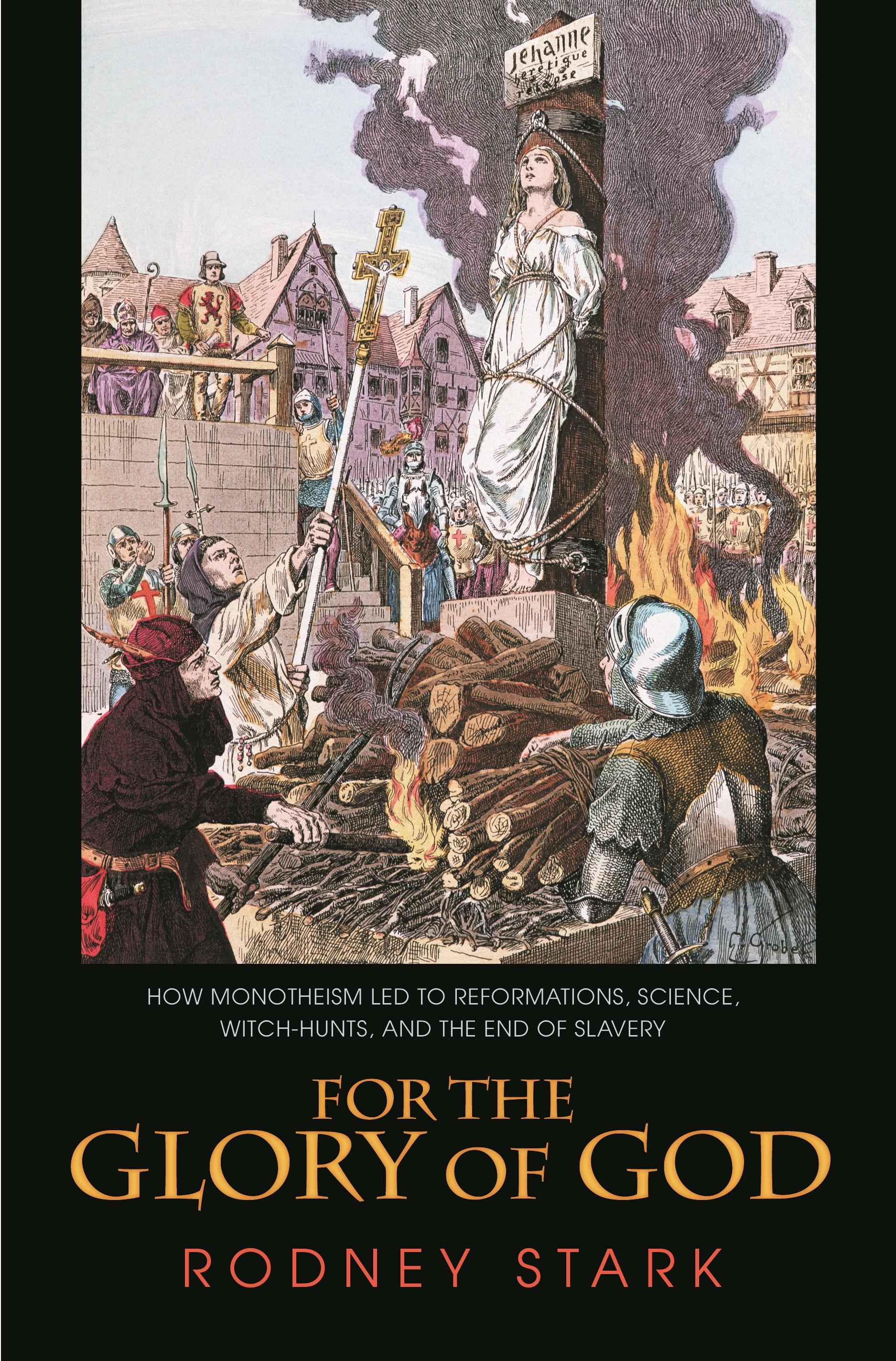
Rodney Stark's provocative new book argues that, whether we like it or not, people acting for the glory of God have formed our modern culture. Continuing his project of identifying the widespread consequences of monotheism, Stark shows that the Christian conception of God resulted--almost inevitably and for the same reasons--in the Protestant Reformation, the rise of modern science, the European witch-hunts, and the Western abolition of slavery. In the process, he explains why Christian and Islamic images of God yielded such different cultural results, leading Christians but not Muslims to foster science, burn "witches," and denounce slavery.
With his usual clarity and skepticism toward the received wisdom, Stark finds the origins of these disparate phenomena within monotheistic religious organizations. Endemic in such organizations are pressures to maintain religious intensity, which lead to intense conflicts and schisms that have far-reaching social results.
Along the way, Stark debunks many commonly accepted ideas. He interprets the sixteenth-century flowering of science not as a sudden revolution that burst religious barriers, but as the normal, gradual, and direct outgrowth of medieval theology. He also shows that the very ideas about God that sustained the rise of science led also to intense witch-hunting by otherwise clear-headed Europeans, including some celebrated scientists. This conception of God likewise yielded the Christian denunciation of slavery as an abomination--and some of the fiercest witch-hunters were devoted participants in successful abolitionist movements on both sides of the Atlantic.
For the Glory of God is an engrossing narrative that accounts for the very different histories of the Christian and Muslim worlds. It fundamentally changes our understanding of religion's role in history and the forces behind much of what we point to as secular progress.
Before Memmo my notes were scattered across PDFs. Now a workspace pulls everything into one place — I see exactly what's still left to study.
Memmo's summaries are gold before exams. I don't have to re-read 800 pages two weeks before — just the important parts.
The AI chat has saved me the night before an exam more than once. I just keep asking until I get it — no waiting on a study group to reply.
The quizzes hit exactly what I need to know. Memmo tracks what I get stuck on — so I only practice what's worth it.
Flashcards with spaced repetition are magic. Memmo knows when I'm about to forget something and brings it back.
The AI podcasts are my favorite. I listen on my way to school and get a recap without sitting at a computer.

Handbok i kvalitativa metoder
281 kr

Hållbar utveckling: en introduktion för ingenjörer och andra problemlösare
334 kr

Brymans Samhällsvetenskapliga metoder
390 kr

Projektledning
491 kr

Den orättvisa hälsan: om socioekonomiska skillnader i hälsa och livslängd
326 kr

Vetenskapsteori för nybörjare
196 kr

Organizational Leadership
429 kr

På väg mot läraryrket
172 kr

Det sociala livet i skolan: Socialpsykologiska perspektiv
253 kr

Betygsättningens didaktik
151 kr

Personality
402 kr

Studying Leadership
404 kr

Managing Innovation
477 kr

Introduktion till samhällsvetenskaplig metod
347 kr

The Psychology of Sex and Gender
698 kr

Evidens och kunskap för socialt arbete
207 kr

Introduction to Leadership
605 kr