
Before Memmo my notes were scattered across PDFs. Now a workspace pulls everything into one place — I see exactly what's still left to study.
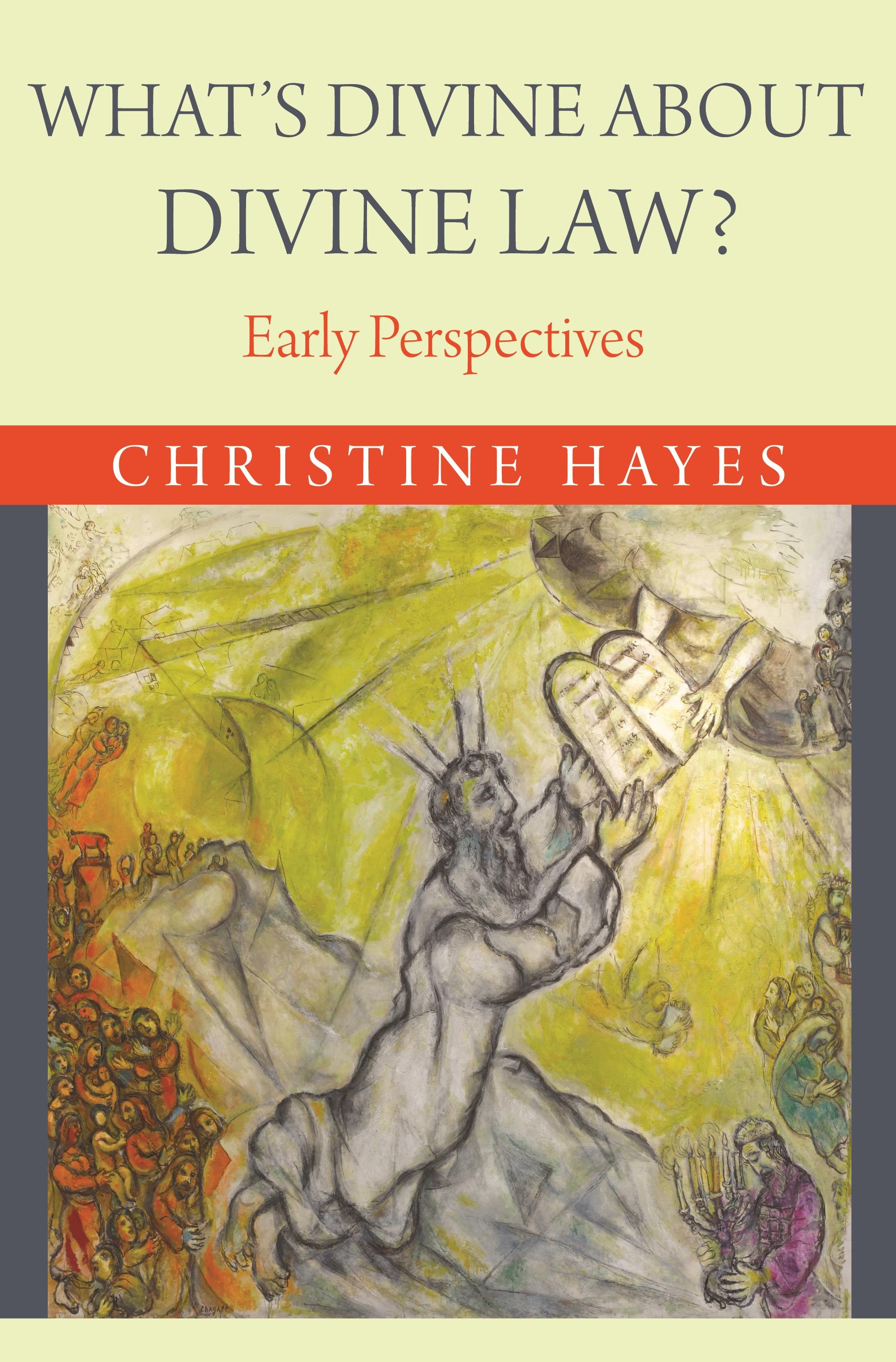
How ancient thinkers grappled with competing conceptions of divine law
In the thousand years before the rise of Islam, two radically diverse conceptions of what it means to say that a law is divine confronted one another with a force that reverberates to the present. What's Divine about Divine Law? untangles the classical and biblical roots of the Western idea of divine law and shows how early adherents to biblical tradition—Hellenistic Jewish writers such as Philo, the community at Qumran, Paul, and the talmudic rabbis—struggled to make sense of this conflicting legacy.
Christine Hayes shows that for the ancient Greeks, divine law was divine by virtue of its inherent qualities of intrinsic rationality, truth, universality, and immutability, while for the biblical authors, divine law was divine because it was grounded in revelation with no presumption of rationality, conformity to truth, universality, or immutability. Hayes describes the collision of these opposing conceptions in the Hellenistic period, and details competing attempts to resolve the resulting cognitive dissonance. She shows how Second Temple and Hellenistic Jewish writers, from the author of 1 Enoch to Philo of Alexandria, were engaged in a common project of bridging the gulf between classical and biblical notions of divine law, while Paul, in his letters to the early Christian church, sought to widen it. Hayes then delves into the literature of classical rabbinic Judaism to reveal how the talmudic rabbis took a third and scandalous path, insisting on a construction of divine law intentionally at odds with the Greco-Roman and Pauline conceptions that would come to dominate the Christianized West.
A stunning achievement in intellectual history, What's Divine about Divine Law? sheds critical light on an ancient debate that would shape foundational Western thought, and that continues to inform contemporary views about the nature and purpose of law and the nature and authority of Scripture.
Before Memmo my notes were scattered across PDFs. Now a workspace pulls everything into one place — I see exactly what's still left to study.
Memmo's summaries are gold before exams. I don't have to re-read 800 pages two weeks before — just the important parts.
The AI chat has saved me the night before an exam more than once. I just keep asking until I get it — no waiting on a study group to reply.
The quizzes hit exactly what I need to know. Memmo tracks what I get stuck on — so I only practice what's worth it.
Flashcards with spaced repetition are magic. Memmo knows when I'm about to forget something and brings it back.
The AI podcasts are my favorite. I listen on my way to school and get a recap without sitting at a computer.

Handbok i kvalitativa metoder
281 kr

Hållbar utveckling: en introduktion för ingenjörer och andra problemlösare
334 kr

Brymans Samhällsvetenskapliga metoder
390 kr

Projektledning
491 kr

Den orättvisa hälsan: om socioekonomiska skillnader i hälsa och livslängd
326 kr

Organizational Leadership
429 kr

Vetenskapsteori för nybörjare
196 kr

På väg mot läraryrket
172 kr

Det sociala livet i skolan: Socialpsykologiska perspektiv
253 kr

Betygsättningens didaktik
151 kr

Personality
402 kr

Studying Leadership
404 kr

Managing Innovation
477 kr

Introduktion till samhällsvetenskaplig metod
347 kr

The Psychology of Sex and Gender
698 kr

Evidens och kunskap för socialt arbete
207 kr

Introduction to Leadership
605 kr