
Before Memmo my notes were scattered across PDFs. Now a workspace pulls everything into one place — I see exactly what's still left to study.
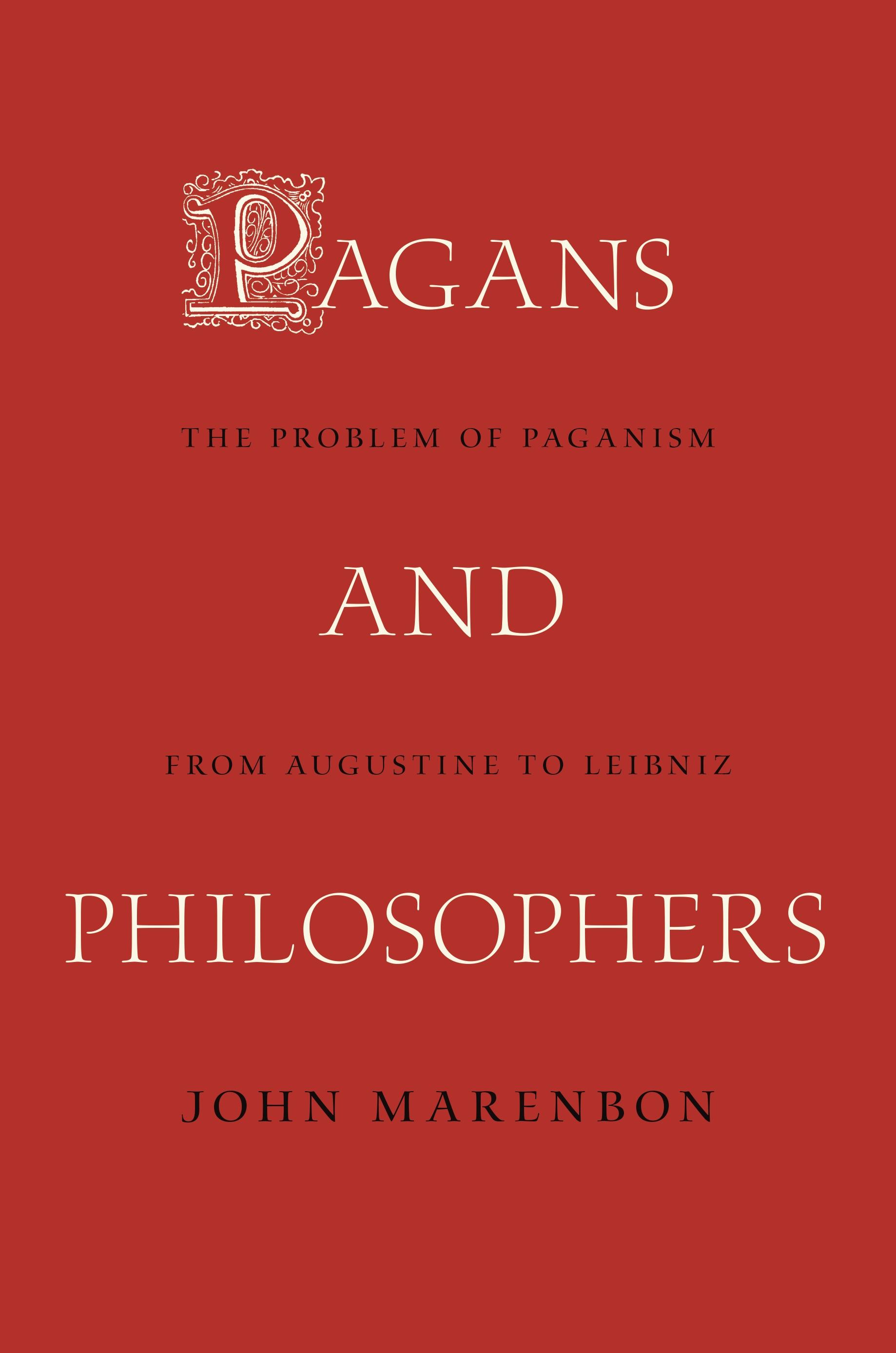
An ambitious history of how medieval writers came to terms with paganism
From the turn of the fifth century to the beginning of the eighteenth, Christian writers were fascinated and troubled by the "Problem of Paganism," which this book identifies and examines for the first time. How could the wisdom and virtue of the great thinkers of antiquity be reconciled with the fact that they were pagans and, many thought, damned? Related questions were raised by encounters with contemporary pagans in northern Europe, Mongolia, and, later, America and China.
Pagans and Philosophers explores how writers—philosophers and theologians, but also poets such as Dante, Chaucer, and Langland, and travelers such as Las Casas and Ricci—tackled the Problem of Paganism. Augustine and Boethius set its terms, while Peter Abelard and John of Salisbury were important early advocates of pagan wisdom and virtue. University theologians such as Aquinas, Scotus, Ockham, and Bradwardine, and later thinkers such as Ficino, Valla, More, Bayle, and Leibniz, explored the difficulty in depth. Meanwhile, Albert the Great inspired Boethius of Dacia and others to create a relativist conception of scientific knowledge that allowed Christian teachers to remain faithful Aristotelians. At the same time, early anthropologists such as John of Piano Carpini, John Mandeville, and Montaigne developed other sorts of relativism in response to the issue.
A sweeping and original account of an important but neglected chapter in Western intellectual history, Pagans and Philosophers provides a new perspective on nothing less than the entire period between the classical and the modern world.
Before Memmo my notes were scattered across PDFs. Now a workspace pulls everything into one place — I see exactly what's still left to study.
Memmo's summaries are gold before exams. I don't have to re-read 800 pages two weeks before — just the important parts.
The AI chat has saved me the night before an exam more than once. I just keep asking until I get it — no waiting on a study group to reply.
The quizzes hit exactly what I need to know. Memmo tracks what I get stuck on — so I only practice what's worth it.
Flashcards with spaced repetition are magic. Memmo knows when I'm about to forget something and brings it back.
The AI podcasts are my favorite. I listen on my way to school and get a recap without sitting at a computer.

Handbok i kvalitativa metoder
281 kr

Hållbar utveckling: en introduktion för ingenjörer och andra problemlösare
334 kr

Brymans Samhällsvetenskapliga metoder
390 kr

Projektledning
491 kr

Den orättvisa hälsan: om socioekonomiska skillnader i hälsa och livslängd
326 kr

Organizational Leadership
429 kr

Vetenskapsteori för nybörjare
196 kr

På väg mot läraryrket
172 kr

Det sociala livet i skolan: Socialpsykologiska perspektiv
253 kr

Betygsättningens didaktik
151 kr

Personality
402 kr

Studying Leadership
404 kr

Managing Innovation
477 kr

Introduktion till samhällsvetenskaplig metod
347 kr

The Psychology of Sex and Gender
698 kr

Evidens och kunskap för socialt arbete
207 kr

Introduction to Leadership
605 kr