
Before Memmo my notes were scattered across PDFs. Now a workspace pulls everything into one place — I see exactly what's still left to study.
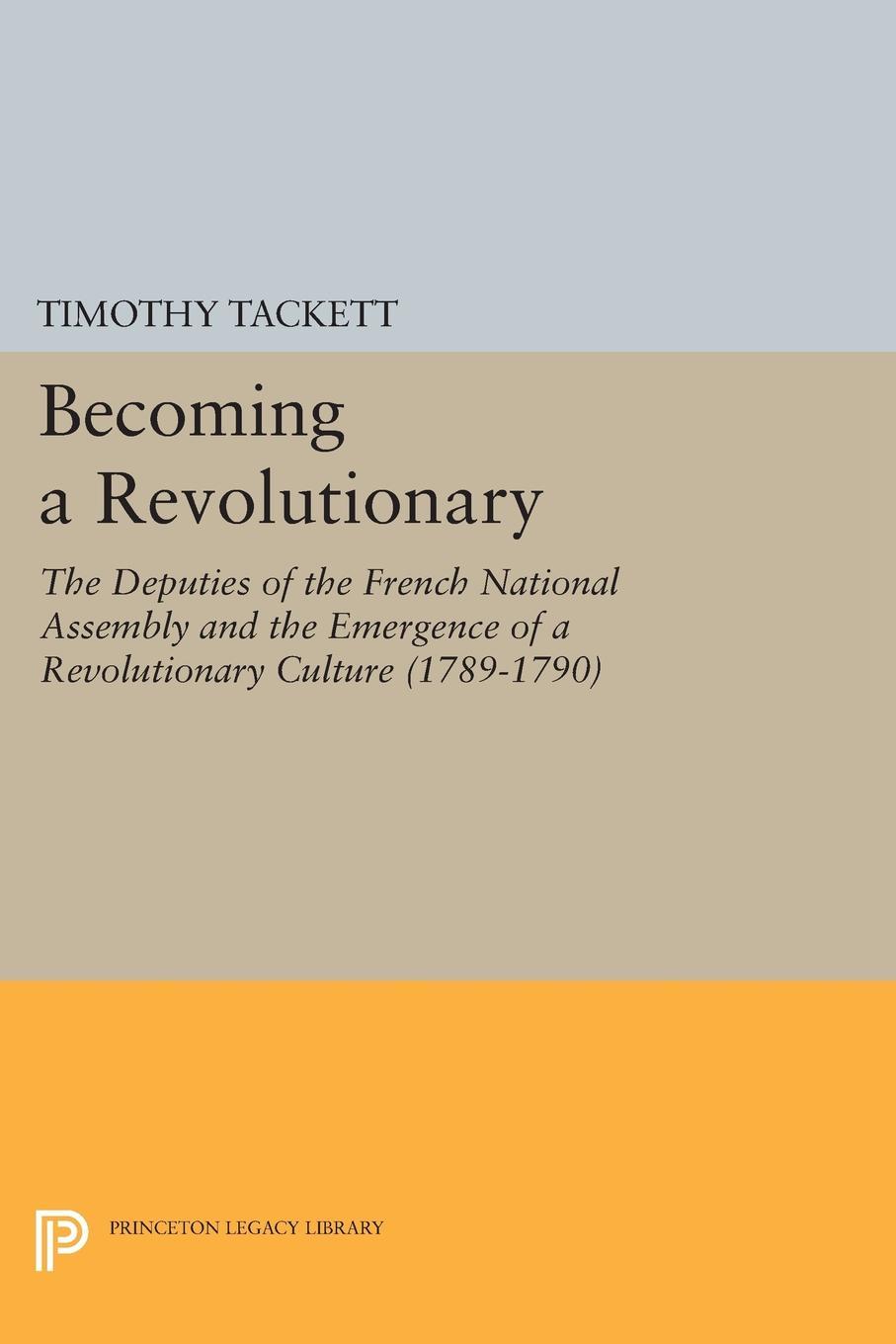
Here Timothy Tackett tests some of the diverse explanations of the origins of the French Revolution by examining the psychological itineraries of the individuals who launched it--the deputies of the Estates General and the National Assembly. Based on a wide variety of sources, notably the letters and diaries of over a hundred deputies, the book assesses their collective biographies and their cultural and political experience before and after 1789. In the face of the current "revisionist" orthodoxy, it argues that members of the Third Estate differed dramatically from the Nobility in wealth, status, and culture.
Virtually all deputies were familiar with some elements of the Enlightenment, yet little evidence can be found before the Revolution of a coherent oppositional "ideology" or "discourse." Far from the inexperienced ideologues depicted by the revisionists, the Third Estate deputies emerge as practical men, more attracted to law, history, and science than to abstract philosophy. Insofar as they received advance instruction in the possibility of extensive reform, it came less from reading books than from involvement in municipal and regional politics and from the actions and decrees of the monarchy itself. Before their arrival in Versailles, few deputies envisioned changes that could be construed as "Revolutionary." Such new ideas emerged primarily in the process of the Assembly itself and continued to develop, in many cases, throughout the first year of the Revolution.
Originally published in 1996.
The Princeton Legacy Library uses the latest print-on-demand technology to again make available previously out-of-print books from the distinguished backlist of Princeton University Press. These editions preserve the original texts of these important books while presenting them in durable paperback and hardcover editions. The goal of the Princeton Legacy Library is to vastly increase access to the rich scholarly heritage found in the thousands of books published by Princeton University Press since its founding in 1905.
Before Memmo my notes were scattered across PDFs. Now a workspace pulls everything into one place — I see exactly what's still left to study.
Memmo's summaries are gold before exams. I don't have to re-read 800 pages two weeks before — just the important parts.
The AI chat has saved me the night before an exam more than once. I just keep asking until I get it — no waiting on a study group to reply.
The quizzes hit exactly what I need to know. Memmo tracks what I get stuck on — so I only practice what's worth it.
Flashcards with spaced repetition are magic. Memmo knows when I'm about to forget something and brings it back.
The AI podcasts are my favorite. I listen on my way to school and get a recap without sitting at a computer.

Handbok i kvalitativa metoder
281 kr

Hållbar utveckling: en introduktion för ingenjörer och andra problemlösare
334 kr

Brymans Samhällsvetenskapliga metoder
390 kr

Projektledning
491 kr

Den orättvisa hälsan: om socioekonomiska skillnader i hälsa och livslängd
326 kr

Vetenskapsteori för nybörjare
196 kr

Organizational Leadership
429 kr

På väg mot läraryrket
172 kr

Det sociala livet i skolan: Socialpsykologiska perspektiv
253 kr

Betygsättningens didaktik
151 kr

Personality
402 kr

Studying Leadership
404 kr

Managing Innovation
477 kr

Introduktion till samhällsvetenskaplig metod
347 kr

The Psychology of Sex and Gender
698 kr

Evidens och kunskap för socialt arbete
207 kr

Introduction to Leadership
605 kr