
Before Memmo my notes were scattered across PDFs. Now a workspace pulls everything into one place — I see exactly what's still left to study.
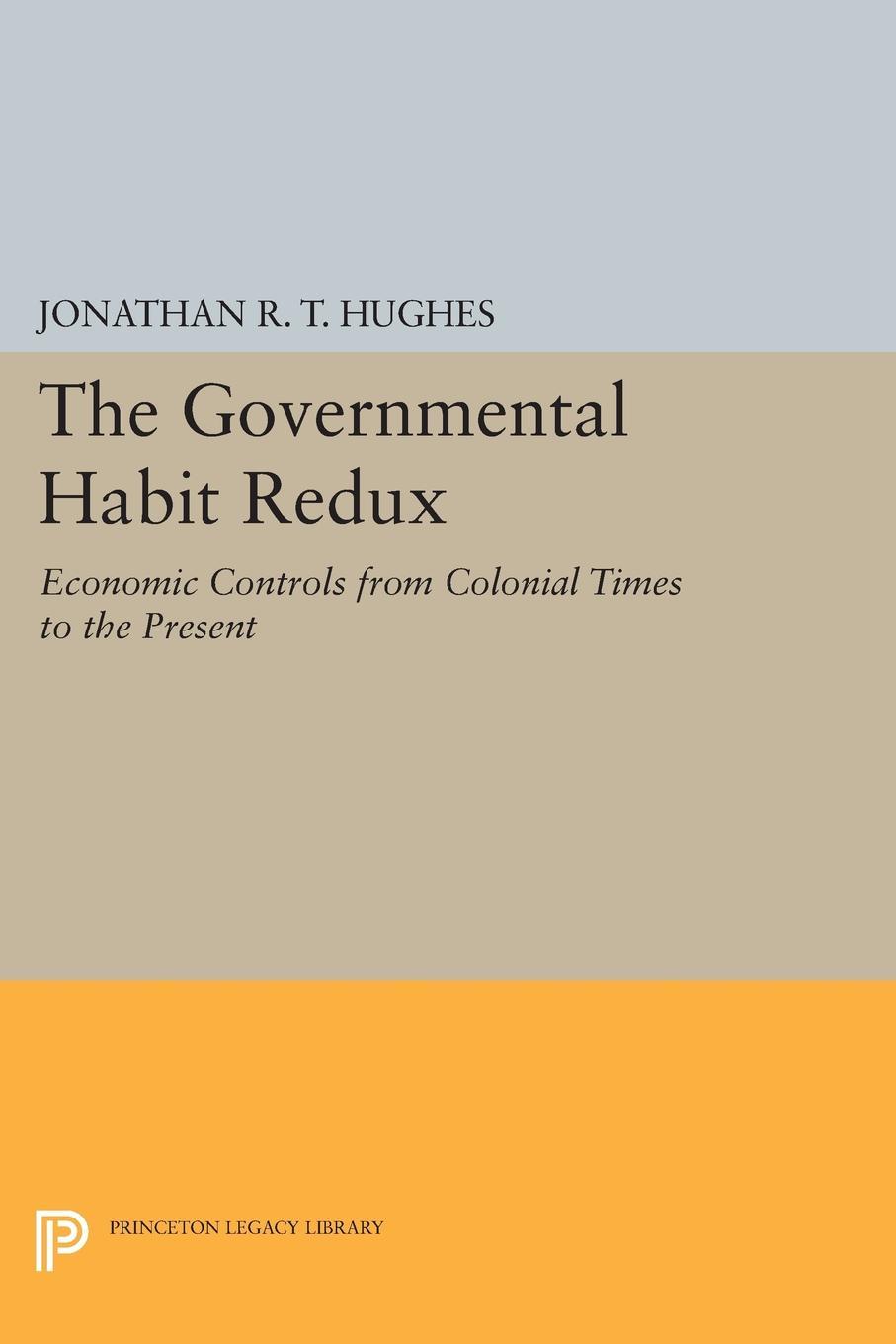
To the distinguished economic historian Jonathan Hughes, the ambiguous outcomes of attempted deregulation signal America's urgent need to probe the origins of our vast and chaotic maze of government economic controls. Why do government restrictions on the economy continue to proliferate, in spite of avowed efforts to allow the market a freer rein? How did this complicated network of nonmarket economic controls come about and whose purposes does it serve? How can we render such controls less destructive of productivity and wealth-creating activity? While exploring these questions, Jonathan Hughes updates his classic book The Governmental Habit to reflect the experience of what he calls the "wild ride" of the last fifteen years and to include a survey of new thinking about the problems of government intervention and control of economic life. Hughes's comprehensive work provides a narrative history of governmental involvement in the U.S. economy from the colonial period to the present, arguing convincingly that the "governmental habit" is deeply rooted in the country's past. In the lively and accessible style of the earlier book, The Governmental Habit Redux contends that modern American government is basically an enormous version of American colonial regimes. Changes in scale have transformed what was once an acceptable pattern into a conglomeration of inefficient and wasteful bureaucracies.
Originally published in 1991.
The Princeton Legacy Library uses the latest print-on-demand technology to again make available previously out-of-print books from the distinguished backlist of Princeton University Press. These editions preserve the original texts of these important books while presenting them in durable paperback and hardcover editions. The goal of the Princeton Legacy Library is to vastly increase access to the rich scholarly heritage found in the thousands of books published by Princeton University Press since its founding in 1905.
Before Memmo my notes were scattered across PDFs. Now a workspace pulls everything into one place — I see exactly what's still left to study.
Memmo's summaries are gold before exams. I don't have to re-read 800 pages two weeks before — just the important parts.
The AI chat has saved me the night before an exam more than once. I just keep asking until I get it — no waiting on a study group to reply.
The quizzes hit exactly what I need to know. Memmo tracks what I get stuck on — so I only practice what's worth it.
Flashcards with spaced repetition are magic. Memmo knows when I'm about to forget something and brings it back.
The AI podcasts are my favorite. I listen on my way to school and get a recap without sitting at a computer.

Handbok i kvalitativa metoder
281 kr

Hållbar utveckling: en introduktion för ingenjörer och andra problemlösare
334 kr

Brymans Samhällsvetenskapliga metoder
390 kr

Projektledning
491 kr

Den orättvisa hälsan: om socioekonomiska skillnader i hälsa och livslängd
326 kr

Organizational Leadership
429 kr

Vetenskapsteori för nybörjare
196 kr

På väg mot läraryrket
172 kr

Det sociala livet i skolan: Socialpsykologiska perspektiv
253 kr

Betygsättningens didaktik
151 kr

Personality
402 kr

Studying Leadership
404 kr

Managing Innovation
477 kr

Introduktion till samhällsvetenskaplig metod
347 kr

The Psychology of Sex and Gender
698 kr

Evidens och kunskap för socialt arbete
207 kr

Introduction to Leadership
605 kr