
Before Memmo my notes were scattered across PDFs. Now a workspace pulls everything into one place — I see exactly what's still left to study.
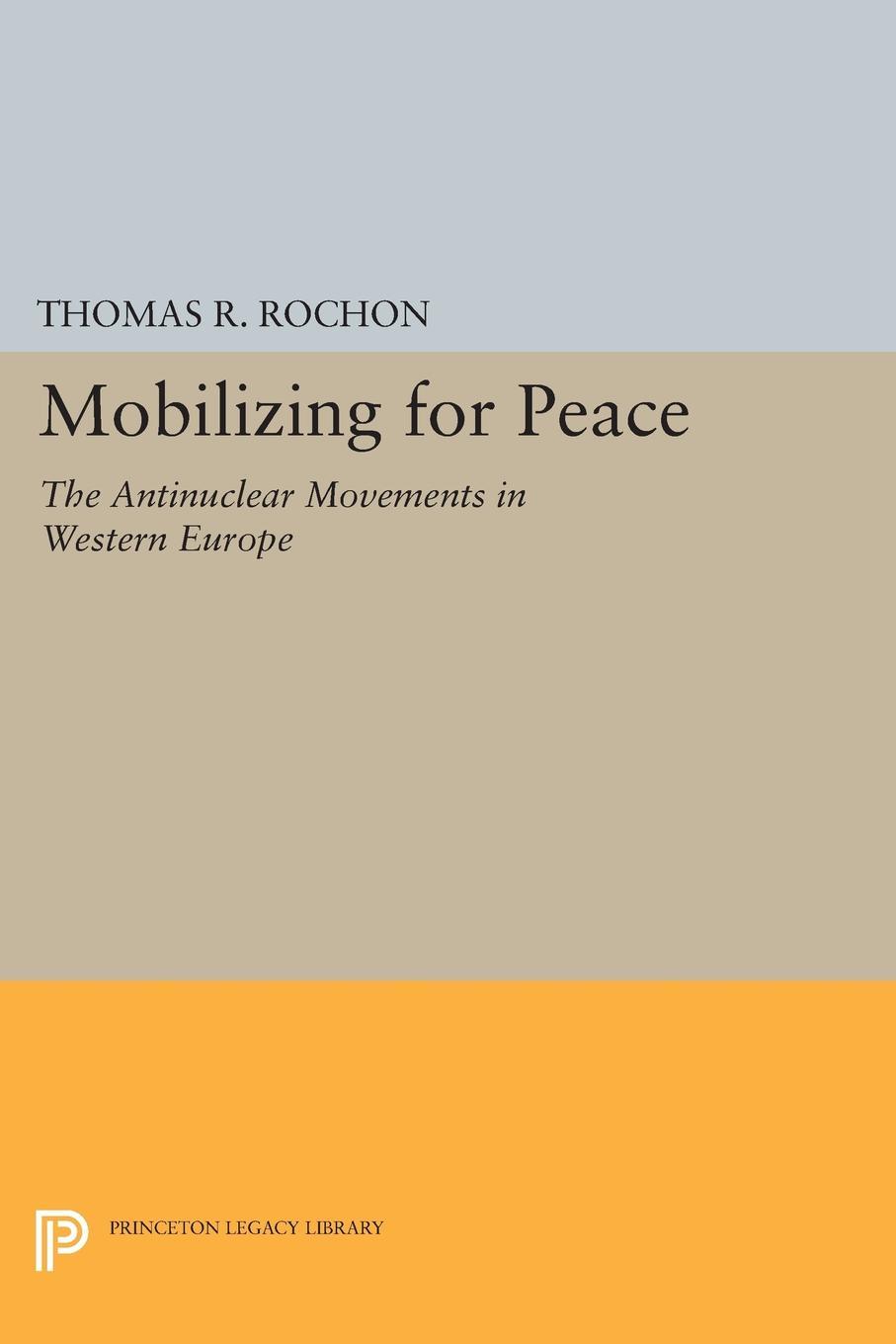
The crusade against nuclear weapons in Great Britain, West Germany, France, and the Netherlands in the early 1980s dwarfed all previous protest movements in Western Europe in the postwar period. What produced the demonstrations against NATO's decision in December 1979 to base 572 cruise and Pershing II missiles in five West European countries? What generated the widespread support that the demonstrators enjoyed? Contrary to the frequent claim that such political movements are a symptom of governmental crisis in the advanced industrial democracies, Thomas Rochon develops the idea that they arise from a creative impulse and perform crucial functions of innovative criticism. He concludes that the West European peace movement has ignited a public debate in which reduction or elimination of certain categories of nuclear weapons is taken seriously for the first time.
Among the topics examined are the sources of support for the peace movement in public opinion, the types of people who joined or supported the movement, and proposals they offered for a nonnuclear defense policy. The author discusses the organization of the movement and its choice of tactics, its impact on politics, and the links between it and other institutions such as churches, trade unions, and political parties.
Originally published in 1988.
The Princeton Legacy Library uses the latest print-on-demand technology to again make available previously out-of-print books from the distinguished backlist of Princeton University Press. These editions preserve the original texts of these important books while presenting them in durable paperback and hardcover editions. The goal of the Princeton Legacy Library is to vastly increase access to the rich scholarly heritage found in the thousands of books published by Princeton University Press since its founding in 1905.
Before Memmo my notes were scattered across PDFs. Now a workspace pulls everything into one place — I see exactly what's still left to study.
Memmo's summaries are gold before exams. I don't have to re-read 800 pages two weeks before — just the important parts.
The AI chat has saved me the night before an exam more than once. I just keep asking until I get it — no waiting on a study group to reply.
The quizzes hit exactly what I need to know. Memmo tracks what I get stuck on — so I only practice what's worth it.
Flashcards with spaced repetition are magic. Memmo knows when I'm about to forget something and brings it back.
The AI podcasts are my favorite. I listen on my way to school and get a recap without sitting at a computer.

Handbok i kvalitativa metoder
281 kr

Hållbar utveckling: en introduktion för ingenjörer och andra problemlösare
334 kr

Brymans Samhällsvetenskapliga metoder
390 kr

Projektledning
491 kr

Den orättvisa hälsan: om socioekonomiska skillnader i hälsa och livslängd
326 kr

Organizational Leadership
429 kr

Vetenskapsteori för nybörjare
196 kr

På väg mot läraryrket
172 kr

Det sociala livet i skolan: Socialpsykologiska perspektiv
253 kr

Betygsättningens didaktik
151 kr

Personality
402 kr

Studying Leadership
404 kr

Managing Innovation
477 kr

Introduktion till samhällsvetenskaplig metod
347 kr

The Psychology of Sex and Gender
698 kr

Evidens och kunskap för socialt arbete
207 kr

Introduction to Leadership
605 kr