
Before Memmo my notes were scattered across PDFs. Now a workspace pulls everything into one place — I see exactly what's still left to study.
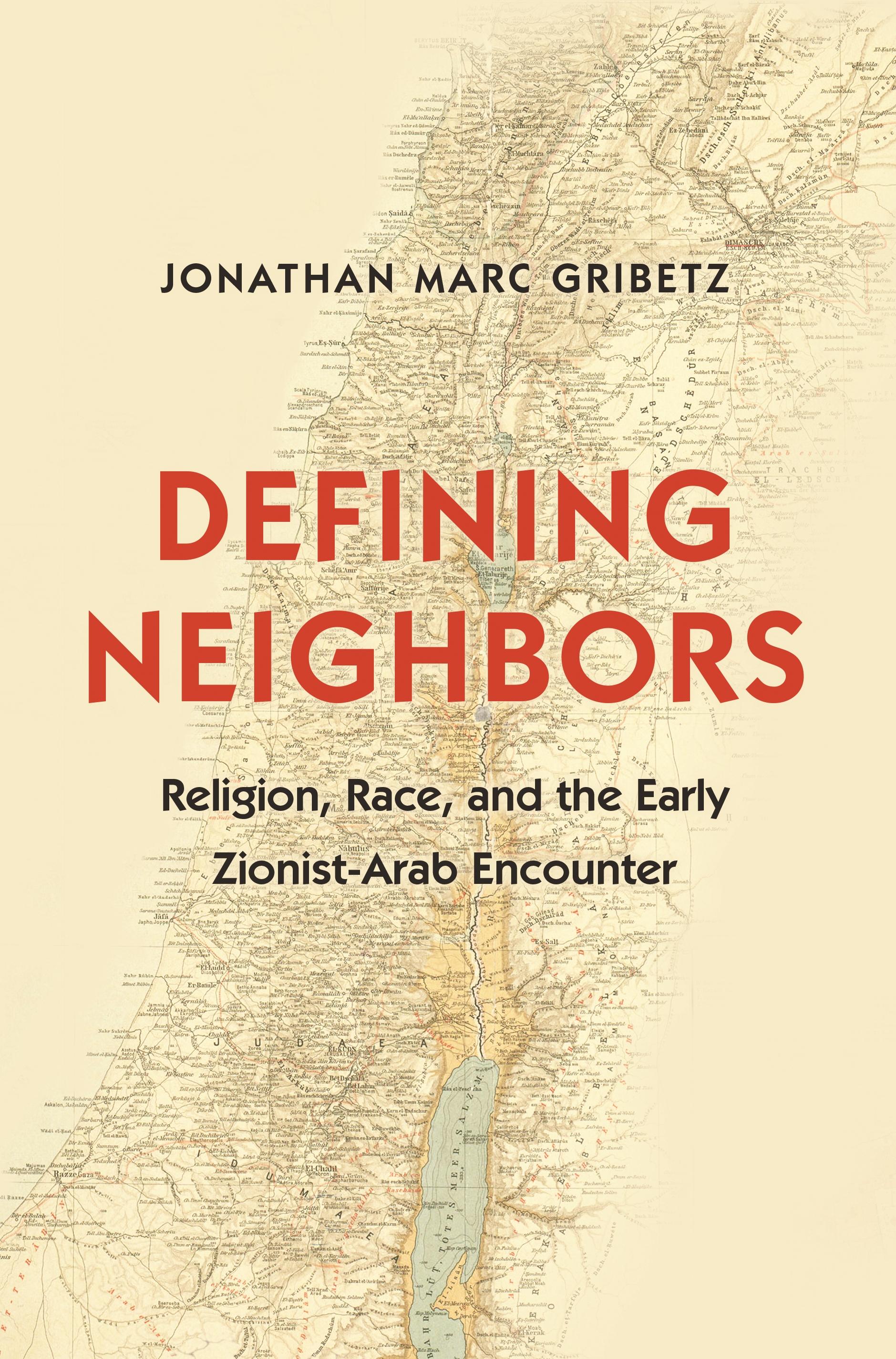
How religion and race—not nationalism—shaped early encounters between Zionists and Arabs in Palestine
As the Israeli-Palestinian conflict persists, aspiring peacemakers continue to search for the precise territorial dividing line that will satisfy both Israeli and Palestinian nationalist demands. The prevailing view assumes that this struggle is nothing more than a dispute over real estate. Defining Neighbors boldly challenges this view, shedding new light on how Zionists and Arabs understood each other in the earliest years of Zionist settlement in Palestine and suggesting that the current singular focus on boundaries misses key elements of the conflict.
Drawing on archival documents as well as newspapers and other print media from the final decades of Ottoman rule, Jonathan Gribetz argues that Zionists and Arabs in pre–World War I Palestine and the broader Middle East did not think of one another or interpret each other's actions primarily in terms of territory or nationalism. Rather, they tended to view their neighbors in religious terms—as Jews, Christians, or Muslims—or as members of "scientifically" defined races—Jewish, Arab, Semitic, or otherwise. Gribetz shows how these communities perceived one another, not as strangers vying for possession of a land that each regarded as exclusively their own, but rather as deeply familiar, if at times mythologized or distorted, others. Overturning conventional wisdom about the origins of the Israeli-Palestinian conflict, Gribetz demonstrates how the seemingly intractable nationalist contest in Israel and Palestine was, at its start, conceived of in very different terms.
Courageous and deeply compelling, Defining Neighbors is a landmark book that fundamentally recasts our understanding of the modern Jewish-Arab encounter and of the Middle East conflict today.
Before Memmo my notes were scattered across PDFs. Now a workspace pulls everything into one place — I see exactly what's still left to study.
Memmo's summaries are gold before exams. I don't have to re-read 800 pages two weeks before — just the important parts.
The AI chat has saved me the night before an exam more than once. I just keep asking until I get it — no waiting on a study group to reply.
The quizzes hit exactly what I need to know. Memmo tracks what I get stuck on — so I only practice what's worth it.
Flashcards with spaced repetition are magic. Memmo knows when I'm about to forget something and brings it back.
The AI podcasts are my favorite. I listen on my way to school and get a recap without sitting at a computer.

Handbok i kvalitativa metoder
281 kr

Hållbar utveckling: en introduktion för ingenjörer och andra problemlösare
334 kr

Brymans Samhällsvetenskapliga metoder
390 kr

Projektledning
491 kr

Den orättvisa hälsan: om socioekonomiska skillnader i hälsa och livslängd
326 kr

Vetenskapsteori för nybörjare
196 kr

Organizational Leadership
429 kr

På väg mot läraryrket
172 kr

Det sociala livet i skolan: Socialpsykologiska perspektiv
253 kr

Betygsättningens didaktik
151 kr

Personality
402 kr

Studying Leadership
404 kr

Managing Innovation
477 kr

Introduktion till samhällsvetenskaplig metod
347 kr

The Psychology of Sex and Gender
698 kr

Evidens och kunskap för socialt arbete
207 kr

Introduction to Leadership
605 kr