
Before Memmo my notes were scattered across PDFs. Now a workspace pulls everything into one place — I see exactly what's still left to study.
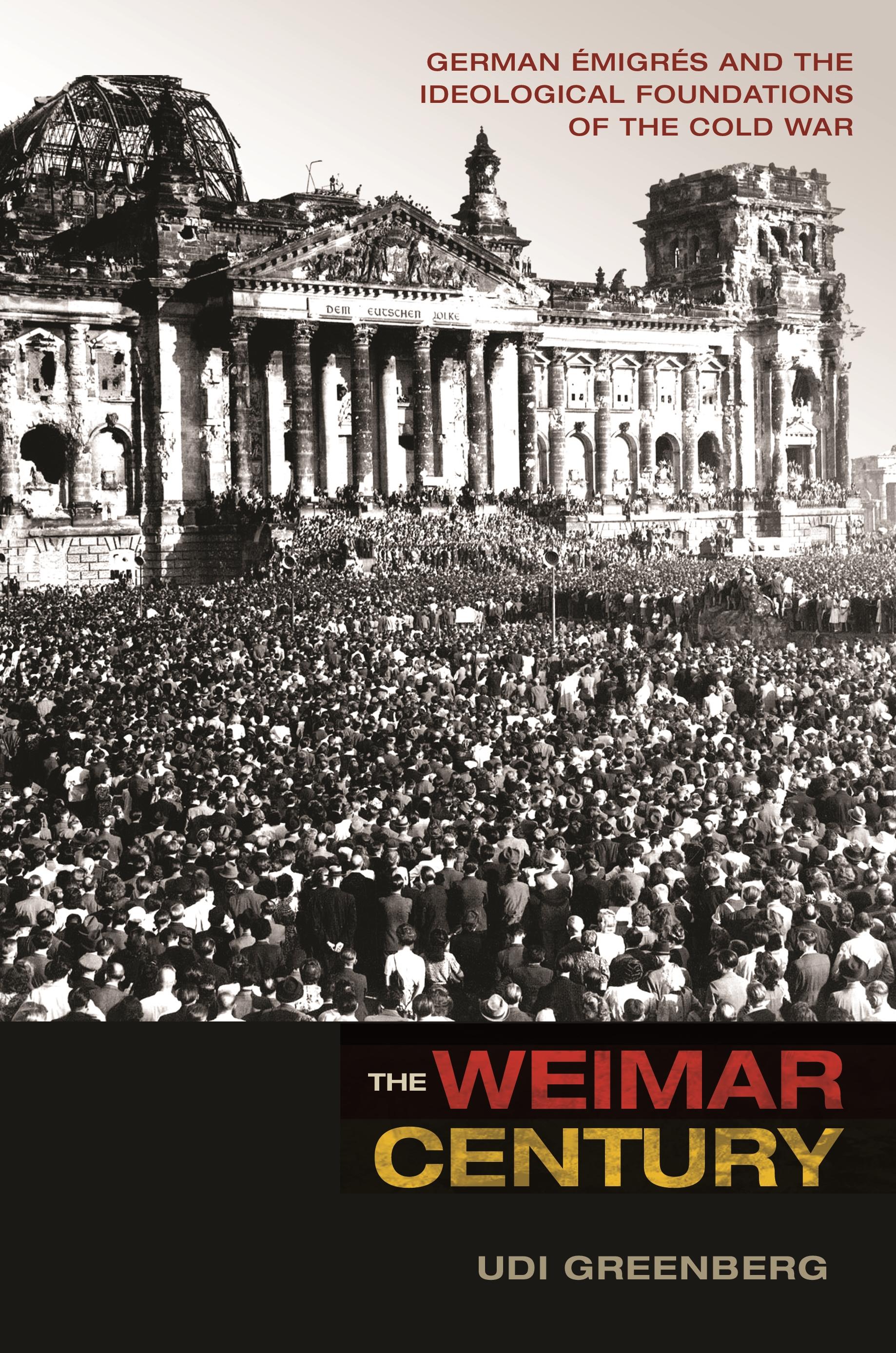
How ideas, individuals, and political traditions from Weimar Germany molded the global postwar order
The Weimar Century reveals the origins of two dramatic events: Germany's post–World War II transformation from a racist dictatorship to a liberal democracy, and the ideological genesis of the Cold War. Blending intellectual, political, and international histories, Udi Greenberg shows that the foundations of Germany’s reconstruction lay in the country’s first democratic experiment, the Weimar Republic (1918–33). He traces the paths of five crucial German émigrés who participated in Weimar’s intense political debates, spent the Nazi era in the United States, and then rebuilt Europe after a devastating war. Examining the unexpected stories of these diverse individuals—Protestant political thinker Carl J. Friedrich, Socialist theorist Ernst Fraenkel, Catholic publicist Waldemar Gurian, liberal lawyer Karl Loewenstein, and international relations theorist Hans Morgenthau—Greenberg uncovers the intellectual and political forces that forged Germany’s democracy after dictatorship, war, and occupation.
In restructuring German thought and politics, these émigrés also shaped the currents of the early Cold War. Having borne witness to Weimar’s political clashes and violent upheavals, they called on democratic regimes to permanently mobilize their citizens and resources in global struggle against their Communist enemies. In the process, they gained entry to the highest levels of American power, serving as top-level advisors to American occupation authorities in Germany and Korea, consultants for the State Department in Latin America, and leaders in universities and philanthropic foundations across Europe and the United States. Their ideas became integral to American global hegemony.
From interwar Germany to the dawn of the American century, The Weimar Century sheds light on the crucial ideas, individuals, and politics that made the trans-Atlantic postwar order.
Before Memmo my notes were scattered across PDFs. Now a workspace pulls everything into one place — I see exactly what's still left to study.
Memmo's summaries are gold before exams. I don't have to re-read 800 pages two weeks before — just the important parts.
The AI chat has saved me the night before an exam more than once. I just keep asking until I get it — no waiting on a study group to reply.
The quizzes hit exactly what I need to know. Memmo tracks what I get stuck on — so I only practice what's worth it.
Flashcards with spaced repetition are magic. Memmo knows when I'm about to forget something and brings it back.
The AI podcasts are my favorite. I listen on my way to school and get a recap without sitting at a computer.

Handbok i kvalitativa metoder
281 kr

Hållbar utveckling: en introduktion för ingenjörer och andra problemlösare
334 kr

Brymans Samhällsvetenskapliga metoder
390 kr

Projektledning
491 kr

Den orättvisa hälsan: om socioekonomiska skillnader i hälsa och livslängd
326 kr

Vetenskapsteori för nybörjare
196 kr

Organizational Leadership
429 kr

På väg mot läraryrket
172 kr

Det sociala livet i skolan: Socialpsykologiska perspektiv
253 kr

Betygsättningens didaktik
151 kr

Personality
402 kr

Studying Leadership
404 kr

Managing Innovation
477 kr

Introduktion till samhällsvetenskaplig metod
347 kr

The Psychology of Sex and Gender
698 kr

Evidens och kunskap för socialt arbete
207 kr

Introduction to Leadership
605 kr