
Before Memmo my notes were scattered across PDFs. Now a workspace pulls everything into one place — I see exactly what's still left to study.
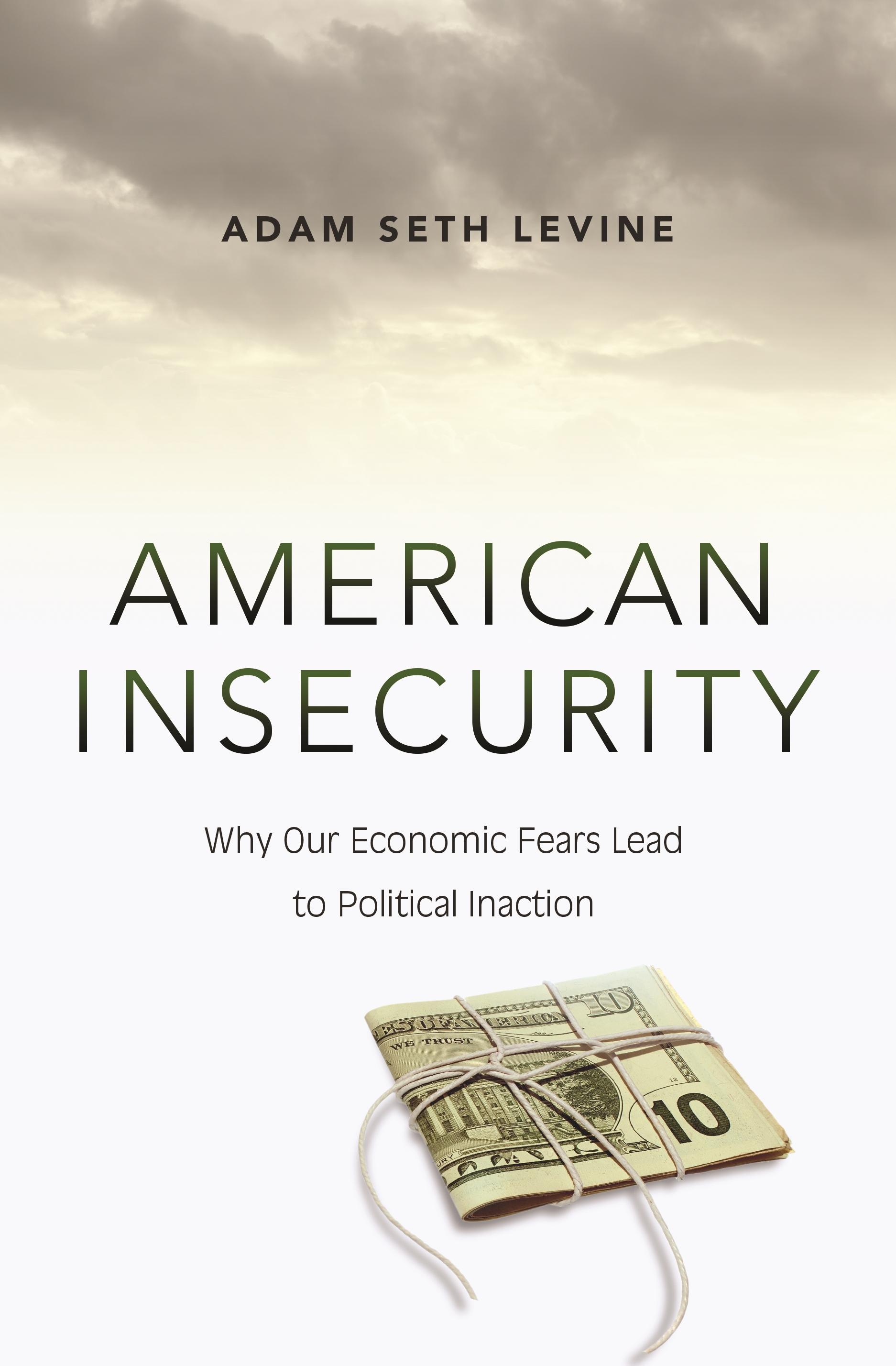
Why economic insecurity spurs so little collective political action
Americans today face no shortage of threats to their financial well-being, such as job and retirement insecurity, health care costs, and spiraling college tuition. While one might expect that these concerns would motivate people to become more politically engaged on the issues, this often doesn't happen, and the resulting inaction carries consequences for political debates and public policy. Moving beyond previously studied barriers to political organization, American Insecurity sheds light on the public's inaction over economic insecurities by showing that the rhetoric surrounding these issues is actually self-undermining. By their nature, the very arguments intended to mobilize individuals—asking them to devote money or time to politics—remind citizens of their economic fears and personal constraints, leading to undermobilization and nonparticipation.
Adam Seth Levine explains why the set of people who become politically active on financial insecurity issues is therefore quite narrow. When money is needed, only those who care about the issues but are not personally affected become involved. When time is needed, participation is limited to those not personally affected or those who are personally affected but outside of the labor force with time to spare. The latter explains why it is relatively easy to mobilize retirees on topics that reflect personal financial concerns, such as Social Security and Medicare. In general, however, when political representation requires a large group to make their case, economic insecurity threats are uniquely disadvantaged.
Scrutinizing the foundations of political behavior, American Insecurity offers a new perspective on collective participation.
Before Memmo my notes were scattered across PDFs. Now a workspace pulls everything into one place — I see exactly what's still left to study.
Memmo's summaries are gold before exams. I don't have to re-read 800 pages two weeks before — just the important parts.
The AI chat has saved me the night before an exam more than once. I just keep asking until I get it — no waiting on a study group to reply.
The quizzes hit exactly what I need to know. Memmo tracks what I get stuck on — so I only practice what's worth it.
Flashcards with spaced repetition are magic. Memmo knows when I'm about to forget something and brings it back.
The AI podcasts are my favorite. I listen on my way to school and get a recap without sitting at a computer.

Handbok i kvalitativa metoder
281 kr

Hållbar utveckling: en introduktion för ingenjörer och andra problemlösare
334 kr

Brymans Samhällsvetenskapliga metoder
390 kr

Projektledning
491 kr

Den orättvisa hälsan: om socioekonomiska skillnader i hälsa och livslängd
326 kr

Vetenskapsteori för nybörjare
196 kr

Organizational Leadership
429 kr

På väg mot läraryrket
172 kr

Det sociala livet i skolan: Socialpsykologiska perspektiv
253 kr

Betygsättningens didaktik
151 kr

Personality
402 kr

Studying Leadership
404 kr

Managing Innovation
477 kr

Introduktion till samhällsvetenskaplig metod
347 kr

The Psychology of Sex and Gender
698 kr

Evidens och kunskap för socialt arbete
207 kr

Introduction to Leadership
605 kr