
Before Memmo my notes were scattered across PDFs. Now a workspace pulls everything into one place — I see exactly what's still left to study.
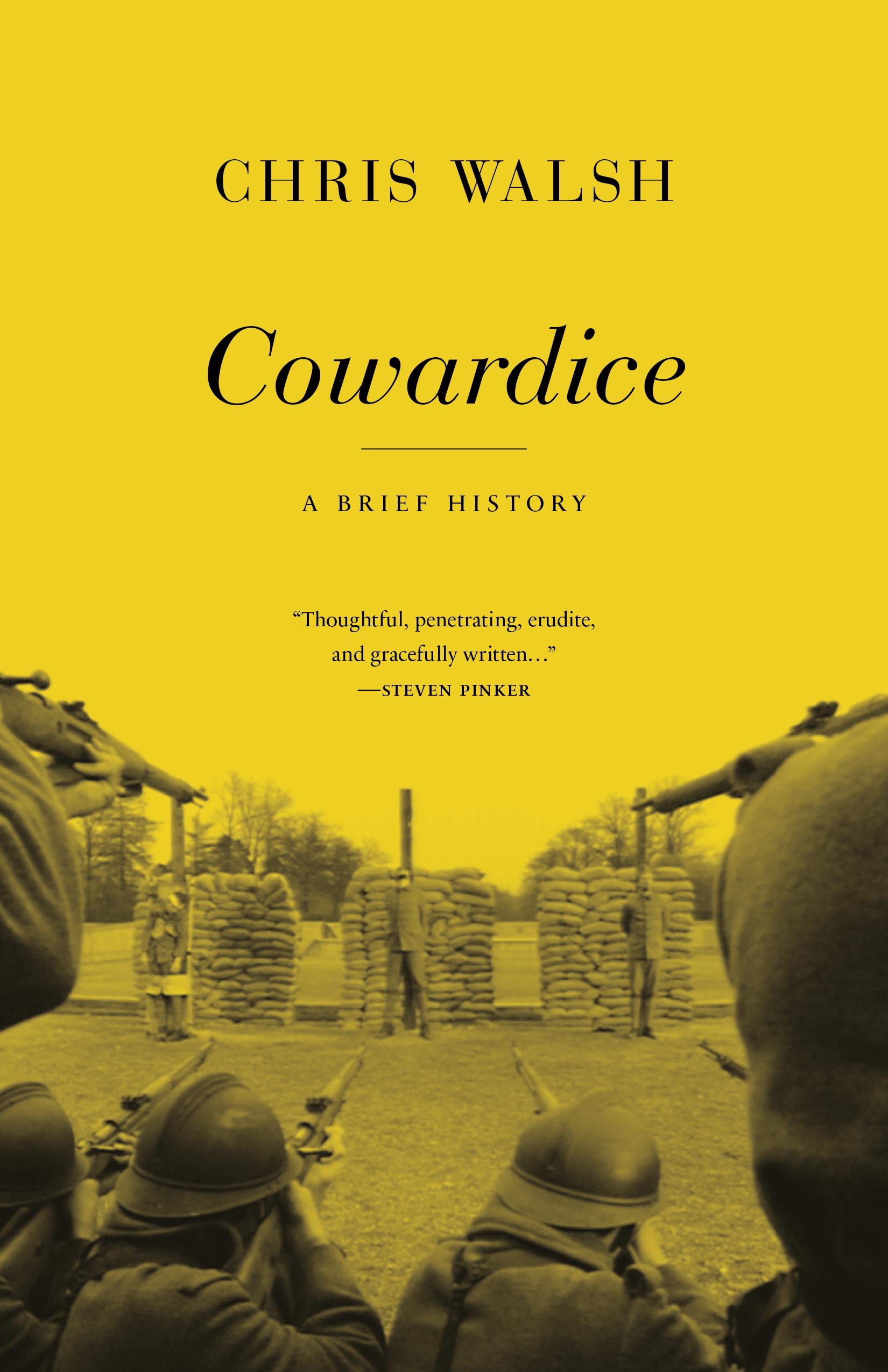
A provocative look at how cowardice has been understood from ancient times to the present
Coward. It's a grave insult, likely to provoke anger, shame, even violence. But what exactly is cowardice? When terrorists are called cowards, does it mean the same as when the term is applied to soldiers? And what, if anything, does cowardice have to do with the rest of us? Bringing together sources from court-martial cases to literary and film classics such as Dante's Inferno, The Red Badge of Courage, and The Thin Red Line, Cowardice recounts the great harm that both cowards and the fear of seeming cowardly have done, and traces the idea of cowardice’s power to its evolutionary roots. But Chris Walsh also shows that this power has faded, most dramatically on the battlefield. Misconduct that earlier might have been punished as cowardice has more recently often been treated medically, as an adverse reaction to trauma, and Walsh explores a parallel therapeutic shift that reaches beyond war, into the realms of politics, crime, philosophy, religion, and love.
Yet, as Walsh indicates, the therapeutic has not altogether triumphed—contempt for cowardice endures, and he argues that such contempt can be a good thing. Courage attracts much more of our attention, but rigorously understanding cowardice may be more morally useful, for it requires us to think critically about our duties and our fears, and it helps us to act ethically when fear and duty conflict.
Richly illustrated and filled with fascinating stories and insights, Cowardice is the first sustained analysis of a neglected but profound and pervasive feature of human experience.
Before Memmo my notes were scattered across PDFs. Now a workspace pulls everything into one place — I see exactly what's still left to study.
Memmo's summaries are gold before exams. I don't have to re-read 800 pages two weeks before — just the important parts.
The AI chat has saved me the night before an exam more than once. I just keep asking until I get it — no waiting on a study group to reply.
The quizzes hit exactly what I need to know. Memmo tracks what I get stuck on — so I only practice what's worth it.
Flashcards with spaced repetition are magic. Memmo knows when I'm about to forget something and brings it back.
The AI podcasts are my favorite. I listen on my way to school and get a recap without sitting at a computer.

Handbok i kvalitativa metoder
281 kr

Hållbar utveckling: en introduktion för ingenjörer och andra problemlösare
334 kr

Brymans Samhällsvetenskapliga metoder
390 kr

Projektledning
491 kr

Den orättvisa hälsan: om socioekonomiska skillnader i hälsa och livslängd
326 kr

Vetenskapsteori för nybörjare
196 kr

Organizational Leadership
429 kr

På väg mot läraryrket
172 kr

Det sociala livet i skolan: Socialpsykologiska perspektiv
253 kr

Betygsättningens didaktik
151 kr

Personality
402 kr

Studying Leadership
404 kr

Managing Innovation
477 kr

Introduktion till samhällsvetenskaplig metod
347 kr

The Psychology of Sex and Gender
698 kr

Evidens och kunskap för socialt arbete
207 kr

Introduction to Leadership
605 kr