
Before Memmo my notes were scattered across PDFs. Now a workspace pulls everything into one place — I see exactly what's still left to study.
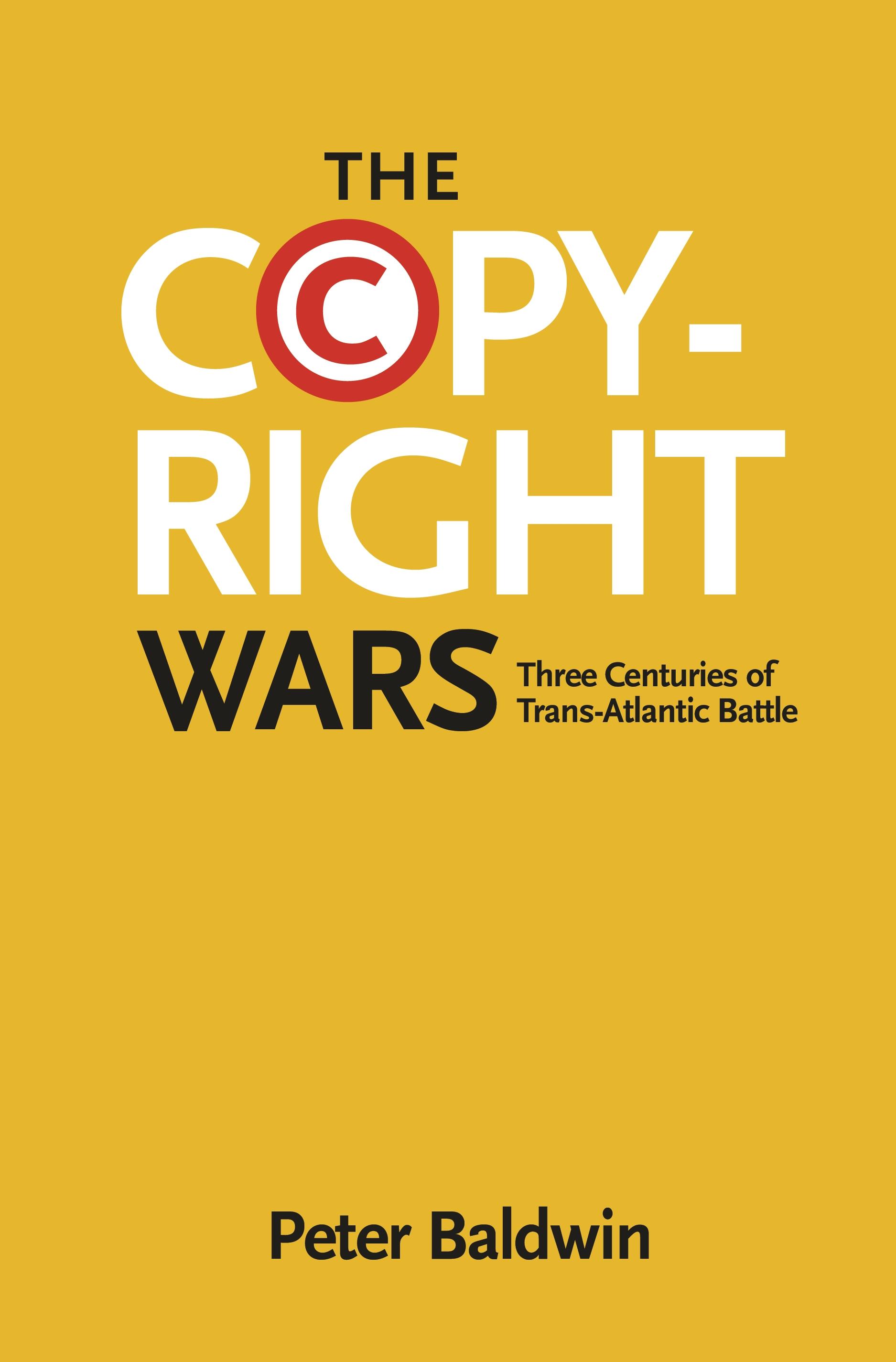
Today's copyright wars can seem unprecedented. Sparked by the digital revolution that has made copyright—and its violation—a part of everyday life, fights over intellectual property have pitted creators, Hollywood, and governments against consumers, pirates, Silicon Valley, and open-access advocates. But while the digital generation can be forgiven for thinking the dispute between, for example, the publishing industry and Google is completely new, the copyright wars in fact stretch back three centuries—and their history is essential to understanding today’s battles. The Copyright Wars—the first major trans-Atlantic history of copyright from its origins to today—tells this important story.
Peter Baldwin explains why the copyright wars have always been driven by a fundamental tension. Should copyright assure authors and rights holders lasting claims, much like conventional property rights, as in Continental Europe? Or should copyright be primarily concerned with giving consumers cheap and easy access to a shared culture, as in Britain and America? The Copyright Wars describes how the Continental approach triumphed, dramatically increasing the claims of rights holders. The book also tells the widely forgotten story of how America went from being a leading copyright opponent and pirate in the eighteenth and nineteenth centuries to become the world’s intellectual property policeman in the late twentieth. As it became a net cultural exporter and its content industries saw their advantage in the Continental ideology of strong authors’ rights, the United States reversed position on copyright, weakening its commitment to the ideal of universal enlightenment—a history that reveals that today’s open-access advocates are heirs of a venerable American tradition.
Compelling and wide-ranging, The Copyright Wars is indispensable for understanding a crucial economic, cultural, and political conflict that has reignited in our own time.
Before Memmo my notes were scattered across PDFs. Now a workspace pulls everything into one place — I see exactly what's still left to study.
Memmo's summaries are gold before exams. I don't have to re-read 800 pages two weeks before — just the important parts.
The AI chat has saved me the night before an exam more than once. I just keep asking until I get it — no waiting on a study group to reply.
The quizzes hit exactly what I need to know. Memmo tracks what I get stuck on — so I only practice what's worth it.
Flashcards with spaced repetition are magic. Memmo knows when I'm about to forget something and brings it back.
The AI podcasts are my favorite. I listen on my way to school and get a recap without sitting at a computer.

Handbok i kvalitativa metoder
281 kr

Hållbar utveckling: en introduktion för ingenjörer och andra problemlösare
334 kr

Brymans Samhällsvetenskapliga metoder
390 kr

Projektledning
491 kr

Den orättvisa hälsan: om socioekonomiska skillnader i hälsa och livslängd
326 kr

Vetenskapsteori för nybörjare
196 kr

Organizational Leadership
429 kr

På väg mot läraryrket
172 kr

Det sociala livet i skolan: Socialpsykologiska perspektiv
253 kr

Betygsättningens didaktik
151 kr

Personality
402 kr

Studying Leadership
404 kr

Managing Innovation
477 kr

Introduktion till samhällsvetenskaplig metod
347 kr

The Psychology of Sex and Gender
698 kr

Evidens och kunskap för socialt arbete
207 kr

Introduction to Leadership
605 kr