
Before Memmo my notes were scattered across PDFs. Now a workspace pulls everything into one place — I see exactly what's still left to study.
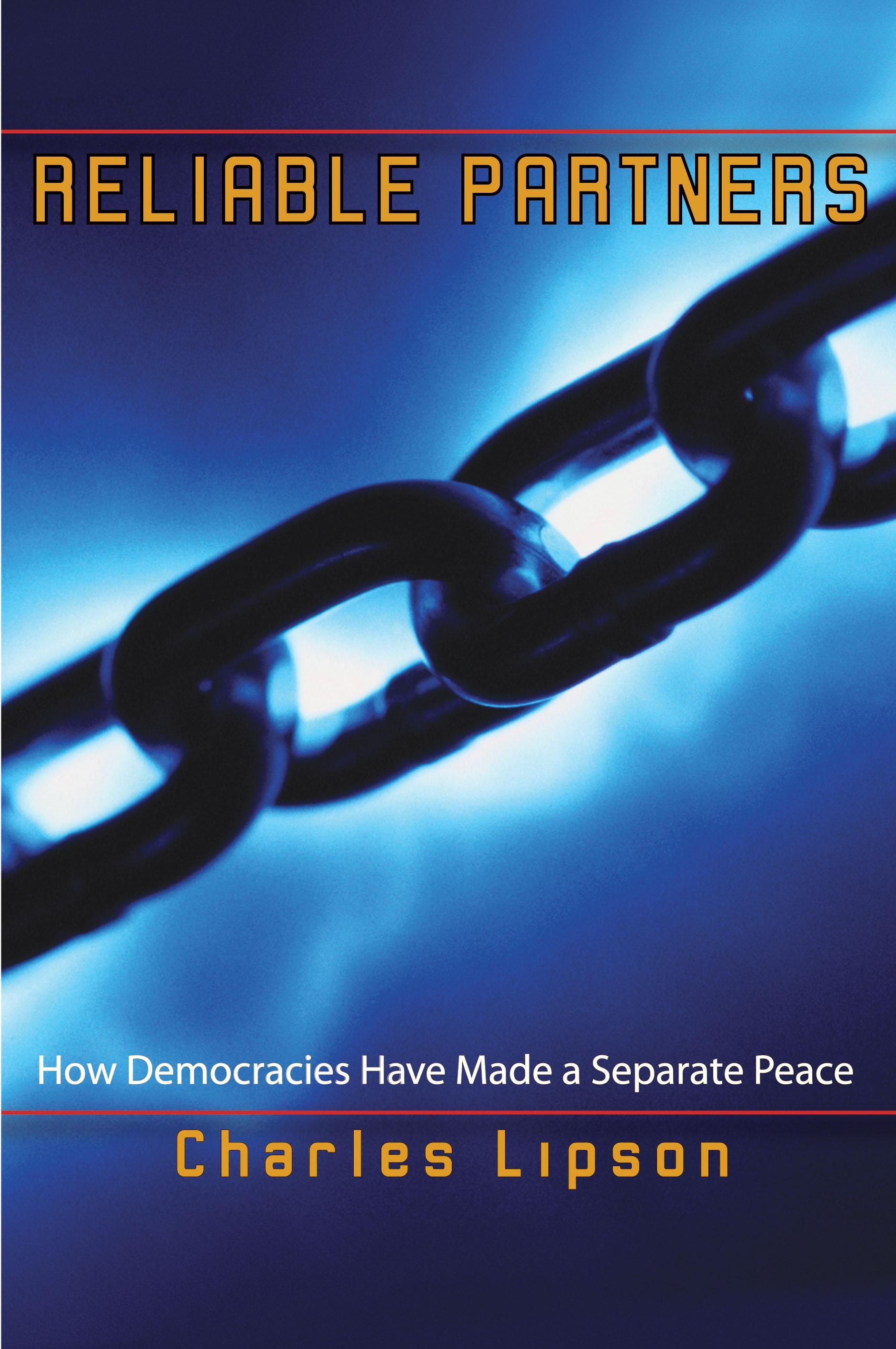
Democracies often go to war but almost never against each other. Indeed, "the democratic peace" has become a catchphrase among scholars and even U.S. Presidents. But why do democracies avoid fighting each other? Reliable Partners offers the first systematic and definitive explanation. Examining decades of research and speculation on the subject and testing this against the history of relations between democracies over the last two centuries, Charles Lipson concludes that constitutional democracies have a "contracting advantage"--a unique ability to settle conflicts with each other by durable agreements. In so doing he forcefully counters realist claims that a regime's character is irrelevant to war and peace. Lipson argues that because democracies are confident their bargains will stick, they can negotiate effective settlements with each other rather than incur the great costs of war.
Why are democracies more reliable partners? Because their politics are uniquely open to outside scrutiny and facilitate long-term commitments. They cannot easily bluff, deceive, or launch surprise attacks. While this transparency weakens their bargaining position, it also makes their promises more credible--and more durable, for democracies are generally stable. Their leaders are constrained by constitutional rules, independent officials, and the political costs of abandoning public commitments. All this allows for solid bargains between democracies. When democracies contemplate breaking their agreements, their open debate gives partners advance notice and a chance to protect themselves. Hence agreements among democracies are less risky than those with nondemocratic states. Setting rigorous analysis in friendly, vigorous prose, Reliable Partners resolves longstanding questions about the democratic peace and highlights important new findings about democracies in world politics, from rivalries to alliances. Above all, it shows conclusively that democracies are uniquely adapted to seal enduring bargains with each other and thus avoid the blight of war.
Before Memmo my notes were scattered across PDFs. Now a workspace pulls everything into one place — I see exactly what's still left to study.
Memmo's summaries are gold before exams. I don't have to re-read 800 pages two weeks before — just the important parts.
The AI chat has saved me the night before an exam more than once. I just keep asking until I get it — no waiting on a study group to reply.
The quizzes hit exactly what I need to know. Memmo tracks what I get stuck on — so I only practice what's worth it.
Flashcards with spaced repetition are magic. Memmo knows when I'm about to forget something and brings it back.
The AI podcasts are my favorite. I listen on my way to school and get a recap without sitting at a computer.

Handbok i kvalitativa metoder
281 kr

Hållbar utveckling: en introduktion för ingenjörer och andra problemlösare
334 kr

Brymans Samhällsvetenskapliga metoder
390 kr

Projektledning
491 kr

Den orättvisa hälsan: om socioekonomiska skillnader i hälsa och livslängd
326 kr

Vetenskapsteori för nybörjare
196 kr

Organizational Leadership
429 kr

På väg mot läraryrket
172 kr

Det sociala livet i skolan: Socialpsykologiska perspektiv
253 kr

Betygsättningens didaktik
151 kr

Personality
402 kr

Studying Leadership
404 kr

Managing Innovation
477 kr

Introduktion till samhällsvetenskaplig metod
347 kr

The Psychology of Sex and Gender
698 kr

Evidens och kunskap för socialt arbete
207 kr

Introduction to Leadership
605 kr