
Before Memmo my notes were scattered across PDFs. Now a workspace pulls everything into one place — I see exactly what's still left to study.
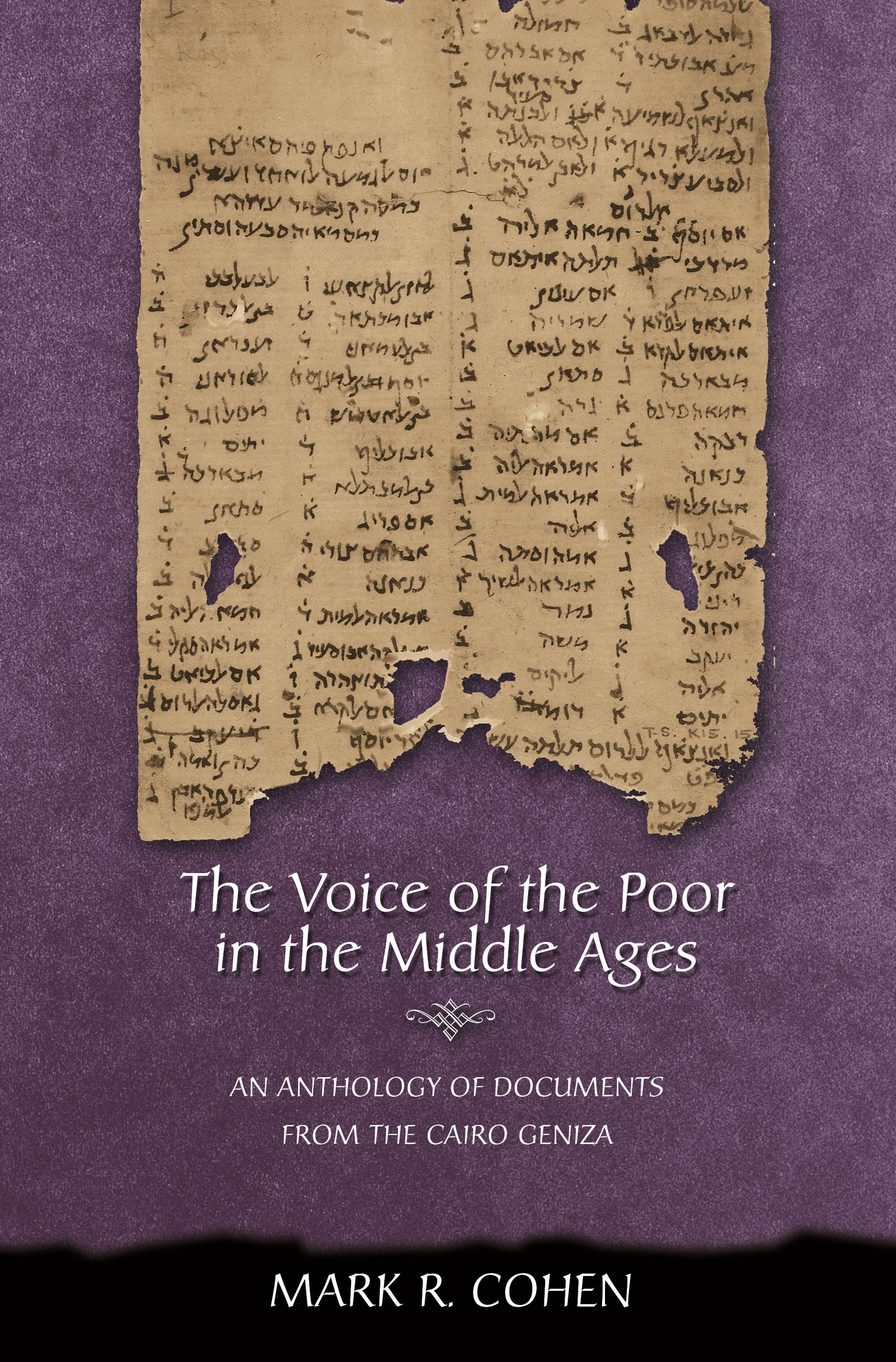
They are voices that have been silent for centuries: those of captives and refugees, widows and orphans, the blind and infirm, and the underclass of the "working poor." Now, for the first time, the voices of the poor in the Middle Ages come to life in this moving book by historian Mark Cohen. A companion to Cohen's other volume, Poverty and Charity in the Jewish Community of Medieval Egypt, the book presents more than ninety letters, alms lists, donor lists, and other related documents from the Geniza, a hidden chamber for discarded papers, situated inside a wall in a Cairo synagogue. Cohen has translated these documents, providing the historical context for each.
In the past, most of what we knew of the poor in the Middle Ages came from records and observations compiled by their literate social superiors, from tax collectors to the inquisitor's clerk, from criminal judges to the benefactors of the helpless, from makers of Islamic waqf deeds to authors of Arabic chronicles, and in Judaism, from Rabbis who wrote responsa to compilers of Jewish-law codes.
What distinguishes this book is that it contains the voices of the poor themselves, found in documents heretofore largely ignored. Because an ancient custom in Judaism prohibited the destruction of pages of sacred writing, the documents were preserved, largely unharmed, for as many as nine centuries.
The Voice of the Poor in the Middle Ages provides access to the attitudes and philanthropic activities of the charitable, alongside the dramatic writings of the poor themselves, whether penned in their own hands or dictated to a scribe or family member. The book also allows a rare glimpse into the women of the Middle Ages, as well as into the world of private charity--an area long elusive to the medieval historian. For researchers and students alike, this book will be an invaluable social history source for years to come.
Before Memmo my notes were scattered across PDFs. Now a workspace pulls everything into one place — I see exactly what's still left to study.
Memmo's summaries are gold before exams. I don't have to re-read 800 pages two weeks before — just the important parts.
The AI chat has saved me the night before an exam more than once. I just keep asking until I get it — no waiting on a study group to reply.
The quizzes hit exactly what I need to know. Memmo tracks what I get stuck on — so I only practice what's worth it.
Flashcards with spaced repetition are magic. Memmo knows when I'm about to forget something and brings it back.
The AI podcasts are my favorite. I listen on my way to school and get a recap without sitting at a computer.

Handbok i kvalitativa metoder
281 kr

Hållbar utveckling: en introduktion för ingenjörer och andra problemlösare
334 kr

Brymans Samhällsvetenskapliga metoder
390 kr

Projektledning
491 kr

Den orättvisa hälsan: om socioekonomiska skillnader i hälsa och livslängd
326 kr

Vetenskapsteori för nybörjare
196 kr

Organizational Leadership
429 kr

På väg mot läraryrket
172 kr

Det sociala livet i skolan: Socialpsykologiska perspektiv
253 kr

Betygsättningens didaktik
151 kr

Personality
402 kr

Studying Leadership
404 kr

Managing Innovation
477 kr

Introduktion till samhällsvetenskaplig metod
347 kr

The Psychology of Sex and Gender
698 kr

Evidens och kunskap för socialt arbete
207 kr

Introduction to Leadership
605 kr