
Before Memmo my notes were scattered across PDFs. Now a workspace pulls everything into one place — I see exactly what's still left to study.
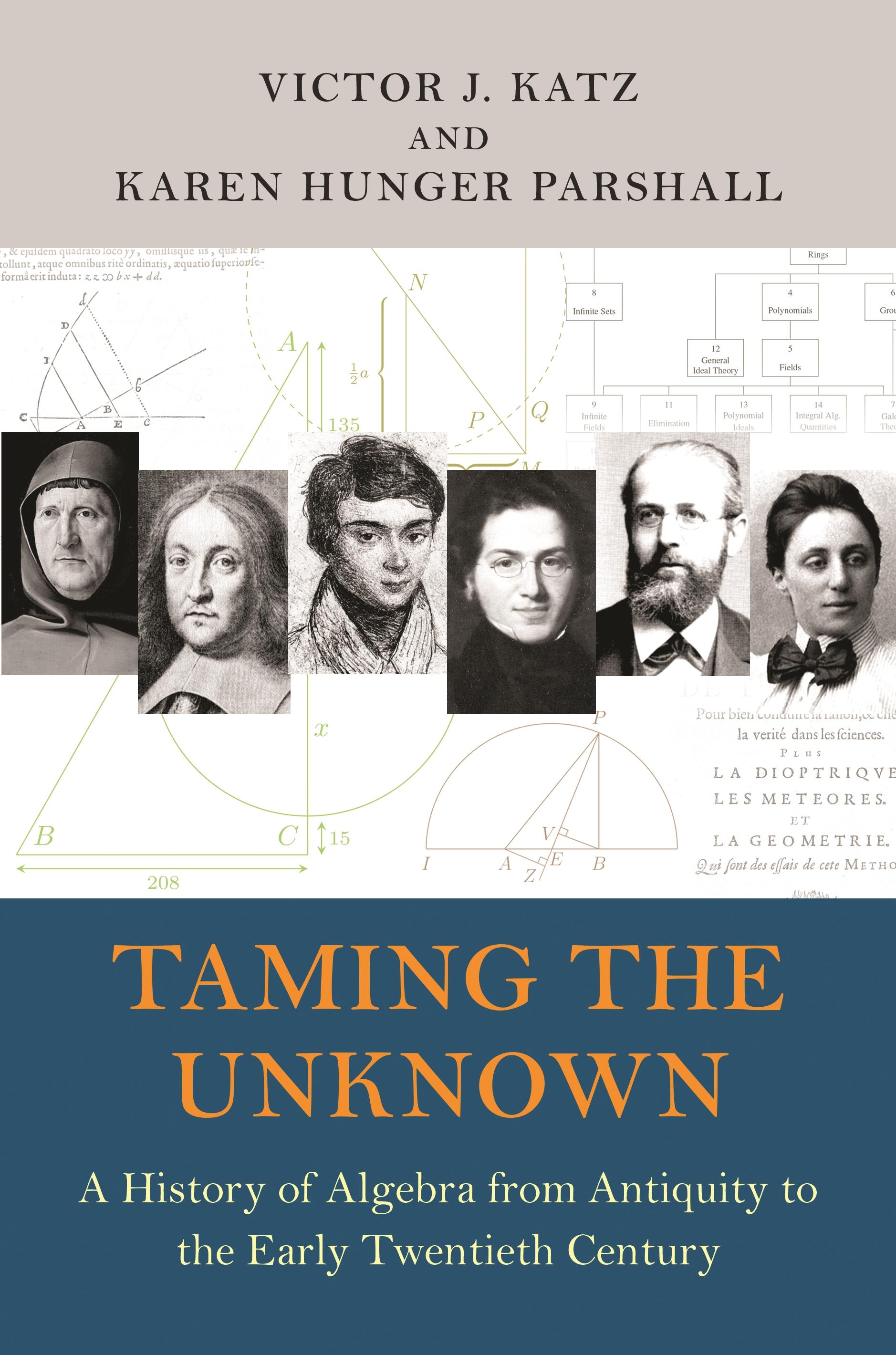
What is algebra? For some, it is an abstract language of x's and y’s. For mathematics majors and professional mathematicians, it is a world of axiomatically defined constructs like groups, rings, and fields. Taming the Unknown considers how these two seemingly different types of algebra evolved and how they relate. Victor Katz and Karen Parshall explore the history of algebra, from its roots in the ancient civilizations of Egypt, Mesopotamia, Greece, China, and India, through its development in the medieval Islamic world and medieval and early modern Europe, to its modern form in the early twentieth century.
Defining algebra originally as a collection of techniques for determining unknowns, the authors trace the development of these techniques from geometric beginnings in ancient Egypt and Mesopotamia and classical Greece. They show how similar problems were tackled in Alexandrian Greece, in China, and in India, then look at how medieval Islamic scholars shifted to an algorithmic stage, which was further developed by medieval and early modern European mathematicians. With the introduction of a flexible and operative symbolism in the sixteenth and seventeenth centuries, algebra entered into a dynamic period characterized by the analytic geometry that could evaluate curves represented by equations in two variables, thereby solving problems in the physics of motion. This new symbolism freed mathematicians to study equations of degrees higher than two and three, ultimately leading to the present abstract era.
Taming the Unknown follows algebra’s remarkable growth through different epochs around the globe.
Before Memmo my notes were scattered across PDFs. Now a workspace pulls everything into one place — I see exactly what's still left to study.
Memmo's summaries are gold before exams. I don't have to re-read 800 pages two weeks before — just the important parts.
The AI chat has saved me the night before an exam more than once. I just keep asking until I get it — no waiting on a study group to reply.
The quizzes hit exactly what I need to know. Memmo tracks what I get stuck on — so I only practice what's worth it.
Flashcards with spaced repetition are magic. Memmo knows when I'm about to forget something and brings it back.
The AI podcasts are my favorite. I listen on my way to school and get a recap without sitting at a computer.

Handbok i kvalitativa metoder
281 kr

Hållbar utveckling: en introduktion för ingenjörer och andra problemlösare
334 kr

Brymans Samhällsvetenskapliga metoder
390 kr

Projektledning
491 kr

Den orättvisa hälsan: om socioekonomiska skillnader i hälsa och livslängd
326 kr

Organizational Leadership
429 kr

Vetenskapsteori för nybörjare
196 kr

På väg mot läraryrket
172 kr

Det sociala livet i skolan: Socialpsykologiska perspektiv
253 kr

Betygsättningens didaktik
151 kr

Personality
402 kr

Studying Leadership
404 kr

Managing Innovation
477 kr

Introduktion till samhällsvetenskaplig metod
347 kr

The Psychology of Sex and Gender
698 kr

Evidens och kunskap för socialt arbete
207 kr

Introduction to Leadership
605 kr