
Before Memmo my notes were scattered across PDFs. Now a workspace pulls everything into one place — I see exactly what's still left to study.
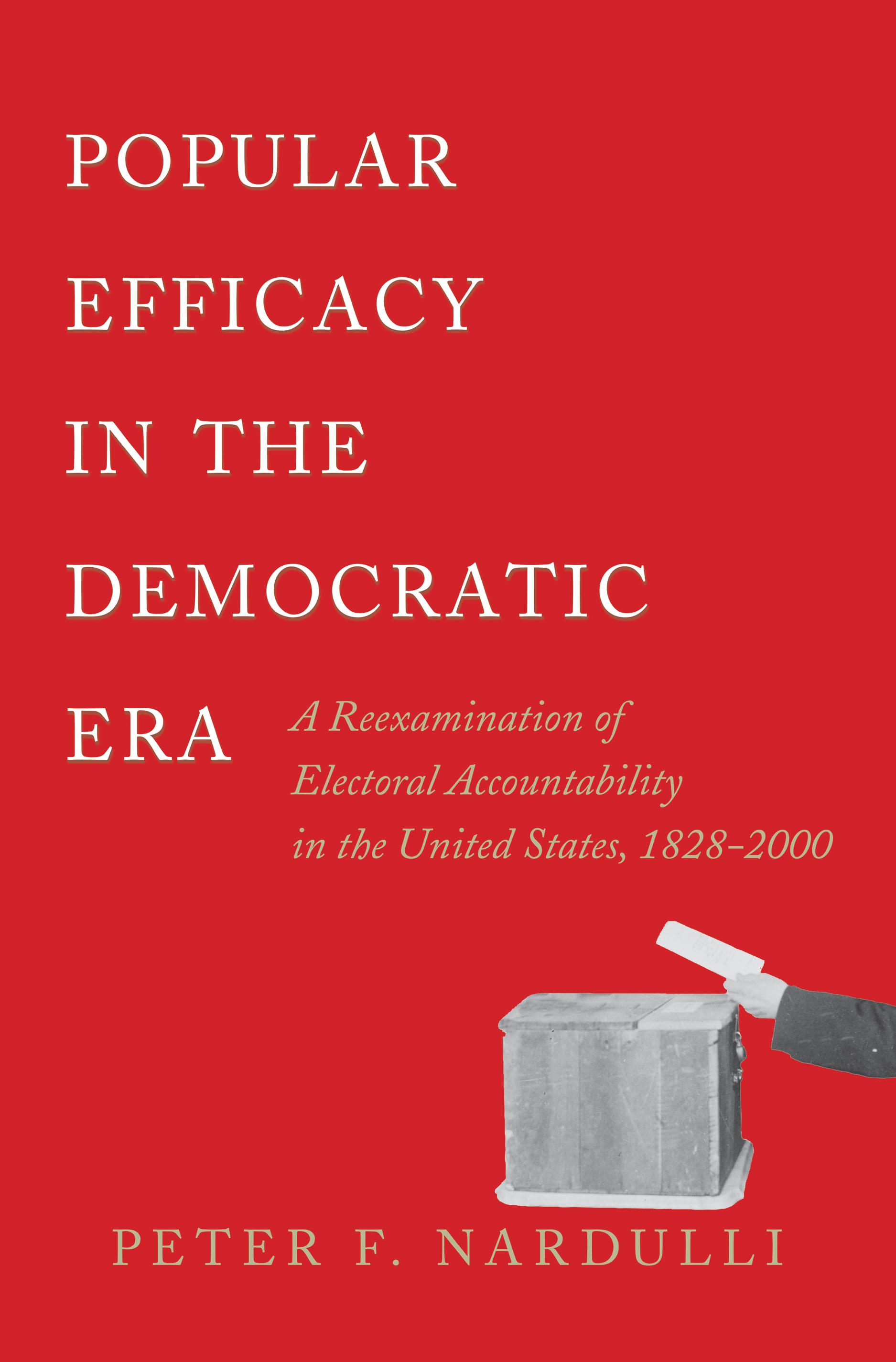
Social scientists have long criticized American voters for being "unsophisticated" in the way they acquire and use political information. The low level of political sophistication leaves them vulnerable to manipulation by political "elites," whose sway over voters is deemed incontrovertible and often decisive. In this book, Peter Nardulli challenges the conventional wisdom that citizens are "manageable fools," with little capacity to exercise independent judgment in the voting booth. Rather, he argues, voters are eminently capable of playing an efficacious role in democratic politics and of routinely demonstrating the ability to evaluate competing stewards in a discriminating manner.
Nardulli's book offers a cognitively based model of voting and uses a normal vote approach to analyzing local-level election returns. It examines the entire sweep of United States presidential elections in the democratic era (1828 to 2000), making it the most encompassing empirical analysis of presidential voting to date. Nardulli's analysis separates presidential elections into three categories: those that produce a major, enduring change in voting patterns, those that represent a short-term deviation from prevailing voting patterns, and those in which the dominant party receives a resounding endorsement from the electorate. These "disequilibrating" elections have been routine in American electoral history, particularly after the adoption of the Progressive-Era reforms.
Popular Efficacy in the Democratic Era provides a dramatically different picture of mass-elite linkages than most prior studies of American democracy, and an image of voters as being neither foolish nor manageable. Moreover, it shows why party elites must take proactive steps to provide for the core political desires of voters.
Before Memmo my notes were scattered across PDFs. Now a workspace pulls everything into one place — I see exactly what's still left to study.
Memmo's summaries are gold before exams. I don't have to re-read 800 pages two weeks before — just the important parts.
The AI chat has saved me the night before an exam more than once. I just keep asking until I get it — no waiting on a study group to reply.
The quizzes hit exactly what I need to know. Memmo tracks what I get stuck on — so I only practice what's worth it.
Flashcards with spaced repetition are magic. Memmo knows when I'm about to forget something and brings it back.
The AI podcasts are my favorite. I listen on my way to school and get a recap without sitting at a computer.

Handbok i kvalitativa metoder
281 kr

Hållbar utveckling: en introduktion för ingenjörer och andra problemlösare
334 kr

Brymans Samhällsvetenskapliga metoder
390 kr

Projektledning
491 kr

Den orättvisa hälsan: om socioekonomiska skillnader i hälsa och livslängd
326 kr

Vetenskapsteori för nybörjare
196 kr

Organizational Leadership
429 kr

På väg mot läraryrket
172 kr

Det sociala livet i skolan: Socialpsykologiska perspektiv
253 kr

Betygsättningens didaktik
151 kr

Personality
402 kr

Studying Leadership
404 kr

Managing Innovation
477 kr

Introduktion till samhällsvetenskaplig metod
347 kr

The Psychology of Sex and Gender
698 kr

Evidens och kunskap för socialt arbete
207 kr

Introduction to Leadership
605 kr