
Before Memmo my notes were scattered across PDFs. Now a workspace pulls everything into one place — I see exactly what's still left to study.
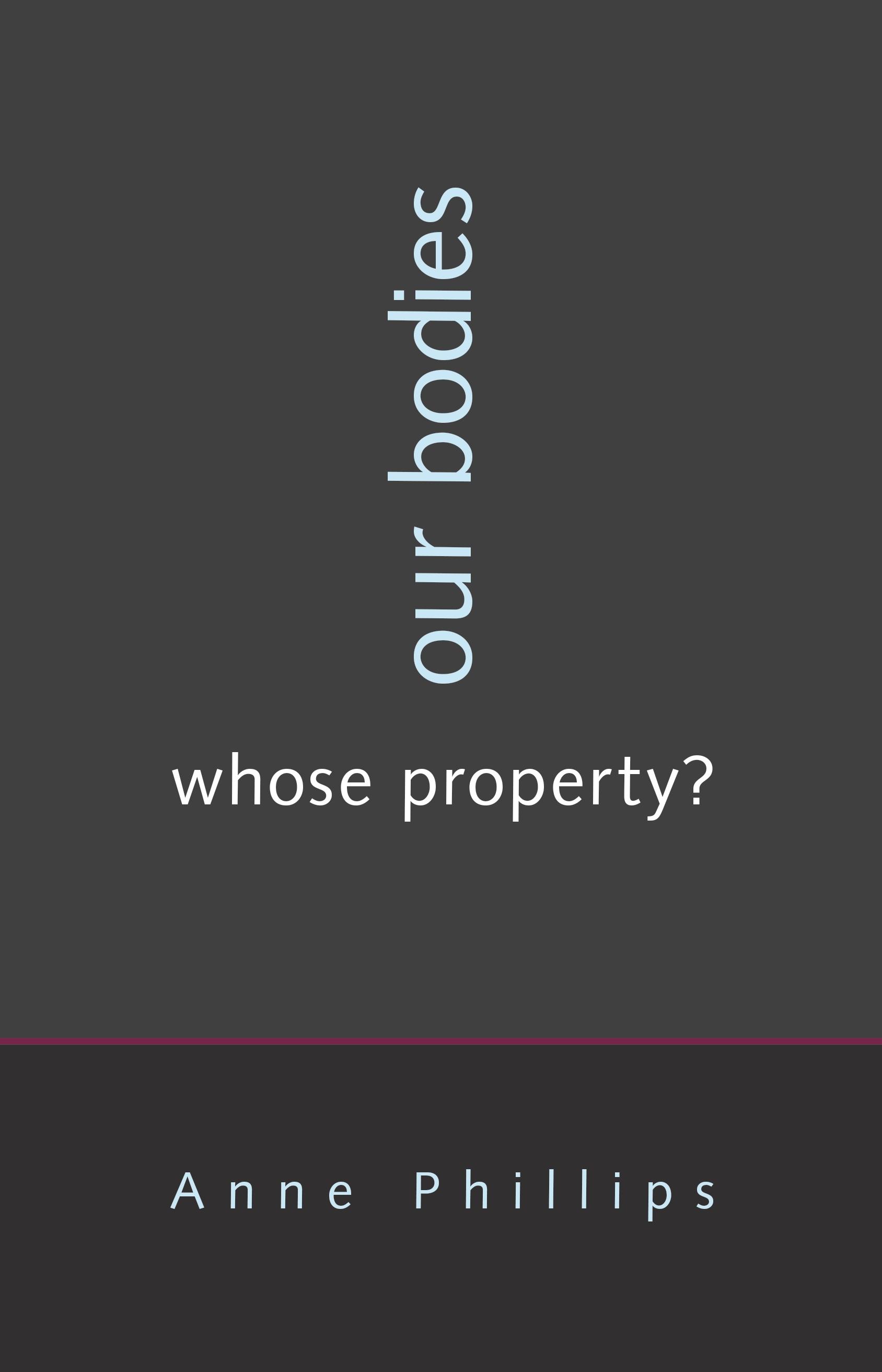
An argument against treating our bodies as commodities
No one wants to be treated like an object, regarded as an item of property, or put up for sale. Yet many people frame personal autonomy in terms of self-ownership, representing themselves as property owners with the right to do as they wish with their bodies. Others do not use the language of property, but are similarly insistent on the rights of free individuals to decide for themselves whether to engage in commercial transactions for sex, reproduction, or organ sales. Drawing on analyses of rape, surrogacy, and markets in human organs, Our Bodies, Whose Property? challenges notions of freedom based on ownership of our bodies and argues against the normalization of markets in bodily services and parts. Anne Phillips explores the risks associated with metaphors of property and the reasons why the commodification of the body remains problematic.
What, she asks, is wrong with thinking of oneself as the owner of one's body? What is wrong with making our bodies available for rent or sale? What, if anything, is the difference between markets in sex, reproduction, or human body parts, and the other markets we commonly applaud? Phillips contends that body markets occupy the outer edges of a continuum that is, in some way, a feature of all labor markets. But she also emphasizes that we all have bodies, and considers the implications of this otherwise banal fact for equality. Bodies remind us of shared vulnerability, alerting us to the common experience of living as embodied beings in the same world.
Examining the complex issue of body exceptionalism, Our Bodies, Whose Property? demonstrates that treating the body as property makes human equality harder to comprehend.
Before Memmo my notes were scattered across PDFs. Now a workspace pulls everything into one place — I see exactly what's still left to study.
Memmo's summaries are gold before exams. I don't have to re-read 800 pages two weeks before — just the important parts.
The AI chat has saved me the night before an exam more than once. I just keep asking until I get it — no waiting on a study group to reply.
The quizzes hit exactly what I need to know. Memmo tracks what I get stuck on — so I only practice what's worth it.
Flashcards with spaced repetition are magic. Memmo knows when I'm about to forget something and brings it back.
The AI podcasts are my favorite. I listen on my way to school and get a recap without sitting at a computer.

Handbok i kvalitativa metoder
281 kr

Hållbar utveckling: en introduktion för ingenjörer och andra problemlösare
334 kr

Brymans Samhällsvetenskapliga metoder
390 kr

Projektledning
491 kr

Den orättvisa hälsan: om socioekonomiska skillnader i hälsa och livslängd
326 kr

Vetenskapsteori för nybörjare
196 kr

Organizational Leadership
429 kr

På väg mot läraryrket
172 kr

Det sociala livet i skolan: Socialpsykologiska perspektiv
253 kr

Betygsättningens didaktik
151 kr

Personality
402 kr

Studying Leadership
404 kr

Managing Innovation
477 kr

Introduktion till samhällsvetenskaplig metod
347 kr

The Psychology of Sex and Gender
698 kr

Evidens och kunskap för socialt arbete
207 kr

Introduction to Leadership
605 kr