
Before Memmo my notes were scattered across PDFs. Now a workspace pulls everything into one place — I see exactly what's still left to study.
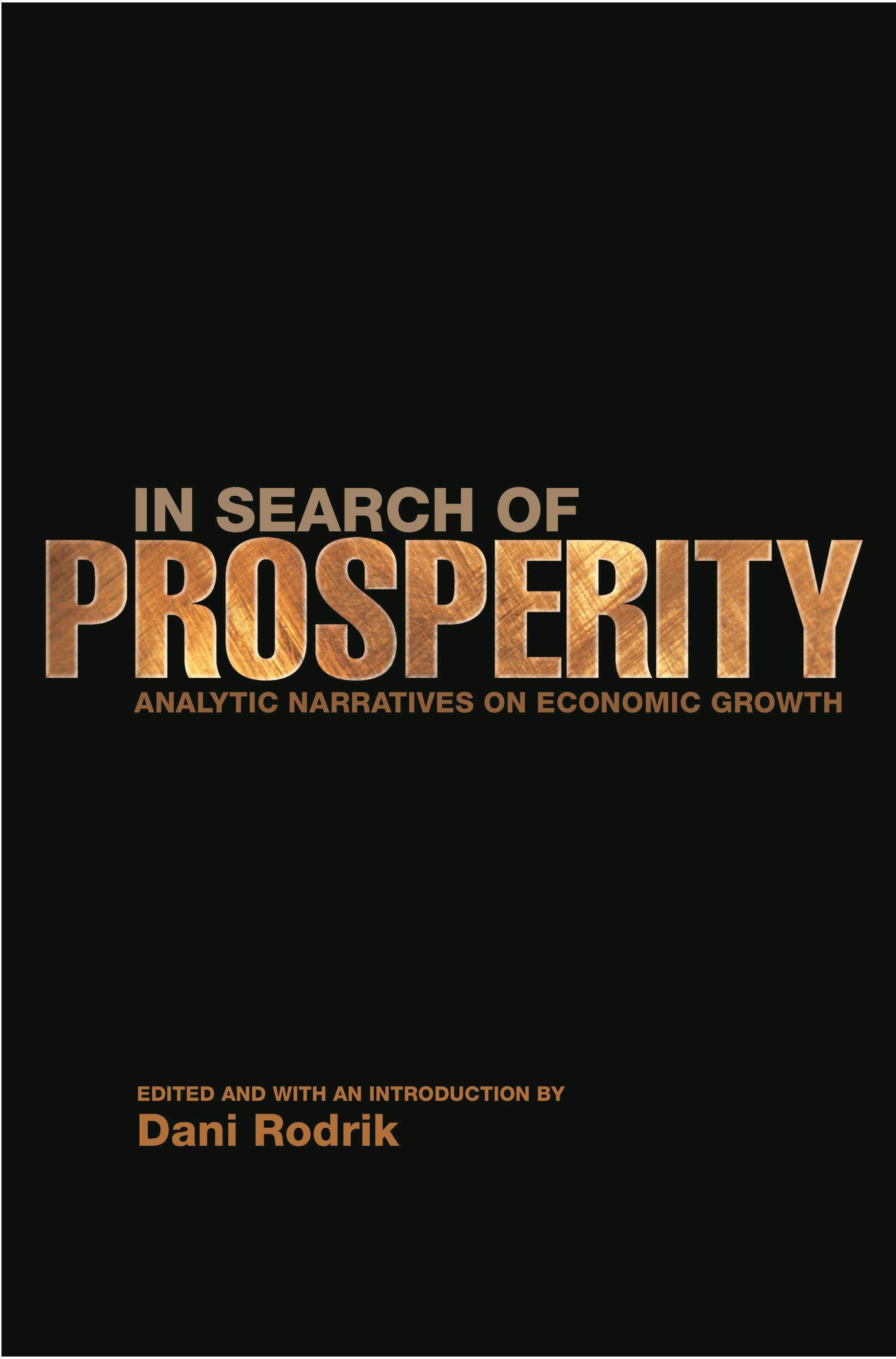
The economics of growth has come a long way since it regained center stage for economists in the mid-1980s. Here for the first time is a series of country studies guided by that research. The thirteen essays, by leading economists, shed light on some of the most important growth puzzles of our time. How did China grow so rapidly despite the absence of full-fledged private property rights? What happened in India after the early 1980s to more than double its growth rate? How did Botswana and Mauritius avoid the problems that other countries in sub--Saharan Africa succumbed to? How did Indonesia manage to grow over three decades despite weak institutions and distorted microeconomic policies and why did it suffer such a collapse after 1997?
What emerges from this collective effort is a deeper understanding of the centrality of institutions. Economies that have performed well over the long term owe their success not to geography or trade, but to institutions that have generated market-oriented incentives, protected property rights, and enabled stability. However, these narratives warn against a cookie-cutter approach to institution building.
The contributors are Daron Acemoglu, Maite Careaga, Gregory Clark, J. Bradford DeLong, Georges de Menil, William Easterly, Ricardo Hausmann, Simon Johnson, Daniel Kaufmann, Massimo Mastruzzi, Ian W. McLean, Lant Pritchett, Yingyi Qian, James A. Robinson, Devesh Roy, Arvind Subramanian, Alan M. Taylor, Jonathan Temple, Barry R. Weingast, Susan Wolcott, and Diego Zavaleta.
Before Memmo my notes were scattered across PDFs. Now a workspace pulls everything into one place — I see exactly what's still left to study.
Memmo's summaries are gold before exams. I don't have to re-read 800 pages two weeks before — just the important parts.
The AI chat has saved me the night before an exam more than once. I just keep asking until I get it — no waiting on a study group to reply.
The quizzes hit exactly what I need to know. Memmo tracks what I get stuck on — so I only practice what's worth it.
Flashcards with spaced repetition are magic. Memmo knows when I'm about to forget something and brings it back.
The AI podcasts are my favorite. I listen on my way to school and get a recap without sitting at a computer.

Handbok i kvalitativa metoder
281 kr

Hållbar utveckling: en introduktion för ingenjörer och andra problemlösare
334 kr

Brymans Samhällsvetenskapliga metoder
390 kr

Projektledning
491 kr

Den orättvisa hälsan: om socioekonomiska skillnader i hälsa och livslängd
326 kr

Organizational Leadership
429 kr

Vetenskapsteori för nybörjare
196 kr

På väg mot läraryrket
172 kr

Det sociala livet i skolan: Socialpsykologiska perspektiv
253 kr

Betygsättningens didaktik
151 kr

Personality
402 kr

Studying Leadership
404 kr

Managing Innovation
477 kr

Introduktion till samhällsvetenskaplig metod
347 kr

The Psychology of Sex and Gender
698 kr

Evidens och kunskap för socialt arbete
207 kr

Introduction to Leadership
605 kr