
Before Memmo my notes were scattered across PDFs. Now a workspace pulls everything into one place — I see exactly what's still left to study.
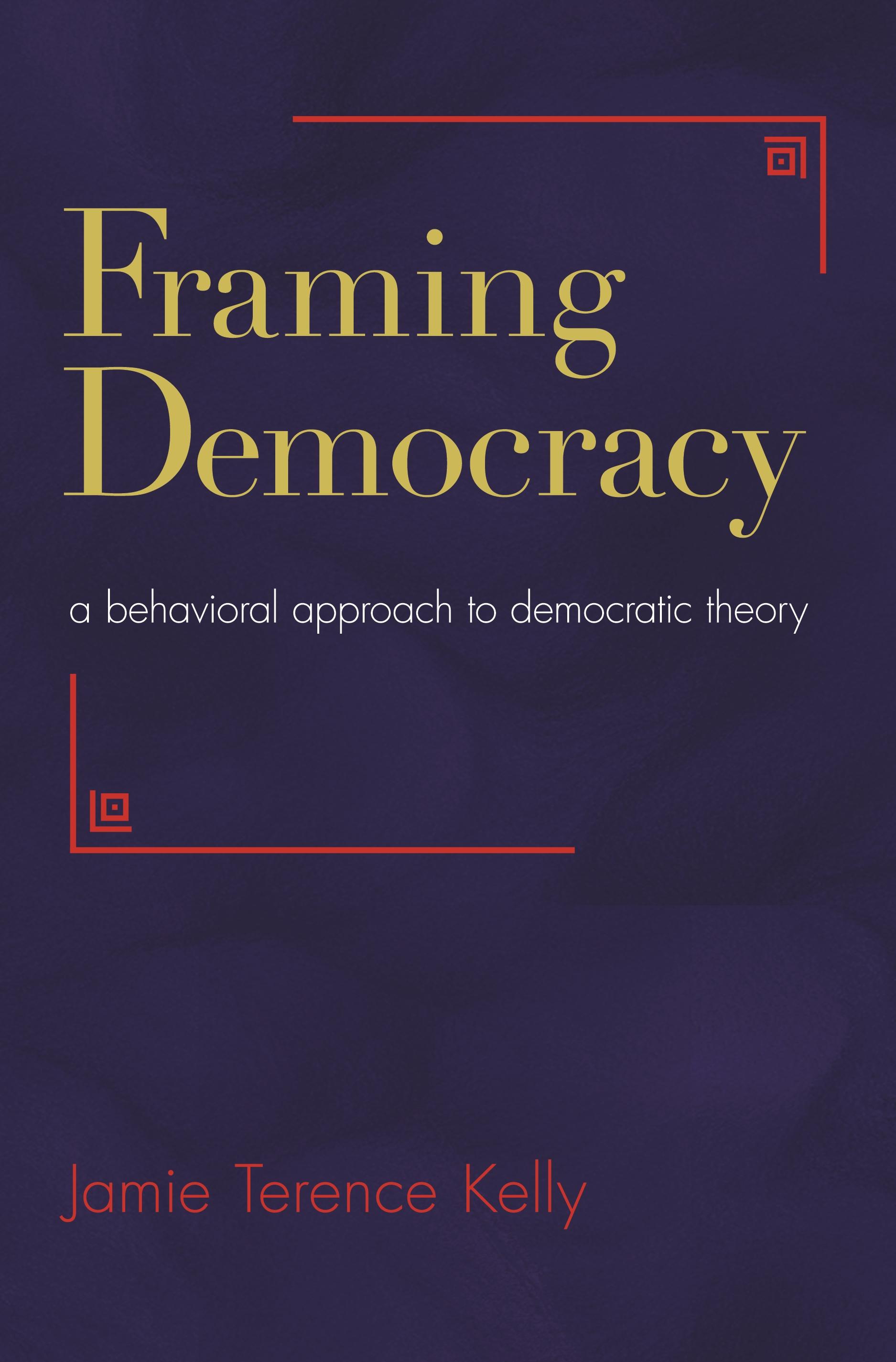
The past thirty years have seen a surge of empirical research into political decision making and the influence of framing effects--the phenomenon that occurs when different but equivalent presentations of a decision problem elicit different judgments or preferences. During the same period, political philosophers have become increasingly interested in democratic theory, particularly in deliberative theories of democracy. Unfortunately, the empirical and philosophical studies of democracy have largely proceeded in isolation from each other. As a result, philosophical treatments of democracy have overlooked recent developments in psychology, while the empirical study of framing effects has ignored much contemporary work in political philosophy. In Framing Democracy, Jamie Terence Kelly bridges this divide by explaining the relevance of framing effects for normative theories of democracy.
Employing a behavioral approach, Kelly argues for rejecting the rational actor model of decision making and replacing it with an understanding of choice imported from psychology and social science. After surveying the wide array of theories that go under the name of democratic theory, he argues that a behavioral approach enables a focus on three important concerns: moral reasons for endorsing democracy, feasibility considerations governing particular theories, and implications for institutional design. Finally, Kelly assesses a number of methods for addressing framing effects, including proposals to increase the amount of political speech, mechanisms designed to insulate democratic outcomes from flawed decision making, and programs of public education.
The first book to develop a behavioral theory of democracy, Framing Democracy has important insights for democratic theory, the social scientific understanding of political decision making, economics, and legal theory.
Before Memmo my notes were scattered across PDFs. Now a workspace pulls everything into one place — I see exactly what's still left to study.
Memmo's summaries are gold before exams. I don't have to re-read 800 pages two weeks before — just the important parts.
The AI chat has saved me the night before an exam more than once. I just keep asking until I get it — no waiting on a study group to reply.
The quizzes hit exactly what I need to know. Memmo tracks what I get stuck on — so I only practice what's worth it.
Flashcards with spaced repetition are magic. Memmo knows when I'm about to forget something and brings it back.
The AI podcasts are my favorite. I listen on my way to school and get a recap without sitting at a computer.

Handbok i kvalitativa metoder
281 kr

Hållbar utveckling: en introduktion för ingenjörer och andra problemlösare
334 kr

Brymans Samhällsvetenskapliga metoder
390 kr

Projektledning
491 kr

Den orättvisa hälsan: om socioekonomiska skillnader i hälsa och livslängd
326 kr

Organizational Leadership
429 kr

Vetenskapsteori för nybörjare
196 kr

På väg mot läraryrket
172 kr

Det sociala livet i skolan: Socialpsykologiska perspektiv
253 kr

Betygsättningens didaktik
151 kr

Personality
402 kr

Studying Leadership
404 kr

Managing Innovation
477 kr

Introduktion till samhällsvetenskaplig metod
347 kr

The Psychology of Sex and Gender
698 kr

Evidens och kunskap för socialt arbete
207 kr

Introduction to Leadership
605 kr