
Before Memmo my notes were scattered across PDFs. Now a workspace pulls everything into one place — I see exactly what's still left to study.
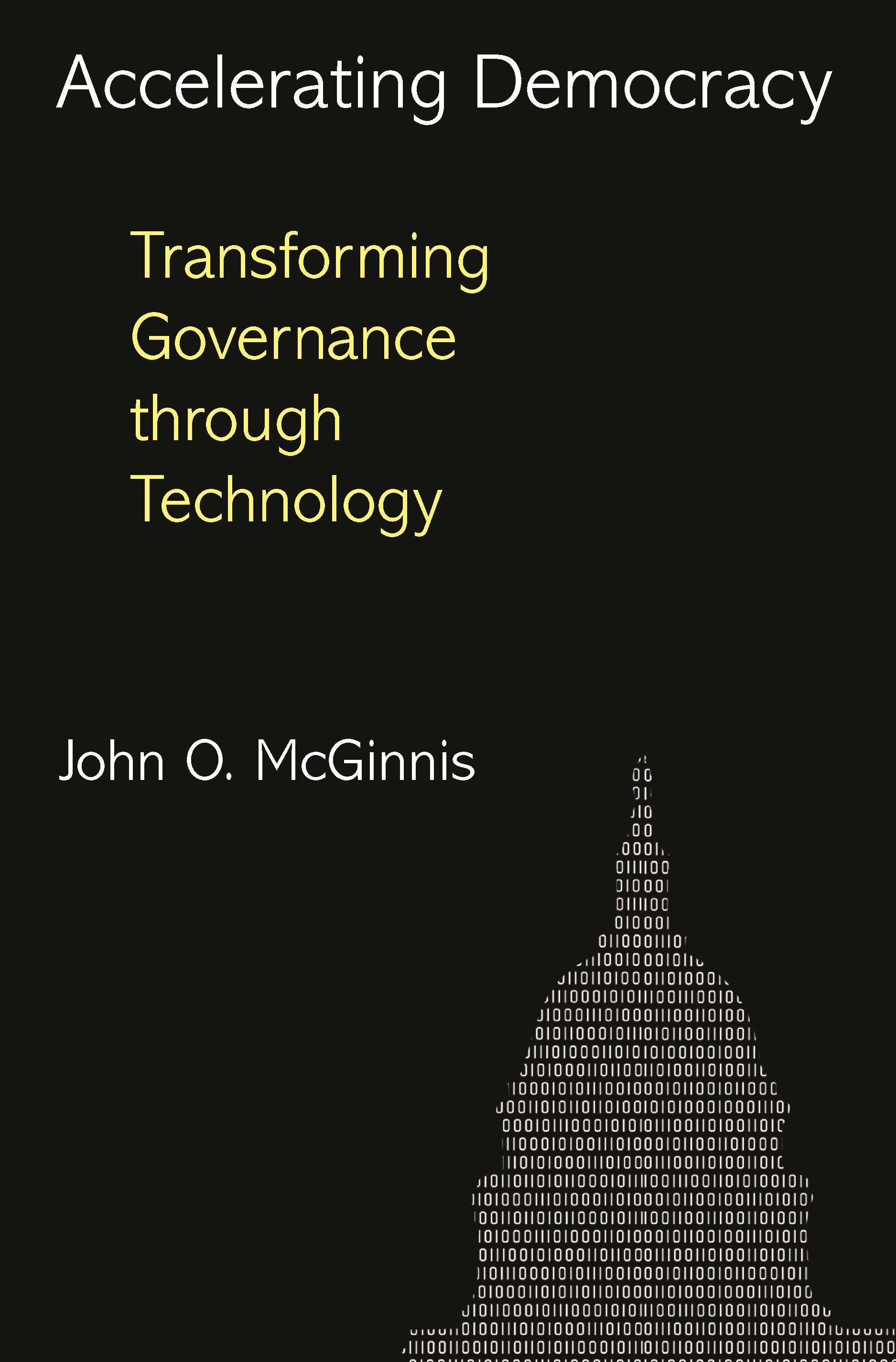
How to adapt democracy to the accelerating pace of technological change—and why it's critical that we do
Successful democracies throughout history—from ancient Athens to Britain on the cusp of the industrial age—have used the technology of their time to gather information for better governance. Our challenge is no different today, but it is more urgent because the accelerating pace of technological change creates potentially enormous dangers as well as benefits. Accelerating Democracy shows how to adapt democracy to new information technologies that can enhance political decision making and enable us to navigate the social rapids ahead.
John O. McGinnis demonstrates how these new technologies combine to address a problem as old as democracy itself--how to help citizens better evaluate the consequences of their political choices. As society became more complex in the nineteenth century, social planning became a top-down enterprise delegated to experts and bureaucrats. Today, technology increasingly permits information to bubble up from below and filter through more dispersed and competitive sources. McGinnis explains how to use fast-evolving information technologies to more effectively analyze past public policy, bring unprecedented intensity of scrutiny to current policy proposals, and more accurately predict the results of future policy. But he argues that we can do so only if government keeps pace with technological change. For instance, it must revive federalism to permit different jurisdictions to test different policies so that their results can be evaluated, and it must legalize information markets to permit people to bet on what the consequences of a policy will be even before that policy is implemented.
Accelerating Democracy reveals how we can achieve a democracy that is informed by expertise and social-scientific knowledge while shedding the arrogance and insularity of a technocracy.
Before Memmo my notes were scattered across PDFs. Now a workspace pulls everything into one place — I see exactly what's still left to study.
Memmo's summaries are gold before exams. I don't have to re-read 800 pages two weeks before — just the important parts.
The AI chat has saved me the night before an exam more than once. I just keep asking until I get it — no waiting on a study group to reply.
The quizzes hit exactly what I need to know. Memmo tracks what I get stuck on — so I only practice what's worth it.
Flashcards with spaced repetition are magic. Memmo knows when I'm about to forget something and brings it back.
The AI podcasts are my favorite. I listen on my way to school and get a recap without sitting at a computer.

Handbok i kvalitativa metoder
281 kr

Hållbar utveckling: en introduktion för ingenjörer och andra problemlösare
334 kr

Brymans Samhällsvetenskapliga metoder
390 kr

Projektledning
491 kr

Den orättvisa hälsan: om socioekonomiska skillnader i hälsa och livslängd
326 kr

Vetenskapsteori för nybörjare
196 kr

Organizational Leadership
429 kr

På väg mot läraryrket
172 kr

Det sociala livet i skolan: Socialpsykologiska perspektiv
253 kr

Betygsättningens didaktik
151 kr

Personality
402 kr

Studying Leadership
404 kr

Managing Innovation
477 kr

Introduktion till samhällsvetenskaplig metod
347 kr

The Psychology of Sex and Gender
698 kr

Evidens och kunskap för socialt arbete
207 kr

Introduction to Leadership
605 kr