
Before Memmo my notes were scattered across PDFs. Now a workspace pulls everything into one place — I see exactly what's still left to study.
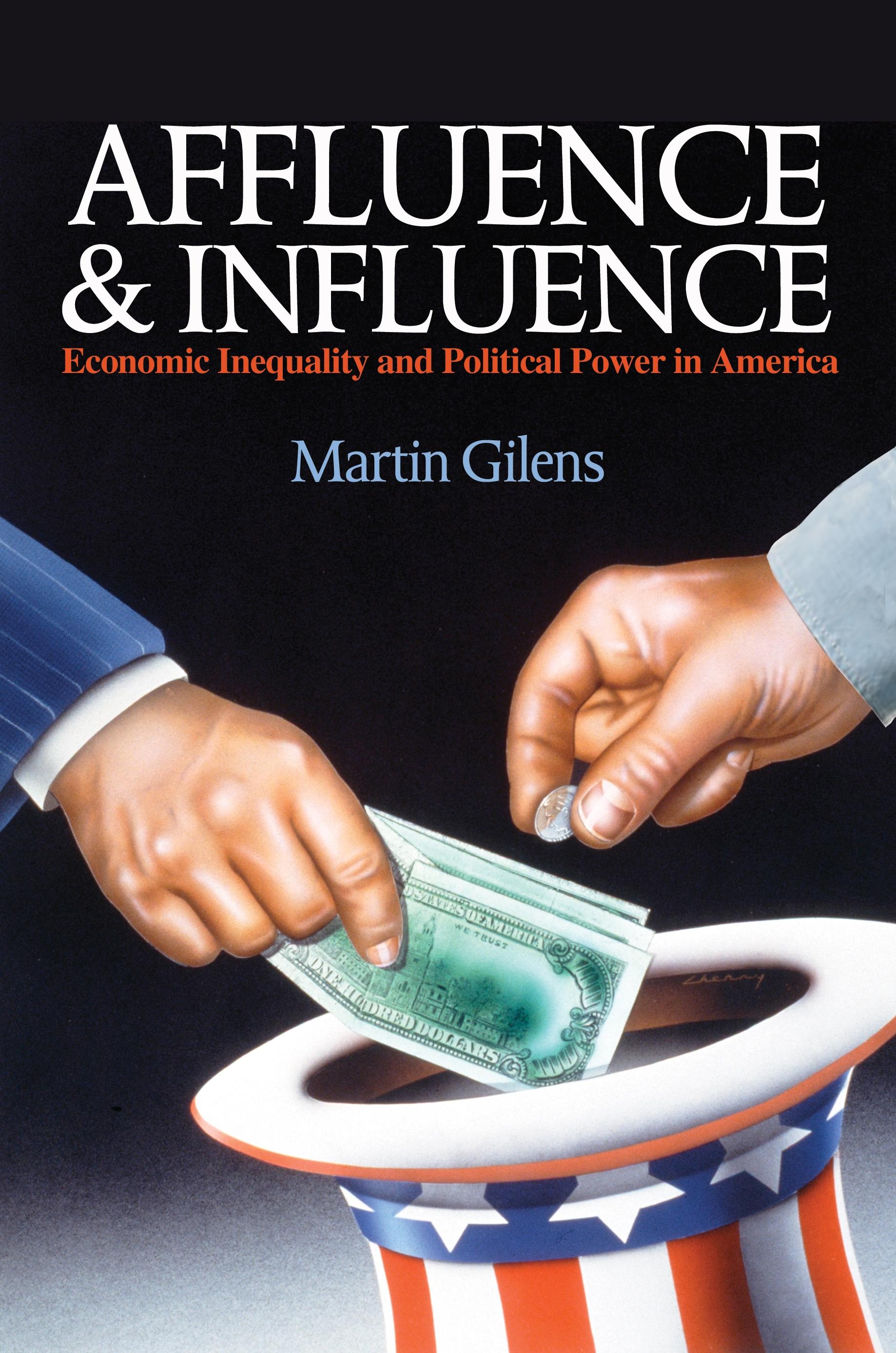
Why policymaking in the United States privileges the rich over the poor
Can a country be a democracy if its government only responds to the preferences of the rich? In an ideal democracy, all citizens should have equal influence on government policy—but as this book demonstrates, America's policymakers respond almost exclusively to the preferences of the economically advantaged. Affluence and Influence definitively explores how political inequality in the United States has evolved over the last several decades and how this growing disparity has been shaped by interest groups, parties, and elections.
With sharp analysis and an impressive range of data, Martin Gilens looks at thousands of proposed policy changes, and the degree of support for each among poor, middle-class, and affluent Americans. His findings are staggering: when preferences of low- or middle-income Americans diverge from those of the affluent, there is virtually no relationship between policy outcomes and the desires of less advantaged groups. In contrast, affluent Americans' preferences exhibit a substantial relationship with policy outcomes whether their preferences are shared by lower-income groups or not. Gilens shows that representational inequality is spread widely across different policy domains and time periods. Yet Gilens also shows that under specific circumstances the preferences of the middle class and, to a lesser extent, the poor, do seem to matter. In particular, impending elections—especially presidential elections—and an even partisan division in Congress mitigate representational inequality and boost responsiveness to the preferences of the broader public.
At a time when economic and political inequality in the United States only continues to rise, Affluence and Influence raises important questions about whether American democracy is truly responding to the needs of all its citizens.
Before Memmo my notes were scattered across PDFs. Now a workspace pulls everything into one place — I see exactly what's still left to study.
Memmo's summaries are gold before exams. I don't have to re-read 800 pages two weeks before — just the important parts.
The AI chat has saved me the night before an exam more than once. I just keep asking until I get it — no waiting on a study group to reply.
The quizzes hit exactly what I need to know. Memmo tracks what I get stuck on — so I only practice what's worth it.
Flashcards with spaced repetition are magic. Memmo knows when I'm about to forget something and brings it back.
The AI podcasts are my favorite. I listen on my way to school and get a recap without sitting at a computer.

Handbok i kvalitativa metoder
281 kr

Hållbar utveckling: en introduktion för ingenjörer och andra problemlösare
334 kr

Brymans Samhällsvetenskapliga metoder
390 kr

Projektledning
491 kr

Den orättvisa hälsan: om socioekonomiska skillnader i hälsa och livslängd
326 kr

Organizational Leadership
429 kr

Vetenskapsteori för nybörjare
196 kr

På väg mot läraryrket
172 kr

Det sociala livet i skolan: Socialpsykologiska perspektiv
253 kr

Betygsättningens didaktik
151 kr

Personality
402 kr

Studying Leadership
404 kr

Managing Innovation
477 kr

Introduktion till samhällsvetenskaplig metod
347 kr

The Psychology of Sex and Gender
698 kr

Evidens och kunskap för socialt arbete
207 kr

Introduction to Leadership
605 kr