
Before Memmo my notes were scattered across PDFs. Now a workspace pulls everything into one place — I see exactly what's still left to study.
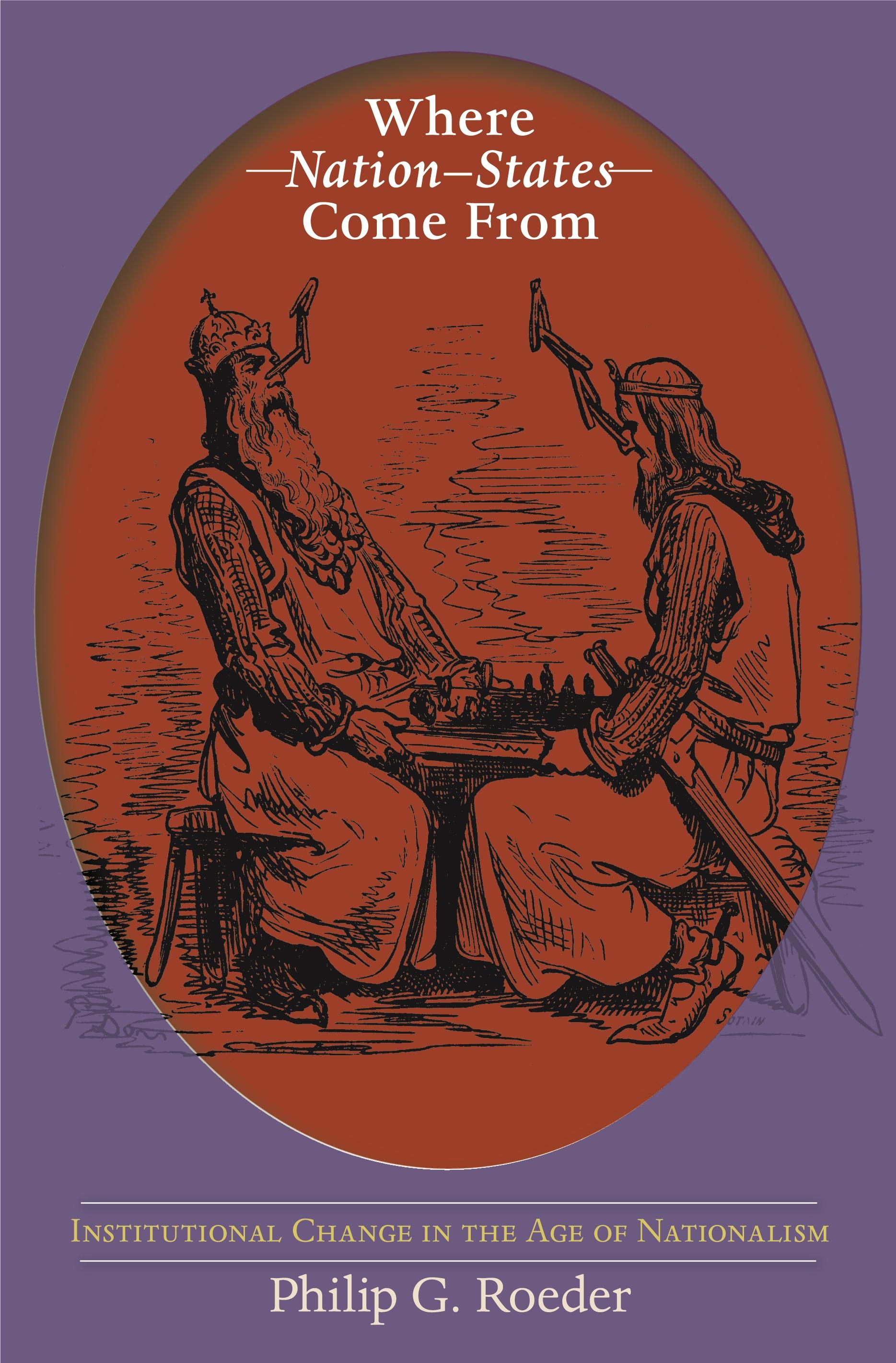
To date, the world can lay claim to little more than 190 sovereign independent entities recognized as nation-states, while by some estimates there may be up to eight hundred more nation-state projects underway and seven to eight thousand potential projects. Why do a few such endeavors come to fruition while most fail? Standard explanations have pointed to national awakenings, nationalist mobilizations, economic efficiency, military prowess, or intervention by the great powers. Where Nation-States Come From provides a compelling alternative account, one that incorporates an in-depth examination of the Russian Empire, the Soviet Union, and their successor states.
Philip Roeder argues that almost all successful nation-state projects have been associated with a particular political institution prior to independence: the segment-state, a jurisdiction defined by both human and territorial boundaries. Independence represents an administrative upgrade of a segment-state. Before independence, segmental institutions shape politics on the periphery of an existing sovereign state. Leaders of segment-states are thus better positioned than other proponents of nation-state endeavors to forge locally hegemonic national identities. Before independence, segmental institutions also shape the politics between the periphery and center of existing states. Leaders of segment-states are hence also more able to challenge the status quo and to induce the leaders of the existing state to concede independence. Roeder clarifies the mechanisms that link such institutions to outcomes, and demonstrates that these relationships have prevailed around the world through most of the age of nationalism.
Before Memmo my notes were scattered across PDFs. Now a workspace pulls everything into one place — I see exactly what's still left to study.
Memmo's summaries are gold before exams. I don't have to re-read 800 pages two weeks before — just the important parts.
The AI chat has saved me the night before an exam more than once. I just keep asking until I get it — no waiting on a study group to reply.
The quizzes hit exactly what I need to know. Memmo tracks what I get stuck on — so I only practice what's worth it.
Flashcards with spaced repetition are magic. Memmo knows when I'm about to forget something and brings it back.
The AI podcasts are my favorite. I listen on my way to school and get a recap without sitting at a computer.

Handbok i kvalitativa metoder
281 kr

Hållbar utveckling: en introduktion för ingenjörer och andra problemlösare
334 kr

Brymans Samhällsvetenskapliga metoder
390 kr

Projektledning
491 kr

Den orättvisa hälsan: om socioekonomiska skillnader i hälsa och livslängd
326 kr

Organizational Leadership
429 kr

Vetenskapsteori för nybörjare
196 kr

På väg mot läraryrket
172 kr

Det sociala livet i skolan: Socialpsykologiska perspektiv
253 kr

Betygsättningens didaktik
151 kr

Personality
402 kr

Studying Leadership
404 kr

Managing Innovation
477 kr

Introduktion till samhällsvetenskaplig metod
347 kr

The Psychology of Sex and Gender
698 kr

Evidens och kunskap för socialt arbete
207 kr

Introduction to Leadership
605 kr