
Before Memmo my notes were scattered across PDFs. Now a workspace pulls everything into one place — I see exactly what's still left to study.
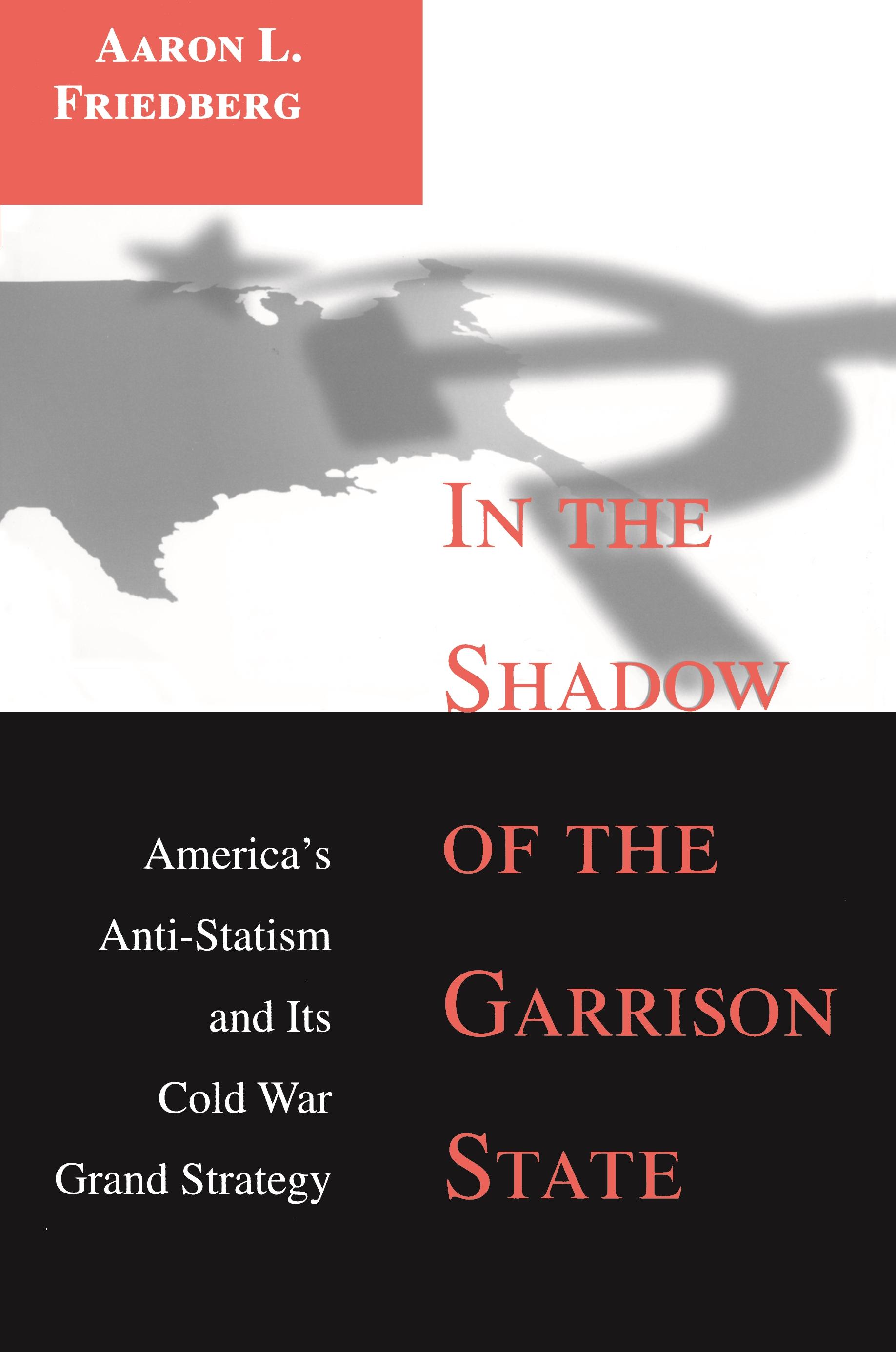
War--or the threat of war--usually strengthens states as governments tax, draft soldiers, exert control over industrial production, and dampen internal dissent in order to build military might. The United States, however, was founded on the suspicion of state power, a suspicion that continued to gird its institutional architecture and inform the sentiments of many of its politicians and citizens through the twentieth century. In this comprehensive rethinking of postwar political history, Aaron Friedberg convincingly argues that such anti-statist inclinations prevented Cold War anxieties from transforming the United States into the garrison state it might have become in their absence. Drawing on an array of primary and secondary sources, including newly available archival materials, Friedberg concludes that the "weakness" of the American state served as a profound source of national strength that allowed the United States to outperform and outlast its supremely centralized and statist rival: the Soviet Union.
Friedberg's analysis of the U. S. government's approach to taxation, conscription, industrial planning, scientific research and development, and armaments manufacturing reveals that the American state did expand during the early Cold War period. But domestic constraints on its expansion--including those stemming from mean self-interest as well as those guided by a principled belief in the virtues of limiting federal power--protected economic vitality, technological superiority, and public support for Cold War activities. The strategic synthesis that emerged by the early 1960s was functional as well as stable, enabling the United States to deter, contain, and ultimately outlive the Soviet Union precisely because the American state did not limit unduly the political, personal, and economic freedom of its citizens.
Political scientists, historians, and general readers interested in Cold War history will value this thoroughly researched volume. Friedberg's insightful scholarship will also inspire future policy by contributing to our understanding of how liberal democracy's inherent qualities nurture its survival and spread.
Before Memmo my notes were scattered across PDFs. Now a workspace pulls everything into one place — I see exactly what's still left to study.
Memmo's summaries are gold before exams. I don't have to re-read 800 pages two weeks before — just the important parts.
The AI chat has saved me the night before an exam more than once. I just keep asking until I get it — no waiting on a study group to reply.
The quizzes hit exactly what I need to know. Memmo tracks what I get stuck on — so I only practice what's worth it.
Flashcards with spaced repetition are magic. Memmo knows when I'm about to forget something and brings it back.
The AI podcasts are my favorite. I listen on my way to school and get a recap without sitting at a computer.

Handbok i kvalitativa metoder
281 kr

Hållbar utveckling: en introduktion för ingenjörer och andra problemlösare
334 kr

Brymans Samhällsvetenskapliga metoder
390 kr

Projektledning
491 kr

Den orättvisa hälsan: om socioekonomiska skillnader i hälsa och livslängd
326 kr

Vetenskapsteori för nybörjare
196 kr

Organizational Leadership
429 kr

På väg mot läraryrket
172 kr

Det sociala livet i skolan: Socialpsykologiska perspektiv
253 kr

Betygsättningens didaktik
151 kr

Personality
402 kr

Studying Leadership
404 kr

Managing Innovation
477 kr

Introduktion till samhällsvetenskaplig metod
347 kr

The Psychology of Sex and Gender
698 kr

Evidens och kunskap för socialt arbete
207 kr

Introduction to Leadership
605 kr