
Before Memmo my notes were scattered across PDFs. Now a workspace pulls everything into one place — I see exactly what's still left to study.
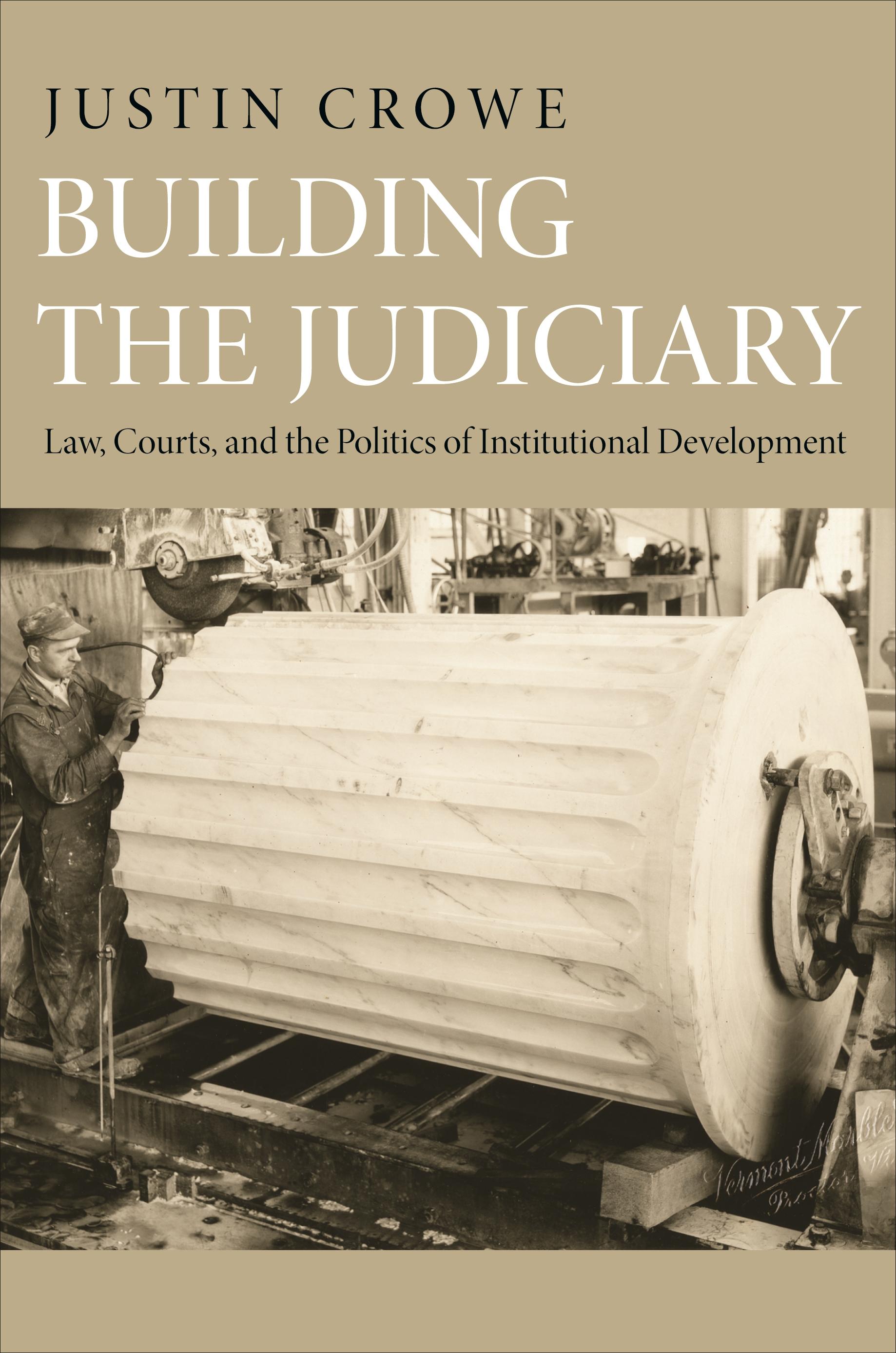
How did the federal judiciary transcend early limitations to become a powerful institution of American governance? How did the Supreme Court move from political irrelevance to political centrality? Building the Judiciary uncovers the causes and consequences of judicial institution-building in the United States from the commencement of the new government in 1789 through the close of the twentieth century. Explaining why and how the federal judiciary became an independent, autonomous, and powerful political institution, Justin Crowe moves away from the notion that the judiciary is exceptional in the scheme of American politics, illustrating instead how it is subject to the same architectonic politics as other political institutions.
Arguing that judicial institution-building is fundamentally based on a series of contested questions regarding institutional design and delegation, Crowe develops a theory to explain why political actors seek to build the judiciary and the conditions under which they are successful. He both demonstrates how the motivations of institution-builders ranged from substantive policy to partisan and electoral politics to judicial performance, and details how reform was often provoked by substantial changes in the political universe or transformational entrepreneurship by political leaders. Embedding case studies of landmark institution-building episodes within a contextual understanding of each era under consideration, Crowe presents a historically rich narrative that offers analytically grounded explanations for why judicial institution-building was pursued, how it was accomplished, and what--in the broader scheme of American constitutional democracy--it achieved.
Before Memmo my notes were scattered across PDFs. Now a workspace pulls everything into one place — I see exactly what's still left to study.
Memmo's summaries are gold before exams. I don't have to re-read 800 pages two weeks before — just the important parts.
The AI chat has saved me the night before an exam more than once. I just keep asking until I get it — no waiting on a study group to reply.
The quizzes hit exactly what I need to know. Memmo tracks what I get stuck on — so I only practice what's worth it.
Flashcards with spaced repetition are magic. Memmo knows when I'm about to forget something and brings it back.
The AI podcasts are my favorite. I listen on my way to school and get a recap without sitting at a computer.

Handbok i kvalitativa metoder
281 kr

Hållbar utveckling: en introduktion för ingenjörer och andra problemlösare
334 kr

Brymans Samhällsvetenskapliga metoder
390 kr

Projektledning
491 kr

Den orättvisa hälsan: om socioekonomiska skillnader i hälsa och livslängd
326 kr

Vetenskapsteori för nybörjare
196 kr

Organizational Leadership
429 kr

På väg mot läraryrket
172 kr

Det sociala livet i skolan: Socialpsykologiska perspektiv
253 kr

Betygsättningens didaktik
151 kr

Personality
402 kr

Studying Leadership
404 kr

Managing Innovation
477 kr

Introduktion till samhällsvetenskaplig metod
347 kr

The Psychology of Sex and Gender
698 kr

Evidens och kunskap för socialt arbete
207 kr

Introduction to Leadership
605 kr