
Before Memmo my notes were scattered across PDFs. Now a workspace pulls everything into one place — I see exactly what's still left to study.
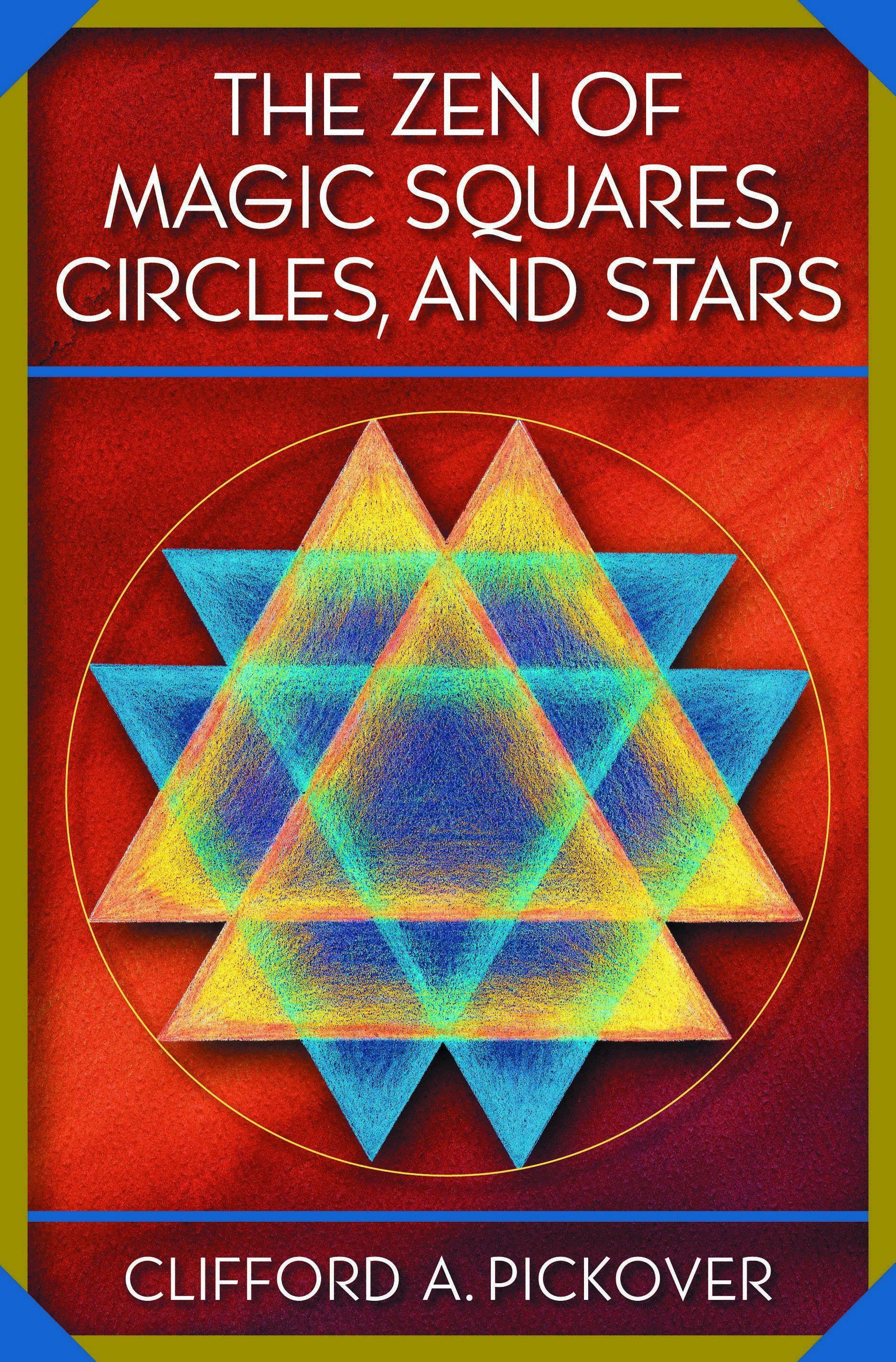
Humanity's love affair with mathematics and mysticism reached a critical juncture, legend has it, on the back of a turtle in ancient China. As Clifford Pickover briefly recounts in this enthralling book, the most comprehensive in decades on magic squares, Emperor Yu was supposedly strolling along the Yellow River one day around 2200 B.C. when he spotted the creature: its shell had a series of dots within squares. To Yu's amazement, each row of squares contained fifteen dots, as did the columns and diagonals. When he added any two cells opposite along a line through the center square, like 2 and 8, he always arrived at 10. The turtle, unwitting inspirer of the ''Yu'' square, went on to a life of courtly comfort and fame.
Pickover explains why Chinese emperors, Babylonian astrologer-priests, prehistoric cave people in France, and ancient Mayans of the Yucatan were convinced that magic squares--arrays filled with numbers or letters in certain arrangements--held the secret of the universe. Since the dawn of civilization, he writes, humans have invoked such patterns to ward off evil and bring good fortune. Yet who would have guessed that in the twenty-first century, mathematicians would be studying magic squares so immense and in so many dimensions that the objects defy ordinary human contemplation and visualization?
Readers are treated to a colorful history of magic squares and similar structures, their construction, and classification along with a remarkable variety of newly discovered objects ranging from ornate inlaid magic cubes to hypercubes. Illustrated examples occur throughout, with some patterns from the author's own experiments. The tesseracts, circles, spheres, and stars that he presents perfectly convey the age-old devotion of the math-minded to this Zenlike quest. Number lovers, puzzle aficionados, and math enthusiasts will treasure this rich and lively encyclopedia of one of the few areas of mathematics where the contributions of even nonspecialists count.
Before Memmo my notes were scattered across PDFs. Now a workspace pulls everything into one place — I see exactly what's still left to study.
Memmo's summaries are gold before exams. I don't have to re-read 800 pages two weeks before — just the important parts.
The AI chat has saved me the night before an exam more than once. I just keep asking until I get it — no waiting on a study group to reply.
The quizzes hit exactly what I need to know. Memmo tracks what I get stuck on — so I only practice what's worth it.
Flashcards with spaced repetition are magic. Memmo knows when I'm about to forget something and brings it back.
The AI podcasts are my favorite. I listen on my way to school and get a recap without sitting at a computer.

Handbok i kvalitativa metoder
281 kr

Hållbar utveckling: en introduktion för ingenjörer och andra problemlösare
334 kr

Brymans Samhällsvetenskapliga metoder
390 kr

Projektledning
491 kr

Den orättvisa hälsan: om socioekonomiska skillnader i hälsa och livslängd
326 kr

Vetenskapsteori för nybörjare
196 kr

Organizational Leadership
429 kr

På väg mot läraryrket
172 kr

Det sociala livet i skolan: Socialpsykologiska perspektiv
253 kr

Betygsättningens didaktik
151 kr

Personality
402 kr

Studying Leadership
404 kr

Managing Innovation
477 kr

Introduktion till samhällsvetenskaplig metod
347 kr

The Psychology of Sex and Gender
698 kr

Evidens och kunskap för socialt arbete
207 kr

Introduction to Leadership
605 kr