
Before Memmo my notes were scattered across PDFs. Now a workspace pulls everything into one place — I see exactly what's still left to study.
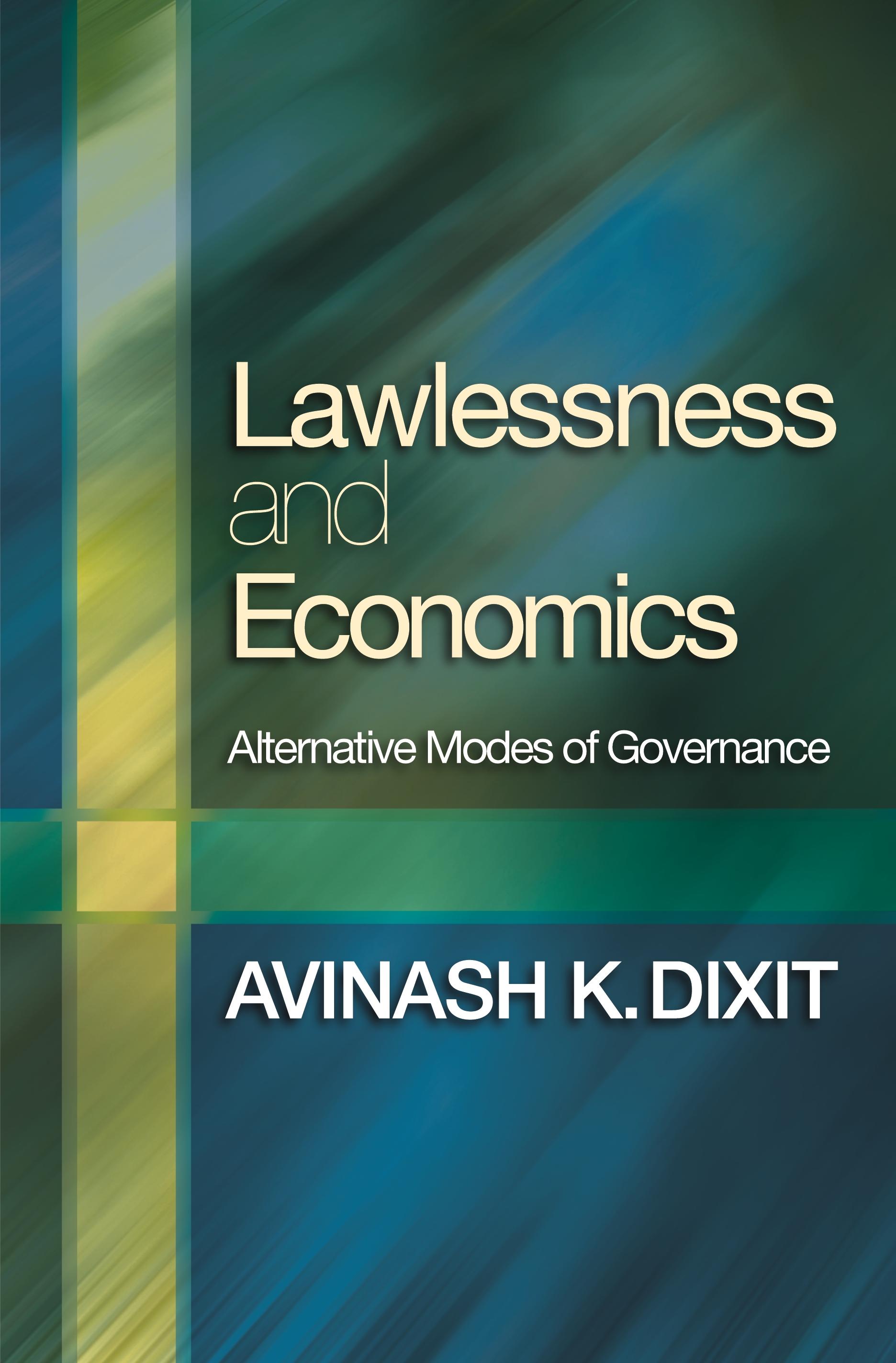
How can property rights be protected and contracts be enforced in countries where the rule of law is ineffective or absent? How can firms from advanced market economies do business in such circumstances? In Lawlessness and Economics, Avinash Dixit examines the theory of private institutions that transcend or supplement weak economic governance from the state.
In much of the world and through much of history, private mechanisms--such as long-term relationships, arbitration, social networks to disseminate information and norms to impose sanctions, and for-profit enforcement services--have grown up in place of formal, state-governed institutions. Even in countries with strong legal systems, many of these mechanisms continue under the shadow of the law. Numerous case studies and empirical investigations have demonstrated the variety, importance, and merits, and drawbacks of such institutions.
This book builds on these studies and constructs a toolkit of theoretical models to analyze them. The models shed new conceptual light on the different modes of governance, and deepen our understanding of the interaction of the alternative institutions with each other and with the government's law. For example, one model explains the limit on the size of social networks and illuminates problems in the transition to more formal legal systems as economies grow beyond this limit. Other models explain why for-profit enforcement is inefficient. The models also help us understand why state law dovetails with some non-state institutions and collides with others. This can help less-developed countries and transition economies devise better processes for the introduction or reform of their formal legal systems.
Before Memmo my notes were scattered across PDFs. Now a workspace pulls everything into one place — I see exactly what's still left to study.
Memmo's summaries are gold before exams. I don't have to re-read 800 pages two weeks before — just the important parts.
The AI chat has saved me the night before an exam more than once. I just keep asking until I get it — no waiting on a study group to reply.
The quizzes hit exactly what I need to know. Memmo tracks what I get stuck on — so I only practice what's worth it.
Flashcards with spaced repetition are magic. Memmo knows when I'm about to forget something and brings it back.
The AI podcasts are my favorite. I listen on my way to school and get a recap without sitting at a computer.

Handbok i kvalitativa metoder
281 kr

Hållbar utveckling: en introduktion för ingenjörer och andra problemlösare
334 kr

Brymans Samhällsvetenskapliga metoder
390 kr

Projektledning
491 kr

Den orättvisa hälsan: om socioekonomiska skillnader i hälsa och livslängd
326 kr

Organizational Leadership
429 kr

Vetenskapsteori för nybörjare
196 kr

På väg mot läraryrket
172 kr

Det sociala livet i skolan: Socialpsykologiska perspektiv
253 kr

Betygsättningens didaktik
151 kr

Personality
402 kr

Studying Leadership
404 kr

Managing Innovation
477 kr

Introduktion till samhällsvetenskaplig metod
347 kr

The Psychology of Sex and Gender
698 kr

Evidens och kunskap för socialt arbete
207 kr

Introduction to Leadership
605 kr