
Before Memmo my notes were scattered across PDFs. Now a workspace pulls everything into one place — I see exactly what's still left to study.
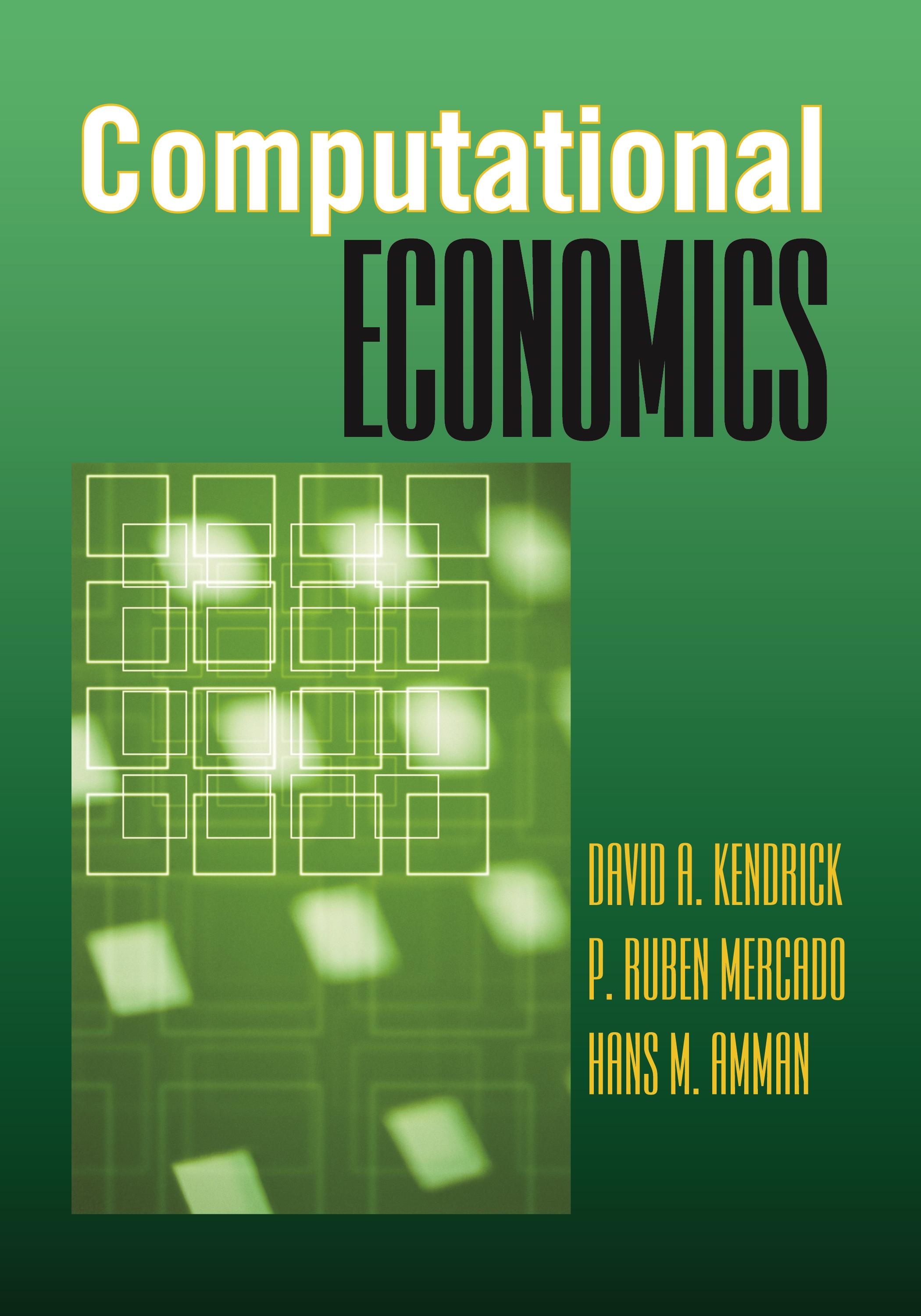
The ability to conceptualize an economic problem verbally, to formulate it as a mathematical model, and then represent the mathematics in software so that the model can be solved on a computer is a crucial skill for economists. Computational Economics contains well-known models--and some brand-new ones--designed to help students move from verbal to mathematical to computational representations in economic modeling. The authors' focus, however, is not just on solving the models, but also on developing the ability to modify them to reflect one's interest and point of view. The result is a book that enables students to be creative in developing models that are relevant to the economic problems of their times.
Unlike other computational economics textbooks, this book is organized around economic topics, among them macroeconomics, microeconomics, and finance. The authors employ various software systems--including MATLAB, Mathematica, GAMS, the nonlinear programming solver in Excel, and the database systems in Access--to enable students to use the most advantageous system. The book progresses from relatively simple models to more complex ones, and includes appendices on the ins and outs of running each program.
The book is intended for use by advanced undergraduates and professional economists and even, as a first exposure to computational economics, by graduate students.
Before Memmo my notes were scattered across PDFs. Now a workspace pulls everything into one place — I see exactly what's still left to study.
Memmo's summaries are gold before exams. I don't have to re-read 800 pages two weeks before — just the important parts.
The AI chat has saved me the night before an exam more than once. I just keep asking until I get it — no waiting on a study group to reply.
The quizzes hit exactly what I need to know. Memmo tracks what I get stuck on — so I only practice what's worth it.
Flashcards with spaced repetition are magic. Memmo knows when I'm about to forget something and brings it back.
The AI podcasts are my favorite. I listen on my way to school and get a recap without sitting at a computer.

Handbok i kvalitativa metoder
281 kr

Hållbar utveckling: en introduktion för ingenjörer och andra problemlösare
334 kr

Brymans Samhällsvetenskapliga metoder
390 kr

Projektledning
491 kr

Den orättvisa hälsan: om socioekonomiska skillnader i hälsa och livslängd
326 kr

Organizational Leadership
429 kr

Vetenskapsteori för nybörjare
196 kr

På väg mot läraryrket
172 kr

Det sociala livet i skolan: Socialpsykologiska perspektiv
253 kr

Betygsättningens didaktik
151 kr

Personality
402 kr

Studying Leadership
404 kr

Managing Innovation
477 kr

Introduktion till samhällsvetenskaplig metod
347 kr

The Psychology of Sex and Gender
698 kr

Evidens och kunskap för socialt arbete
207 kr

Introduction to Leadership
605 kr