
Before Memmo my notes were scattered across PDFs. Now a workspace pulls everything into one place — I see exactly what's still left to study.
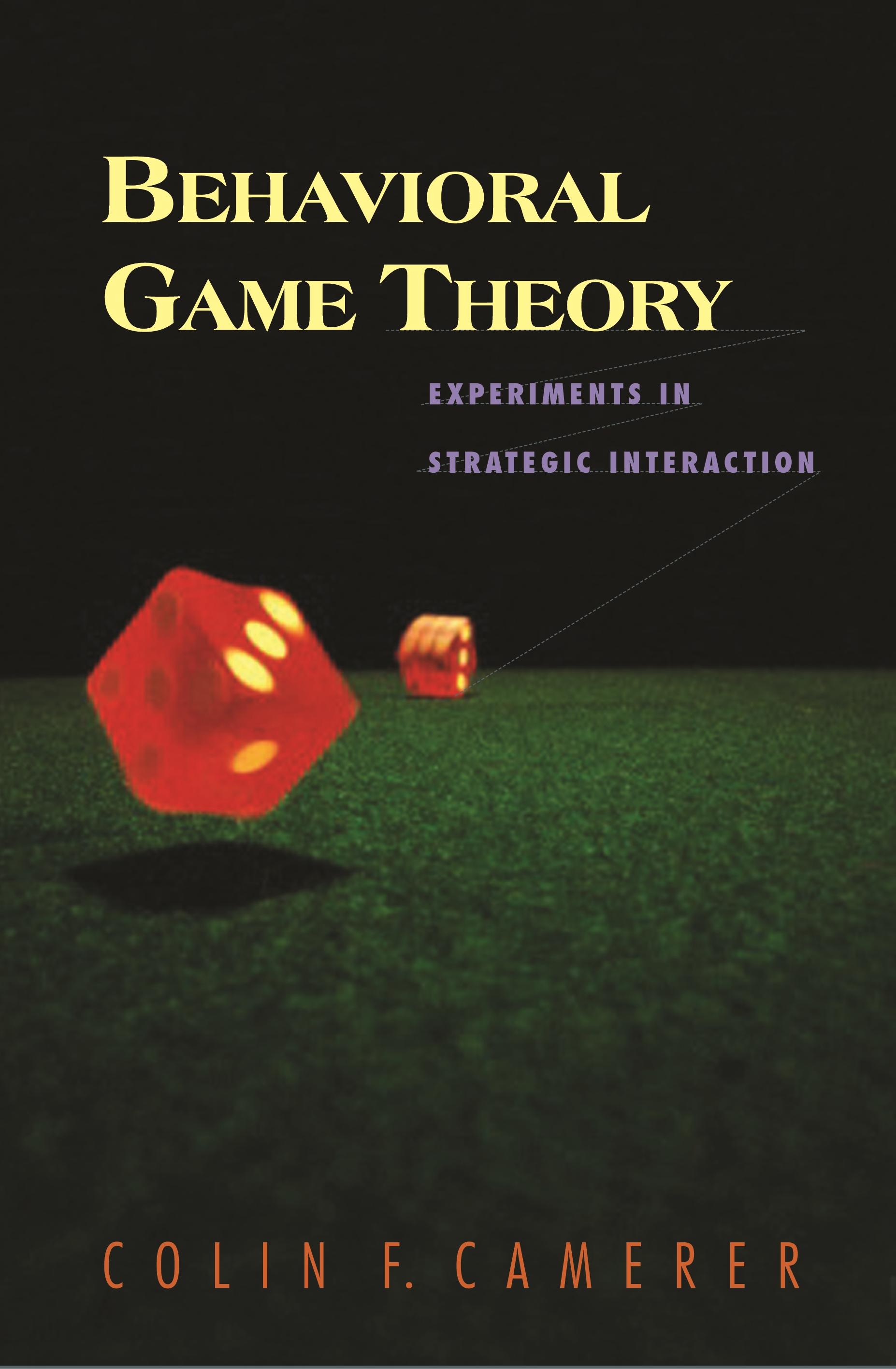
Game theory, the formalized study of strategy, began in the 1940s by asking how emotionless geniuses should play games, but ignored until recently how average people with emotions and limited foresight actually play games. This book marks the first substantial and authoritative effort to close this gap. Colin Camerer, one of the field's leading figures, uses psychological principles and hundreds of experiments to develop mathematical theories of reciprocity, limited strategizing, and learning, which help predict what real people and companies do in strategic situations. Unifying a wealth of information from ongoing studies in strategic behavior, he takes the experimental science of behavioral economics a major step forward. He does so in lucid, friendly prose.
Behavioral game theory has three ingredients that come clearly into focus in this book: mathematical theories of how moral obligation and vengeance affect the way people bargain and trust each other; a theory of how limits in the brain constrain the number of steps of "I think he thinks . . ." reasoning people naturally do; and a theory of how people learn from experience to make better strategic decisions. Strategic interactions that can be explained by behavioral game theory include bargaining, games of bluffing as in sports and poker, strikes, how conventions help coordinate a joint activity, price competition and patent races, and building up reputations for trustworthiness or ruthlessness in business or life.
While there are many books on standard game theory that address the way ideally rational actors operate, Behavioral Game Theory stands alone in blending experimental evidence and psychology in a mathematical theory of normal strategic behavior. It is must reading for anyone who seeks a more complete understanding of strategic thinking, from professional economists to scholars and students of economics, management studies, psychology, political science, anthropology, and biology.
Before Memmo my notes were scattered across PDFs. Now a workspace pulls everything into one place — I see exactly what's still left to study.
Memmo's summaries are gold before exams. I don't have to re-read 800 pages two weeks before — just the important parts.
The AI chat has saved me the night before an exam more than once. I just keep asking until I get it — no waiting on a study group to reply.
The quizzes hit exactly what I need to know. Memmo tracks what I get stuck on — so I only practice what's worth it.
Flashcards with spaced repetition are magic. Memmo knows when I'm about to forget something and brings it back.
The AI podcasts are my favorite. I listen on my way to school and get a recap without sitting at a computer.

Handbok i kvalitativa metoder
281 kr

Hållbar utveckling: en introduktion för ingenjörer och andra problemlösare
334 kr

Brymans Samhällsvetenskapliga metoder
390 kr

Projektledning
491 kr

Den orättvisa hälsan: om socioekonomiska skillnader i hälsa och livslängd
326 kr

Organizational Leadership
429 kr

Vetenskapsteori för nybörjare
196 kr

På väg mot läraryrket
172 kr

Det sociala livet i skolan: Socialpsykologiska perspektiv
253 kr

Betygsättningens didaktik
151 kr

Personality
402 kr

Studying Leadership
404 kr

Managing Innovation
477 kr

Introduktion till samhällsvetenskaplig metod
347 kr

The Psychology of Sex and Gender
698 kr

Evidens och kunskap för socialt arbete
207 kr

Introduction to Leadership
605 kr