
Before Memmo my notes were scattered across PDFs. Now a workspace pulls everything into one place — I see exactly what's still left to study.
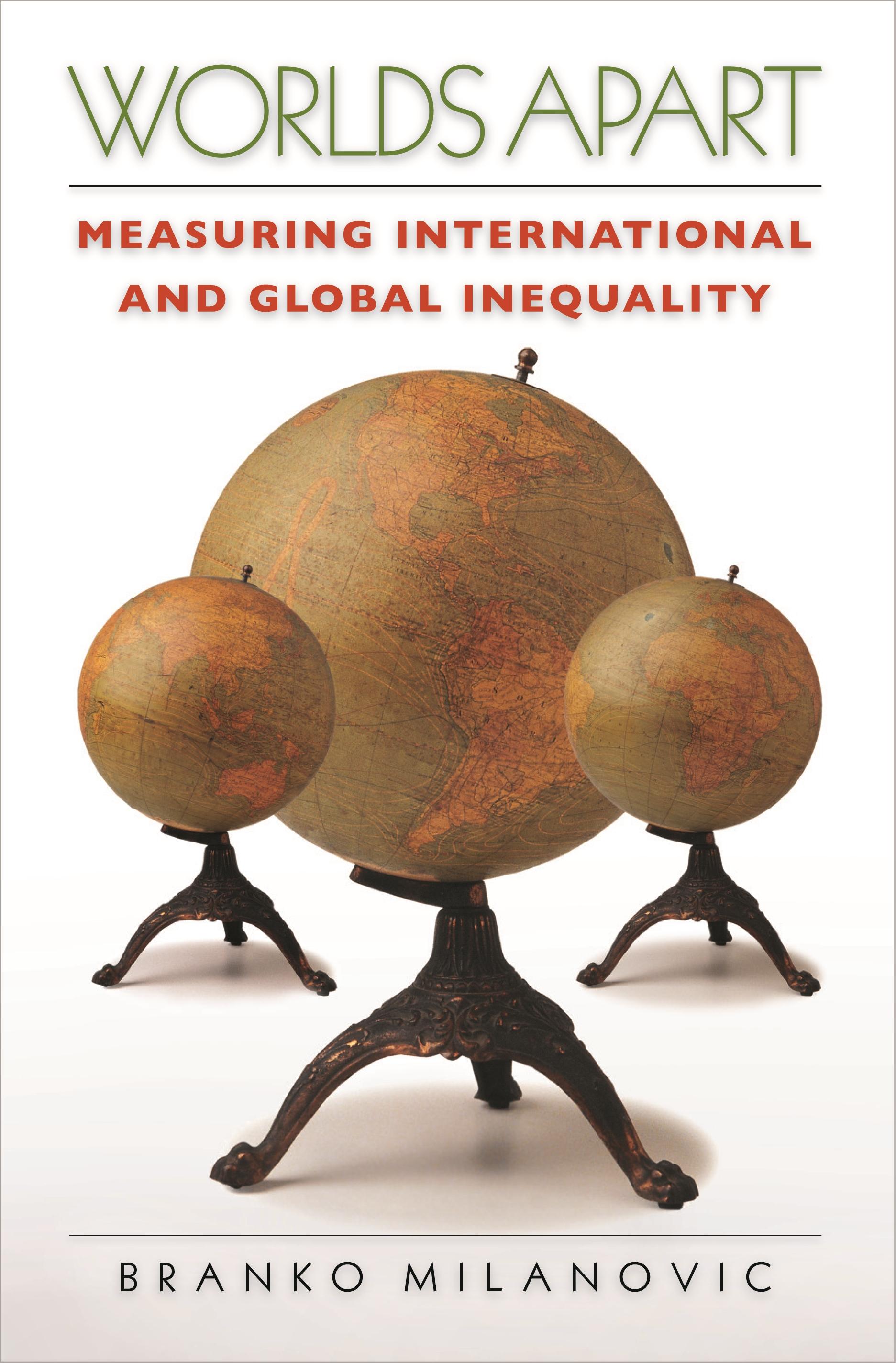
We are used to thinking about inequality within countries--about rich Americans versus poor Americans, for instance. But what about inequality between all citizens of the world? Worlds Apart addresses just how to measure global inequality among individuals, and shows that inequality is shaped by complex forces often working in different directions. Branko Milanovic, a top World Bank economist, analyzes income distribution worldwide using, for the first time, household survey data from more than 100 countries. He evenhandedly explains the main approaches to the problem, offers a more accurate way of measuring inequality among individuals, and discusses the relevant policies of first-world countries and nongovernmental organizations.
Inequality has increased between nations over the last half century (richer countries have generally grown faster than poorer countries). And yet the two most populous nations, China and India, have also grown fast. But over the past two decades inequality within countries has increased. As complex as reconciling these three data trends may be, it is clear: the inequality between the world's individuals is staggering. At the turn of the twenty-first century, the richest 5 percent of people receive one-third of total global income, as much as the poorest 80 percent. While a few poor countries are catching up with the rich world, the differences between the richest and poorest individuals around the globe are huge and likely growing.
Before Memmo my notes were scattered across PDFs. Now a workspace pulls everything into one place — I see exactly what's still left to study.
Memmo's summaries are gold before exams. I don't have to re-read 800 pages two weeks before — just the important parts.
The AI chat has saved me the night before an exam more than once. I just keep asking until I get it — no waiting on a study group to reply.
The quizzes hit exactly what I need to know. Memmo tracks what I get stuck on — so I only practice what's worth it.
Flashcards with spaced repetition are magic. Memmo knows when I'm about to forget something and brings it back.
The AI podcasts are my favorite. I listen on my way to school and get a recap without sitting at a computer.

Handbok i kvalitativa metoder
281 kr

Hållbar utveckling: en introduktion för ingenjörer och andra problemlösare
334 kr

Brymans Samhällsvetenskapliga metoder
390 kr

Projektledning
491 kr

Den orättvisa hälsan: om socioekonomiska skillnader i hälsa och livslängd
326 kr

Organizational Leadership
429 kr

Vetenskapsteori för nybörjare
196 kr

På väg mot läraryrket
172 kr

Det sociala livet i skolan: Socialpsykologiska perspektiv
253 kr

Betygsättningens didaktik
151 kr

Personality
402 kr

Studying Leadership
404 kr

Managing Innovation
477 kr

Introduktion till samhällsvetenskaplig metod
347 kr

The Psychology of Sex and Gender
698 kr

Evidens och kunskap för socialt arbete
207 kr

Introduction to Leadership
605 kr