
Before Memmo my notes were scattered across PDFs. Now a workspace pulls everything into one place — I see exactly what's still left to study.
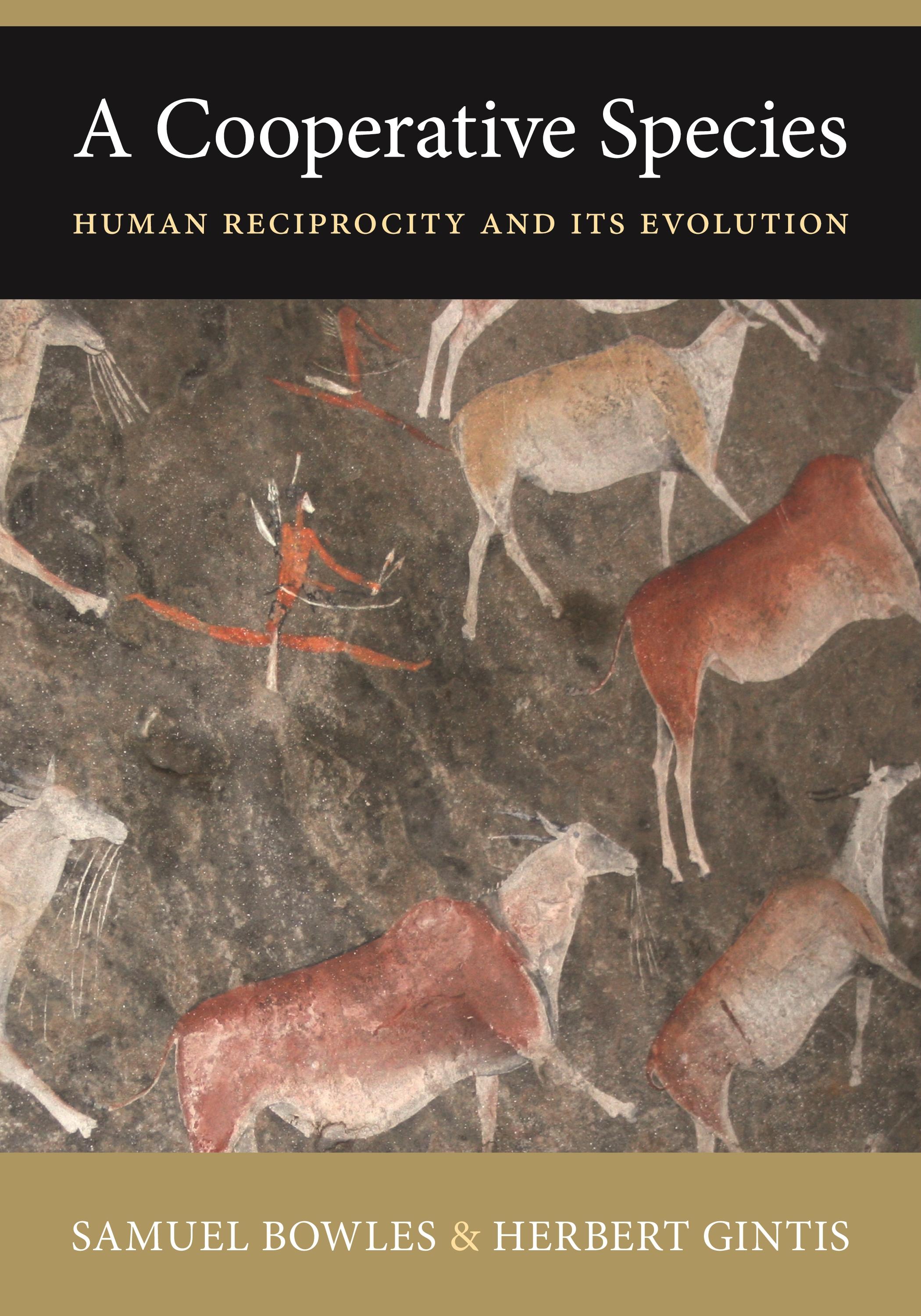
A fascinating look at the evolutionary origins of cooperation
Why do humans, uniquely among animals, cooperate in large numbers to advance projects for the common good? Contrary to the conventional wisdom in biology and economics, this generous and civic-minded behavior is widespread and cannot be explained simply by far-sighted self-interest or a desire to help close genealogical kin.
In A Cooperative Species, Samuel Bowles and Herbert Gintis—pioneers in the new experimental and evolutionary science of human behavior—show that the central issue is not why selfish people act generously, but instead how genetic and cultural evolution has produced a species in which substantial numbers make sacrifices to uphold ethical norms and to help even total strangers.
The authors describe how, for thousands of generations, cooperation with fellow group members has been essential to survival. Groups that created institutions to protect the civic-minded from exploitation by the selfish flourished and prevailed in conflicts with less cooperative groups. Key to this process was the evolution of social emotions such as shame and guilt, and our capacity to internalize social norms so that acting ethically became a personal goal rather than simply a prudent way to avoid punishment.
Using experimental, archaeological, genetic, and ethnographic data to calibrate models of the coevolution of genes and culture as well as prehistoric warfare and other forms of group competition, A Cooperative Species provides a compelling and novel account of how humans came to be moral and cooperative.
Before Memmo my notes were scattered across PDFs. Now a workspace pulls everything into one place — I see exactly what's still left to study.
Memmo's summaries are gold before exams. I don't have to re-read 800 pages two weeks before — just the important parts.
The AI chat has saved me the night before an exam more than once. I just keep asking until I get it — no waiting on a study group to reply.
The quizzes hit exactly what I need to know. Memmo tracks what I get stuck on — so I only practice what's worth it.
Flashcards with spaced repetition are magic. Memmo knows when I'm about to forget something and brings it back.
The AI podcasts are my favorite. I listen on my way to school and get a recap without sitting at a computer.

Handbok i kvalitativa metoder
281 kr

Hållbar utveckling: en introduktion för ingenjörer och andra problemlösare
334 kr

Brymans Samhällsvetenskapliga metoder
390 kr

Projektledning
491 kr

Den orättvisa hälsan: om socioekonomiska skillnader i hälsa och livslängd
326 kr

Vetenskapsteori för nybörjare
196 kr

Organizational Leadership
429 kr

På väg mot läraryrket
172 kr

Det sociala livet i skolan: Socialpsykologiska perspektiv
253 kr

Betygsättningens didaktik
151 kr

Personality
402 kr

Studying Leadership
404 kr

Managing Innovation
477 kr

Introduktion till samhällsvetenskaplig metod
347 kr

The Psychology of Sex and Gender
698 kr

Evidens och kunskap för socialt arbete
207 kr

Introduction to Leadership
605 kr