
Before Memmo my notes were scattered across PDFs. Now a workspace pulls everything into one place — I see exactly what's still left to study.
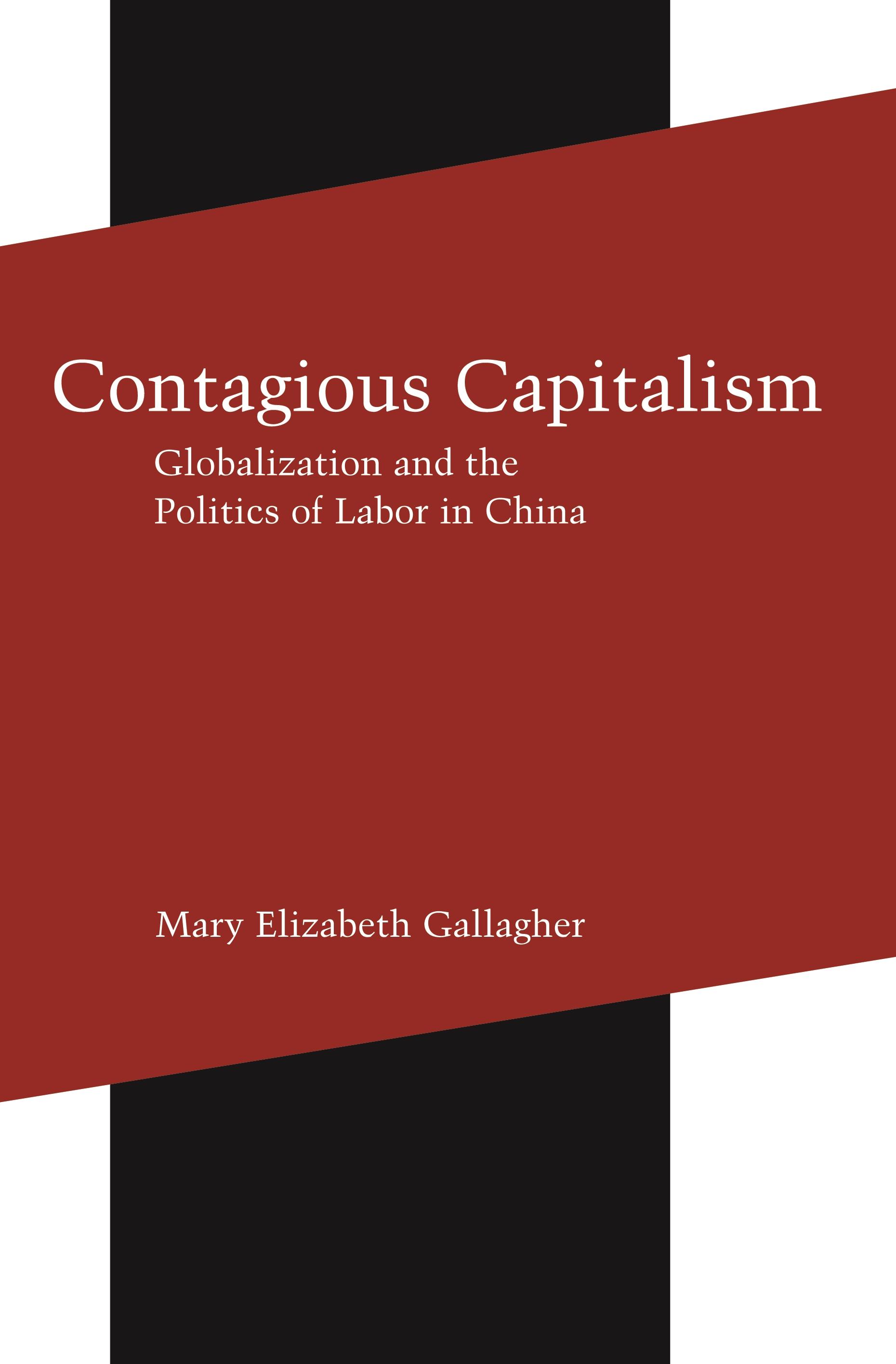
One of the core assumptions of recent American foreign policy is that China's post-1978 policy of "reform and openness" will lead to political liberalization. This book challenges that assumption and the general relationship between economic liberalization and democratization. Moreover, it analyzes the effect of foreign direct investment (FDI) liberalization on Chinese labor politics.
Market reforms and increased integration with the global economy have brought about unprecedented economic growth and social change in China during the last quarter of a century. Contagious Capitalism contends that FDI liberalization played several roles in the process of China's reforms. First, it placed competitive pressure on the state sector to produce more efficiently, thus necessitating new labor practices. Second, it allowed difficult and politically sensitive labor reforms to be extended to other parts of the economy. Third, it caused a reformulation of one of the key ideological debates of reforming socialism: the relative importance of public industry. China's growing integration with the global economy through FDI led to a new focus of debate--away from the public vs. private industry dichotomy and toward a nationalist concern for the fate of Chinese industry.
In comparing China with other Eastern European and Asian economies, two important considerations come into play, the book argues: China's pattern of ownership diversification and China's mode of integration into the global economy. This book relates these two factors to the success of economic change without political liberalization and addresses the way FDI liberalization has affected relations between workers and the ruling Communist Party. Its conclusion: reform and openness in this context resulted in a strengthened Chinese state, a weakened civil society (especially labor), and a delay in political liberalization.
Before Memmo my notes were scattered across PDFs. Now a workspace pulls everything into one place — I see exactly what's still left to study.
Memmo's summaries are gold before exams. I don't have to re-read 800 pages two weeks before — just the important parts.
The AI chat has saved me the night before an exam more than once. I just keep asking until I get it — no waiting on a study group to reply.
The quizzes hit exactly what I need to know. Memmo tracks what I get stuck on — so I only practice what's worth it.
Flashcards with spaced repetition are magic. Memmo knows when I'm about to forget something and brings it back.
The AI podcasts are my favorite. I listen on my way to school and get a recap without sitting at a computer.

Handbok i kvalitativa metoder
281 kr

Hållbar utveckling: en introduktion för ingenjörer och andra problemlösare
334 kr

Brymans Samhällsvetenskapliga metoder
390 kr

Projektledning
491 kr

Den orättvisa hälsan: om socioekonomiska skillnader i hälsa och livslängd
326 kr

Vetenskapsteori för nybörjare
196 kr

Organizational Leadership
429 kr

På väg mot läraryrket
172 kr

Det sociala livet i skolan: Socialpsykologiska perspektiv
253 kr

Betygsättningens didaktik
151 kr

Personality
402 kr

Studying Leadership
404 kr

Managing Innovation
477 kr

Introduktion till samhällsvetenskaplig metod
347 kr

The Psychology of Sex and Gender
698 kr

Evidens och kunskap för socialt arbete
207 kr

Introduction to Leadership
605 kr