
Before Memmo my notes were scattered across PDFs. Now a workspace pulls everything into one place — I see exactly what's still left to study.
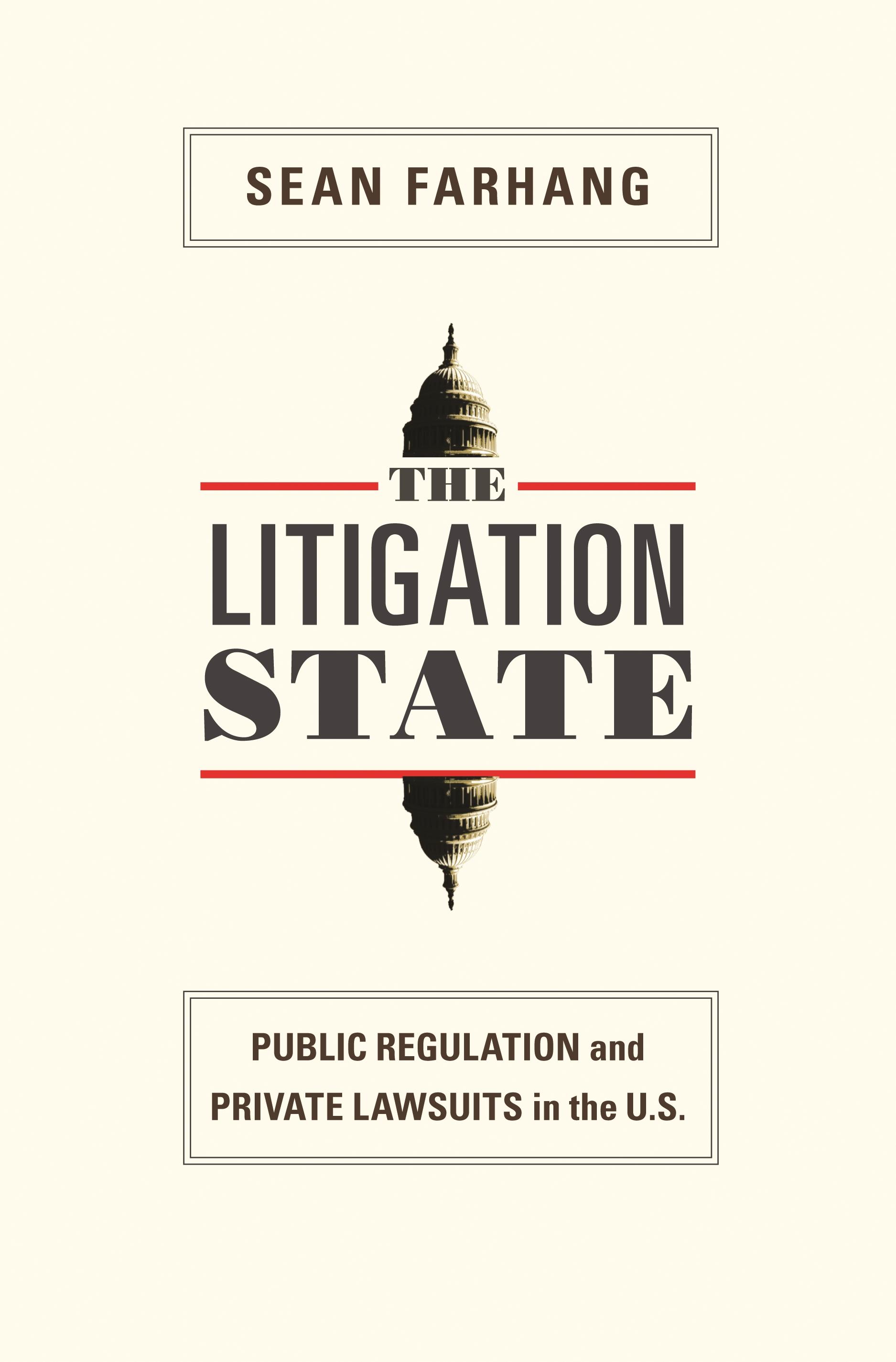
Of the 1.65 million lawsuits enforcing federal laws over the past decade, 3 percent were prosecuted by the federal government, while 97 percent were litigated by private parties. When and why did private plaintiff-driven litigation become a dominant model for enforcing federal regulation? The Litigation State shows how government legislation created the nation's reliance upon private litigation, and investigates why Congress would choose to mobilize, through statutory design, private lawsuits to implement federal statutes. Sean Farhang argues that Congress deliberately cultivates such private lawsuits partly as a means of enforcing its will over the resistance of opposing presidents.
Farhang reveals that private lawsuits, functioning as an enforcement resource, are a profoundly important component of American state capacity. He demonstrates how the distinctive institutional structure of the American state--particularly conflict between Congress and the president over control of the bureaucracy--encourages Congress to incentivize private lawsuits. Congress thereby achieves regulatory aims through a decentralized army of private lawyers, rather than by well-staffed bureaucracies under the president's influence. The historical development of ideological polarization between Congress and the president since the late 1960s has been a powerful cause of the explosion of private lawsuits enforcing federal law over the same period.
Using data from many policy areas spanning the twentieth century, and historical analysis focused on civil rights, The Litigation State investigates how American political institutions shape the strategic design of legislation to mobilize private lawsuits for policy implementation.
Before Memmo my notes were scattered across PDFs. Now a workspace pulls everything into one place — I see exactly what's still left to study.
Memmo's summaries are gold before exams. I don't have to re-read 800 pages two weeks before — just the important parts.
The AI chat has saved me the night before an exam more than once. I just keep asking until I get it — no waiting on a study group to reply.
The quizzes hit exactly what I need to know. Memmo tracks what I get stuck on — so I only practice what's worth it.
Flashcards with spaced repetition are magic. Memmo knows when I'm about to forget something and brings it back.
The AI podcasts are my favorite. I listen on my way to school and get a recap without sitting at a computer.

Handbok i kvalitativa metoder
281 kr

Hållbar utveckling: en introduktion för ingenjörer och andra problemlösare
334 kr

Brymans Samhällsvetenskapliga metoder
390 kr

Projektledning
491 kr

Den orättvisa hälsan: om socioekonomiska skillnader i hälsa och livslängd
326 kr

Vetenskapsteori för nybörjare
196 kr

Organizational Leadership
429 kr

På väg mot läraryrket
172 kr

Det sociala livet i skolan: Socialpsykologiska perspektiv
253 kr

Betygsättningens didaktik
151 kr

Personality
402 kr

Studying Leadership
404 kr

Managing Innovation
477 kr

Introduktion till samhällsvetenskaplig metod
347 kr

The Psychology of Sex and Gender
698 kr

Evidens och kunskap för socialt arbete
207 kr

Introduction to Leadership
605 kr