
Before Memmo my notes were scattered across PDFs. Now a workspace pulls everything into one place — I see exactly what's still left to study.
Why economics needs to focus on fairness and not just efficiency
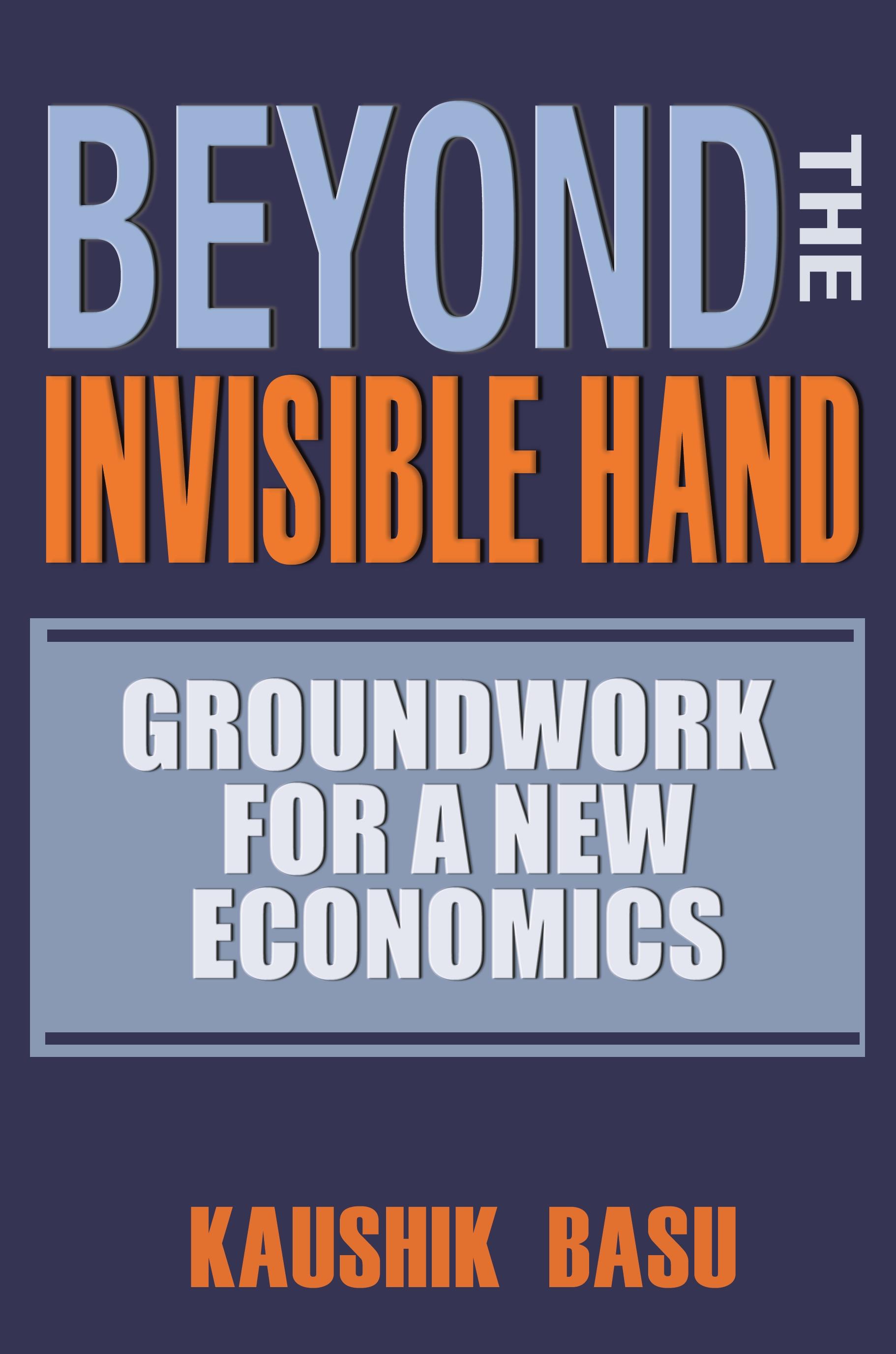
One of the central tenets of mainstream economics is Adam Smith's proposition that, given certain conditions, self-interested behavior by individuals leads them to the social good, almost as if orchestrated by an invisible hand. This deep insight has, over the past two centuries, been taken out of context, contorted, and used as the cornerstone of free-market orthodoxy. In Beyond the Invisible Hand, Kaushik Basu argues that mainstream economics and its conservative popularizers have misrepresented Smith's insight and hampered our understanding of how economies function, why some economies fail and some succeed, and what the nature and role of state intervention might be. Comparing this view of the invisible hand with the vision described by Kafka—in which individuals pursuing their atomistic interests, devoid of moral compunction, end up creating a world that is mean and miserable—Basu argues for collective action and the need to shift our focus from the efficient society to one that is also fair.
Using analytic tools from mainstream economics, the book challenges some of the precepts and propositions of mainstream economics. It maintains that, by ignoring the role of culture and custom, traditional economics promotes the view that the current system is the only viable one, thereby serving the interests of those who do well by this system. Beyond the Invisible Hand challenges readers to fundamentally rethink the assumptions underlying modern economic thought and proves that a more equitable society is both possible and sustainable, and hence worth striving for.
By scrutinizing Adam Smith's theory, this impassioned critique of contemporary mainstream economics debunks traditional beliefs regarding best economic practices, self-interest, and the social good.
Before Memmo my notes were scattered across PDFs. Now a workspace pulls everything into one place — I see exactly what's still left to study.
Memmo's summaries are gold before exams. I don't have to re-read 800 pages two weeks before — just the important parts.
The AI chat has saved me the night before an exam more than once. I just keep asking until I get it — no waiting on a study group to reply.
The quizzes hit exactly what I need to know. Memmo tracks what I get stuck on — so I only practice what's worth it.
Flashcards with spaced repetition are magic. Memmo knows when I'm about to forget something and brings it back.
The AI podcasts are my favorite. I listen on my way to school and get a recap without sitting at a computer.

Handbok i kvalitativa metoder
281 kr

Hållbar utveckling: en introduktion för ingenjörer och andra problemlösare
334 kr

Brymans Samhällsvetenskapliga metoder
390 kr

Projektledning
491 kr

Den orättvisa hälsan: om socioekonomiska skillnader i hälsa och livslängd
326 kr

Organizational Leadership
429 kr

Vetenskapsteori för nybörjare
196 kr

På väg mot läraryrket
172 kr

Det sociala livet i skolan: Socialpsykologiska perspektiv
253 kr

Betygsättningens didaktik
151 kr

Personality
402 kr

Studying Leadership
404 kr

Managing Innovation
477 kr

Introduktion till samhällsvetenskaplig metod
347 kr

The Psychology of Sex and Gender
698 kr

Evidens och kunskap för socialt arbete
207 kr

Introduction to Leadership
605 kr