
Before Memmo my notes were scattered across PDFs. Now a workspace pulls everything into one place — I see exactly what's still left to study.
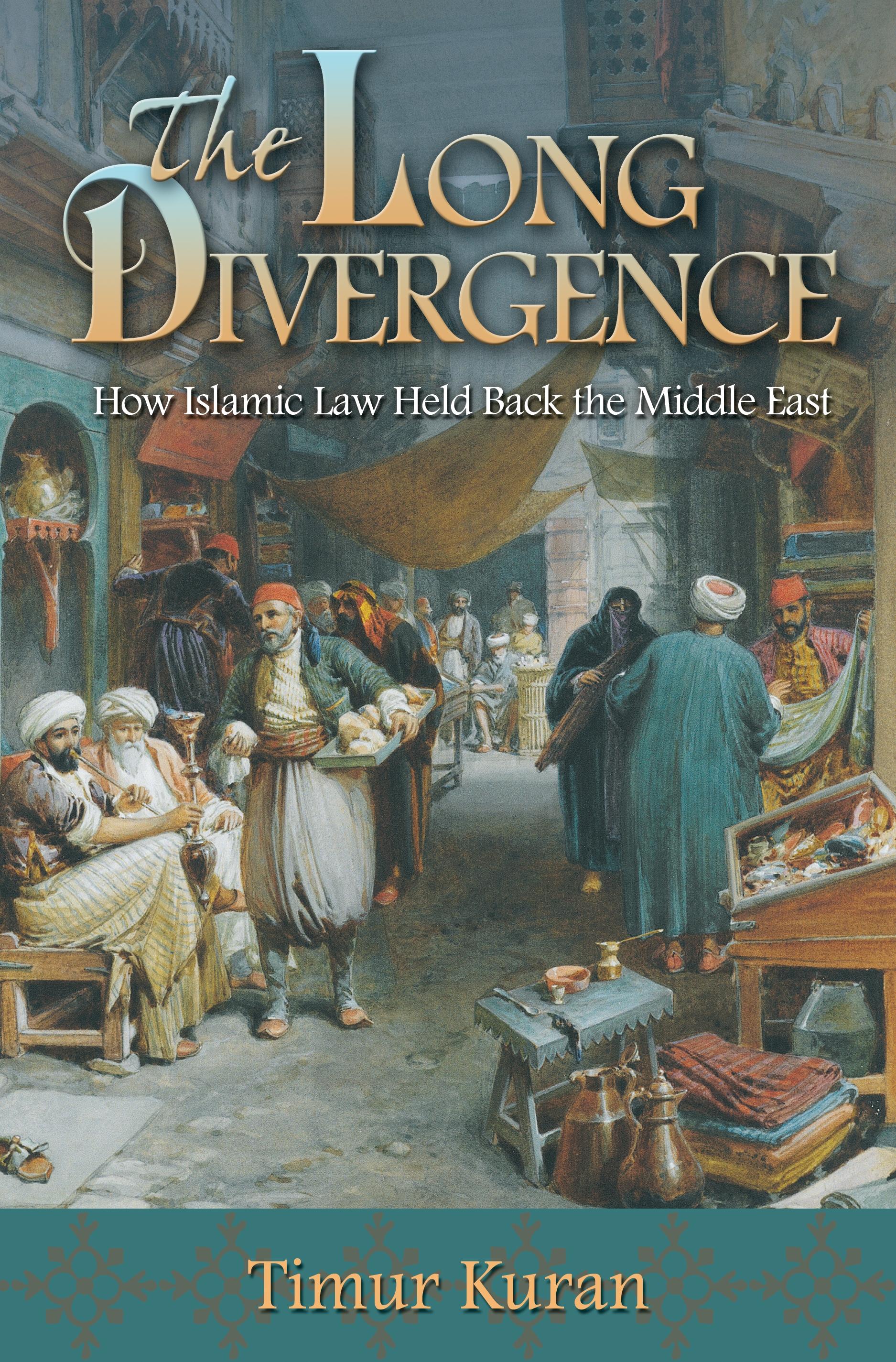
How religious barriers stalled capitalism in the Middle East
In the year 1000, the economy of the Middle East was at least as advanced as that of Europe. But by 1800, the region had fallen dramatically behind—in living standards, technology, and economic institutions. In short, the Middle East had failed to modernize economically as the West surged ahead. What caused this long divergence? And why does the Middle East remain drastically underdeveloped compared to the West? In The Long Divergence, one of the world's leading experts on Islamic economic institutions and the economy of the Middle East provides a new answer to these long-debated questions.
Timur Kuran argues that what slowed the economic development of the Middle East was not colonialism or geography, still less Muslim attitudes or some incompatibility between Islam and capitalism. Rather, starting around the tenth century, Islamic legal institutions, which had benefitted the Middle Eastern economy in the early centuries of Islam, began to act as a drag on development by slowing or blocking the emergence of central features of modern economic life—including private capital accumulation, corporations, large-scale production, and impersonal exchange. By the nineteenth century, modern economic institutions began to be transplanted to the Middle East, but its economy has not caught up. And there is no quick fix today. Low trust, rampant corruption, and weak civil societies—all characteristic of the region's economies today and all legacies of its economic history—will take generations to overcome.
The Long Divergence opens up a frank and honest debate on a crucial issue that even some of the most ardent secularists in the Muslim world have hesitated to discuss.
Before Memmo my notes were scattered across PDFs. Now a workspace pulls everything into one place — I see exactly what's still left to study.
Memmo's summaries are gold before exams. I don't have to re-read 800 pages two weeks before — just the important parts.
The AI chat has saved me the night before an exam more than once. I just keep asking until I get it — no waiting on a study group to reply.
The quizzes hit exactly what I need to know. Memmo tracks what I get stuck on — so I only practice what's worth it.
Flashcards with spaced repetition are magic. Memmo knows when I'm about to forget something and brings it back.
The AI podcasts are my favorite. I listen on my way to school and get a recap without sitting at a computer.

Handbok i kvalitativa metoder
281 kr

Hållbar utveckling: en introduktion för ingenjörer och andra problemlösare
334 kr

Brymans Samhällsvetenskapliga metoder
390 kr

Projektledning
491 kr

Den orättvisa hälsan: om socioekonomiska skillnader i hälsa och livslängd
326 kr

Organizational Leadership
429 kr

Vetenskapsteori för nybörjare
196 kr

På väg mot läraryrket
172 kr

Det sociala livet i skolan: Socialpsykologiska perspektiv
253 kr

Betygsättningens didaktik
151 kr

Personality
402 kr

Studying Leadership
404 kr

Managing Innovation
477 kr

Introduktion till samhällsvetenskaplig metod
347 kr

The Psychology of Sex and Gender
698 kr

Evidens och kunskap för socialt arbete
207 kr

Introduction to Leadership
605 kr